
Talk: buyer questions on GaN and wireless chargers
Practical questions from brand owners, importers and sourcing teams about GaN chargers, travel adapters and wireless chargers, answered by the Wecent Editorial Team from purchasing, compliance and after-sales perspectives.
Browse by topic
Featured questions
-
 Purchasing How do we compare two charger quotes for the ‘same’ specification?
Quotes that look equal often differ in certifications, components, cable, packaging, inspection, payment and shipping terms. Put both into one comparison table, ask the same questions to both suppliers, and compare samples.
-
 Purchasing What payment milestones are reasonable for a first OEM charger order?
Tie payments to events you can verify: deposit at order, balance after inspection and before shipment, and documents as a condition of release.
-
Purchasing How do we evaluate a factory’s claimed lead time before signing?
Break the lead time into stages: samples, approvals, materials, production, inspection and shipping. Ask what each depends on and what happens if it slips, and check against references and your own first order.
-
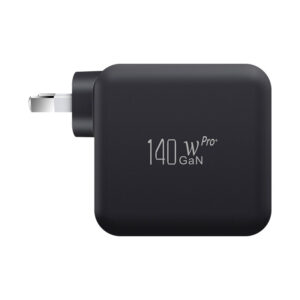 Selection Will a 140W GaN charger fast-charge a 16-inch MacBook Pro over any USB-C cable?
Not over any cable. Above 60W the cable is part of the power path, and 140W needs the right cable and the right charger profile.
-
 Selection Do our chargers need PPS to support Samsung Super Fast Charging?
Yes. Samsung's Super Fast Charging runs on USB PD with the Programmable Power Supply (PPS) feature. Without PPS, a Galaxy phone falls back to slower charging.
-
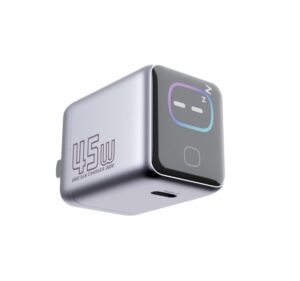
 Use Is it safe to leave a GaN charger plugged in all the time in hotel rooms or offices?
A charger that is certified to the applicable safety standards is designed to stay connected, and its idle power is capped by law in the EU. Installation and condition matter more than the GaN part.
-
 Use Can we use a 100W laptop charger to charge a phone overnight?
Yes, with a standards-compliant USB-C PD charger. The phone negotiates only what it needs, and its own battery management controls overnight charging.
-
Use Is it safe to plug a GaN charger into a power strip or extension lead?
Generally yes, if the strip is in good condition and not overloaded. The charger's own load is modest. The risks are daisy-chaining, cheap strips and covered, crowded sockets.
-
Maintenance How long should a quality GaN charger last in daily use?
There's no single lifespan figure. Heat, load, mains conditions and handling decide it. Use the warranty as the contractual floor and track failures by batch.
-
Maintenance How should we clean a GaN charger’s pins and USB-C ports safely?
Unplug first, keep it dry, and use non-metal tools. Most port problems come from lint and debris, and most pin problems come from dirt or bent pins.
-
Troubleshooting Why does a GaN charger whine or buzz?
A faint high-pitched whine under certain loads can come from components vibrating at switching frequencies, known as coil whine. It's often harmless. Loud buzzing, crackling, or noise with heat or smell is not normal; stop using the charger.
-
Troubleshooting Why does a 140W charger only give 100W?
Above 100W, USB Power Delivery needs Extended Power Range (EPR): a 48V-capable 5A e-marked cable, an EPR-capable device, and a port that offers 140W. If any part is missing, charging falls back to 100W or less.
-
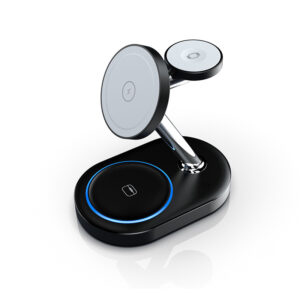 Compliance What does ISED require for chargers and wireless chargers sold in Canada?
Innovation, Science and Economic Development Canada (ISED) sets radio and interference rules. Wireless chargers are radio apparatus and typically need certification under RSS-216, while ICES-003 covers unintentional emissions. Electrical safety and bilingual labelling are separate requirements.
-
Compliance Do wireless chargers go under FCC Part 15 or Part 18 in the US?
It depends on the design. The FCC's guidance on wireless power transfer (KDB 680106) explains when each applies. Your test lab should decide the route with you.
-
Compliance Which energy-efficiency rules apply to chargers in the US?
US Department of Energy (DOE) efficiency standards for external power supplies apply to most chargers. Level VI limits have applied since 2016, products must be certified to DOE, and nameplates carry the 'VI' mark. California has its own appliance efficiency rules too.