
Talk · Use · Business & shared deployment
Is it safe to leave a GaN charger plugged in all the time in hotel rooms or offices?
A charger that is certified to the applicable safety standards is designed to stay connected, and its idle power is capped by law in the EU. Installation and condition matter more than the GaN part.
 Wecent Editorial Team
Updated
3 min read
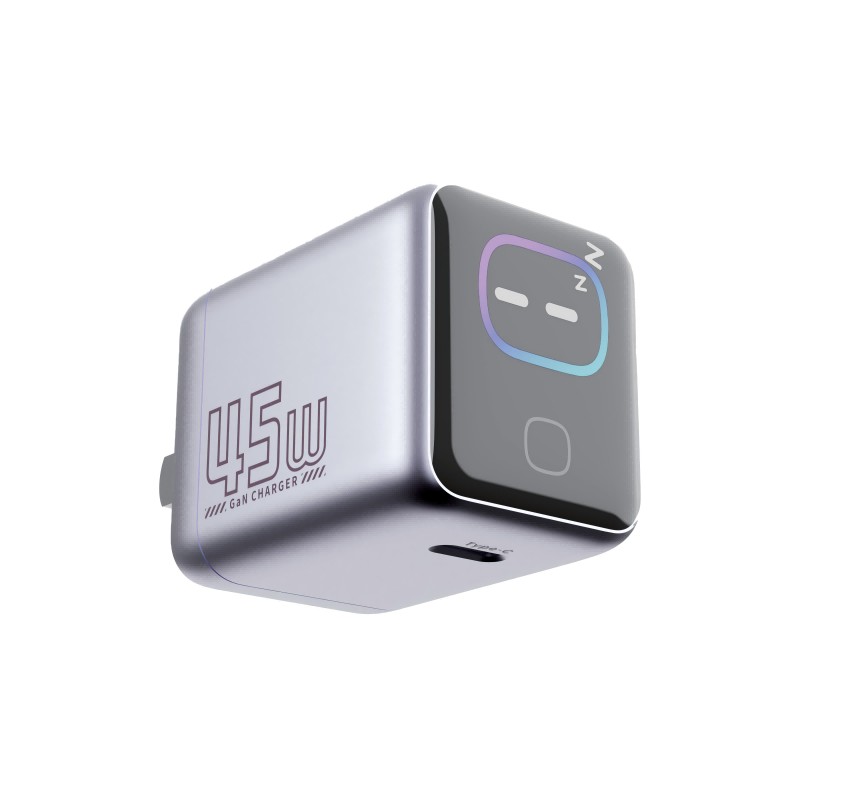
A hotel group wants a 45W GaN charger (WEX45Pro class) in every room, plugged in permanently next to the bed. Their facilities manager asks whether that is safe and how much power the chargers use while nothing is connected.
Short answer: Yes, for a charger certified to the applicable safety standards and installed sensibly. These products are designed for continuous connection to mains. In the EU, their no-load power is capped by Ecodesign rules. The real risks come from damaged units, loose sockets, covered chargers and uncertified replacements, not from GaN itself.
Why continuous connection is an expected use
Chargers of this kind are evaluated under IEC 62368-1 (or its regional versions), a hazard-based safety standard for audio/video and IT equipment. It covers protection against electric shock, fire and excessive surface temperature in normal use and under single-fault conditions. Being left plugged in is normal use for a wall charger. GaN transistors change how the power stage switches, not how the product is assessed.
How much power when idle
EU Regulation 2019/1782 sets maximum no-load power for external power supplies sold in the EU from April 2020. For a standard AC-DC supply, the limit is 0.10 W up to 49 W rated output and 0.21 W above that, with stricter or different values for some categories. For 100 rooms, that means a few watts across the whole building at the legal limit. Ask the supplier for the declared no-load value of the exact model, which the regulation requires to be published.
Where the real risks are
- Loose or worn sockets: a heavy charger in a worn socket can sag and make poor contact, which causes heating. Check sockets when installing.
- Covered chargers: behind a headboard, under bedding or in a closed drawer, heat can’t escape. Chargers need free air.
- Damaged units: cracked housings, bent pins or burnt marks after a guest has knocked one out.
- Uncontrolled replacements: a cheap substitute bought locally after a loss, with unknown certification.
A simple routine for facilities teams
- Install only models with documented safety certification for the country.
- Choose positions with free airflow and sockets that grip firmly; avoid extension blocks behind furniture.
- Add a visual check to housekeeping: cracks, discoloration, loose fit.
- Remove any unit that is damaged, smells hot or buzzes loudly, and log the batch code.
- Replace only with the approved model.
This is general guidance. Local electrical codes and the hotel’s own fire-safety rules apply on top.
Facts cited here come from the named standards bodies, regulators, Apple support documentation and Wecent product pages. Points marked “ask”, “confirm” or “check” are recommendations or open questions to settle with your supplier, not verified specifications.
Three more perspectives
Products discussed in this thread
Related articles & topics
Have a sourcing question about your own programme?
Ask our team More Business & shared deployment questions