
Four paths carry heat out of a charger: conduction into the housing, convection from the surfaces, radiation from the warmest parts, and the connectors and cable. A design that only counts the first two usually discovers the third and fourth during a temperature test, and by then the enclosure has been tooled.
Charger thermal design: the four paths and what each depends on
Conduction, convection, radiation and the connector or cable path.
The four have different dependencies: conduction follows the internal stack and the wall thickness, convection follows the surface area and the orientation of the product in use, radiation follows the emissivity of the surfaces, and the connector path follows the current through the contacts. A small enclosure reduces the first two and makes the design more dependent on the third.
Thermal design is therefore an allocation problem: decide how much heat each path will carry, then verify it with a measurement in the shipping enclosure at the stated ambient.
Path 1: conduction into the housing
The internal stack decides how much heat reaches the surface at all.
The path runs from the switching devices and the magnetics, through the thermal interface material and the potting where used, into the enclosure wall. Every gap, every air pocket and every material change adds resistance, which is why the same components in two arrangements produce different surface temperatures. The design levers are the interface material, the contact area and the wall thickness.
Path 2: convection from the surfaces
Surface area and orientation matter more than the material.
The enclosure releases heat to the surrounding air from its outer surfaces, and the rate depends on the area, the orientation and whether the product sits on a table, in a bag or in a confined space. That is why a temperature rise measured on an open bench at 25 degrees does not describe the same product in a warm room, and why the ambient and the condition belong with the figure.
Path 3: radiation
The path designers forget, and the one that matters at higher surface temperatures.
Radiation depends on the absolute surface temperature and the emissivity of the finish, which means a dark, matte surface releases more than a polished one at the same temperature. The contribution rises as the design runs hotter, which is exactly the condition a dense charger operates in. The check is whether the finish chosen for branding is also the one chosen for thermal performance.
Path 4: connectors and the cable
Heat leaves through the copper as well as the air.
At higher currents the connector and the cable carry a meaningful share of the heat away from the enclosure, and they also generate some of it in the contacts. That is why a unit tested with a light cable can run hotter than the same unit with a properly rated one, and why the cable rating belongs in the thermal discussion rather than only in the accessory list.
| Path | Depends on | Design lever | How to measure it |
|---|---|---|---|
| Conduction | The internal stack and wall thickness | Interface material and contact area | Surface temperature at full load |
| Convection | Area, orientation and surroundings | Enclosure form and venting where allowed | Rise at a stated ambient and condition |
| Radiation | Surface temperature and emissivity | The finish | Comparison across finishes |
| Connector and cable | Current through the contacts | The connector rating and the cable | Contact temperature at rated current |
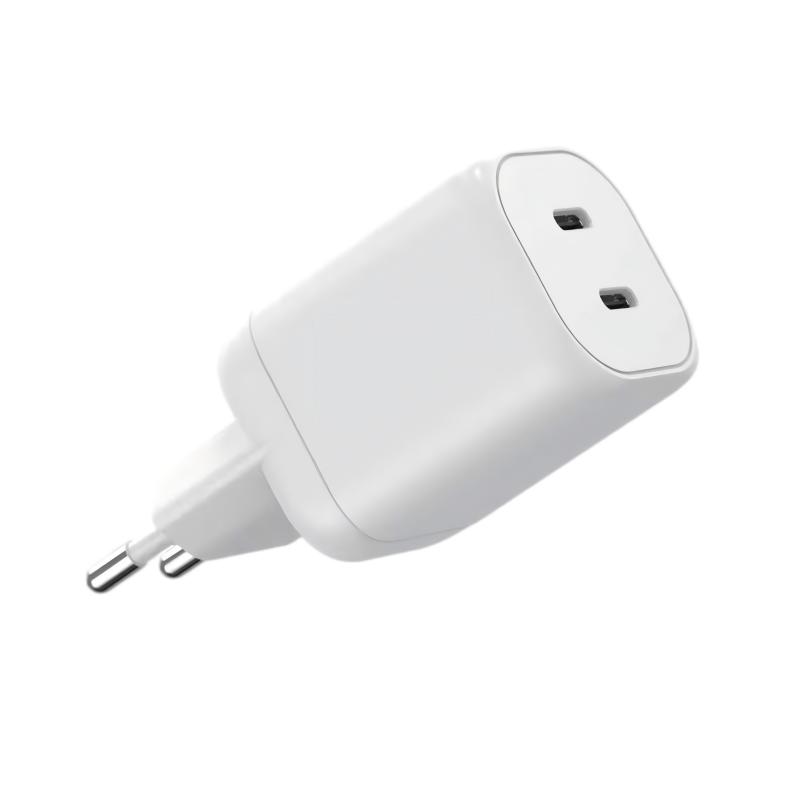
How a smaller volume changes the allocation
The first two paths shrink, so the third and fourth matter more.
A smaller enclosure has less surface area, so proportionally more of the heat has to leave through radiation and through the connector and cable. That is why a dense design benefits from a finish that emits well, a connector rated above the operating current, and a cable that conducts rather than insulates. The allocation changes, and the measurements that verify it change with it.

The measurements that prove the design
Three figures, each with its conditions.
The temperature rise at full output in the shipping enclosure at a stated ambient; the surface temperature at the points a user touches; and the derating condition, where the design reduces output above a threshold. Each figure is recorded with its load, input voltage and ambient, because without them the measurement describes a test rather than the product.
FAQ
Why is my charger hotter than a larger one with the same output?
A smaller enclosure has less surface area to release the same loss, so the surface runs warmer even where the efficiency is better. The useful comparison is the temperature rise at full output in each enclosure at the same ambient. Compare the two at the same full output and the same ambient, because the surface temperature on its own describes the enclosure rather than the design.
Do surface finishes matter thermally?
They do at higher surface temperatures, because radiation depends on emissivity as well as temperature. A dark matte finish emits more than a polished one, which is why branding and thermal decisions are sometimes the same decision. Ask for the finish to be chosen with the thermal result rather than after it, because a dark matte surface emits more than a polished one at the same temperature.
How should the derating be described?
As a threshold with its condition: above which temperature the design reduces output, and by how much. That sentence belongs on the datasheet, because it is what a customer experiences in a warm room. State the threshold with its condition: the temperature above which the design reduces output, and by how much, because that is what the customer experiences in a warm room.
Does the charging cable matter?
It carries heat and generates some in the contacts, so a cable rated below the operating current raises both the contact temperature and the enclosure temperature. The rating belongs in the specification and in the accessory list. Ask for the cable rating in the accessory list, because a cable below the operating current raises both the contact temperature and the enclosure temperature.
Next step
Send the output range, the enclosure size and the market ambient to Wecent Group through the contact page. The reply states how the four paths are allocated for the design, the measured rise at full load in the enclosure and the derating condition. Related reading: GaN charger applications, OEM and ODM charger manufacturing and charger quality control. External references: IEC standards, IEC Webstore, USB Power Delivery specification, EU CE marking rules, UL standards and certification and TUV testing services.
{“@context”:”https://schema.org”,”@type”:”FAQPage”,”mainEntity”:[{“@type”:”Question”,”name”:”Why is my charger hotter than a larger one with the same output?”,”acceptedAnswer”:{“@type”:”Answer”,”text”:”A smaller enclosure has less surface area to release the same loss, so the surface runs warmer even where the efficiency is better. The useful comparison is the temperature rise at full output in each enclosure at the same ambient.”}},{“@type”:”Question”,”name”:”Do surface finishes matter thermally?”,”acceptedAnswer”:{“@type”:”Answer”,”text”:”They do at higher surface temperatures, because radiation depends on emissivity as well as temperature. A dark matte finish emits more than a polished one, which is why branding and thermal decisions are sometimes the same decision.”}},{“@type”:”Question”,”name”:”How should the derating be described?”,”acceptedAnswer”:{“@type”:”Answer”,”text”:”As a threshold with its condition: above which temperature the design reduces output, and by how much. That sentence belongs on the datasheet, because it is what a customer experiences in a warm room.”}},{“@type”:”Question”,”name”:”Does the charging cable matter?”,”acceptedAnswer”:{“@type”:”Answer”,”text”:”It carries heat and generates some in the contacts, so a cable rated below the operating current raises both the contact temperature and the enclosure temperature. The rating belongs in the specification and in the accessory list.”}}]}