Who needs 140W or more
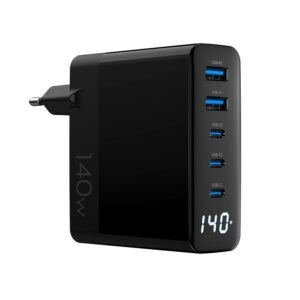
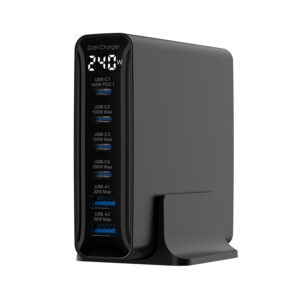
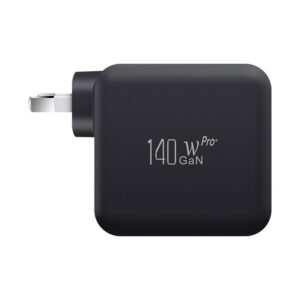
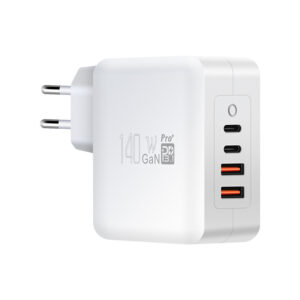
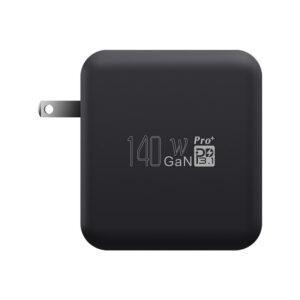
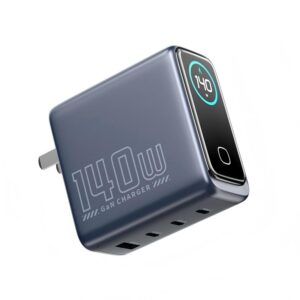
Above 100W the customer is usually not charging one device. A 140W GaN charger typically feeds a laptop, an external display or dock and a phone from a single socket; a 240W unit is used for desktop replacement laptops, multi-device desks, test benches and anything that has to hold its output for hours rather than minutes.
USB-C PD 3.1 and EPR
Power above 100W over USB-C uses the Extended Power Range of PD 3.1, which steps up in 20V increments to 28V, 36V and 48V. The device, the cable and the charger all have to support EPR for the top figures to be reached. In practice a 140W charger is what a 16-inch laptop asks for, and it will still hand a comfortable 30W to a phone on the second port.
Thermals are the real engineering
At these wattages heat is the limiting factor, not the power stage. GaN devices switch with lower losses, which keeps the case cooler for the same output, and the internal layout uses the aluminium shell as a heat spreader. That is why the same platform can be offered with different port counts and still hold a steady, safe case temperature under sustained load.
Port combinations
2A2C and 2A3C layouts are the usual choices: two or three USB-C ports for computers and phones, plus USB-A for legacy devices. The port mix is fixed at tooling, so it is worth deciding early whether the product is a desktop hub replacement or a travel brick with legacy support.
Cables, packaging and certification
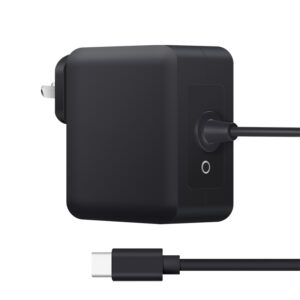
High-wattage programmes are usually shipped with a matching 240W-rated USB-C cable, and often with a pouch or a desk stand. CE, RoHS, FCC and CB reports are available by market, and retail cartons can be re-drawn for your channel. Trial quantities start at 200 pcs per model.
Desk packaging and accessories
These units live on a desk, so what ships in the box matters: a 240W-rated USB-C cable for the laptop port, a shorter cable for the second device, and often a stand or cable clip that keeps the desk tidy. The carton is usually a larger rigid box with a foam or moulded insert so the charger arrives without scuffs, and for retail it carries the port map on the back — buyers want to see which port takes the laptop before they buy. Accessories are quoted per programme and can be added without changing the charger itself.
Frequently asked questions
- Is 140W safe for a 65W laptop? Yes — the laptop requests less and the charger delivers less.
- Why is my laptop charging slowly? Usually the cable: above 60W you need a 5A EPR-rated cable.
- Do these models run hot? They run warm under sustained load by design; the case is part of the thermal path.