Wireless charging in one paragraph
A wireless charger moves energy through a coil pair instead of a cable. The device still has to be positioned over the coil, which is why alignment — magnets, a cradle or a guide ridge — decides how well the product performs in daily use. The rest of the design work is heat: a charger that runs cool holds its rate for longer.
Qi, Qi2 and magnetic alignment
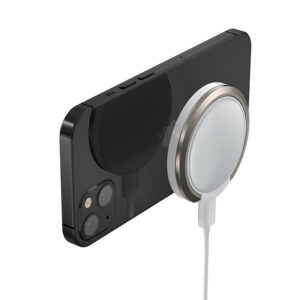
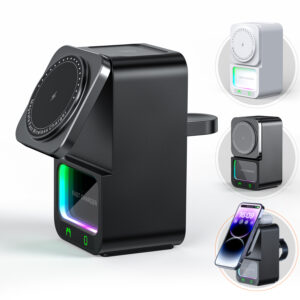
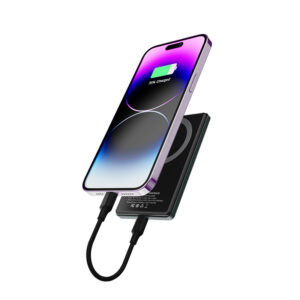
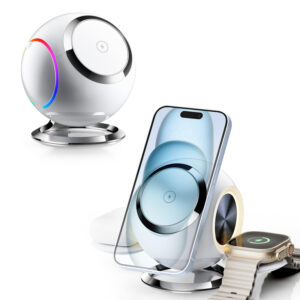
Baseline Qi works but leaves the position up to the user, so real-world speed varies. Qi2 adds a magnetic array that snaps the phone into the correct place, which stabilises both speed and temperature, and it is the standard most new phones are built to. Magnetic stands are the practical way to exploit it, on a desk or in a car.
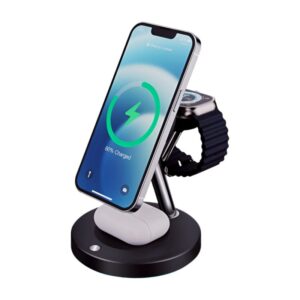
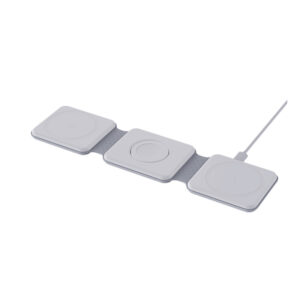
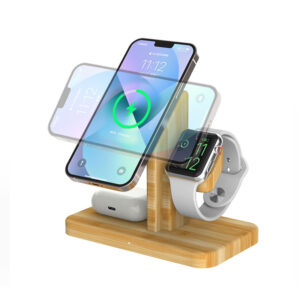
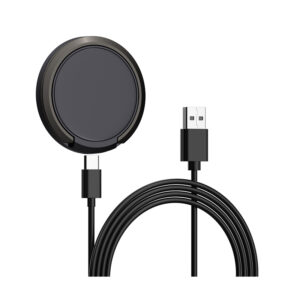
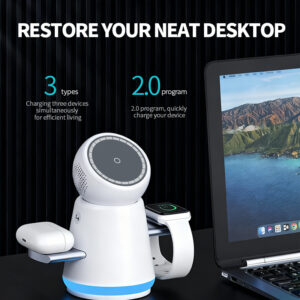
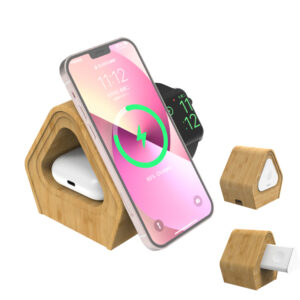
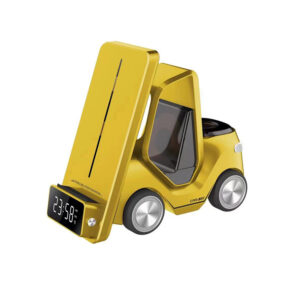
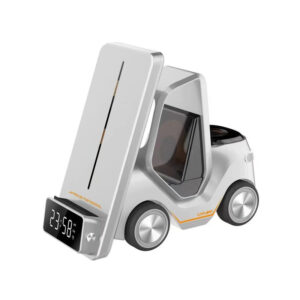
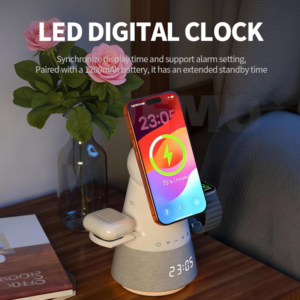
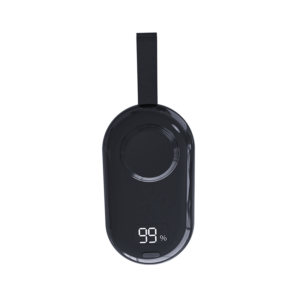
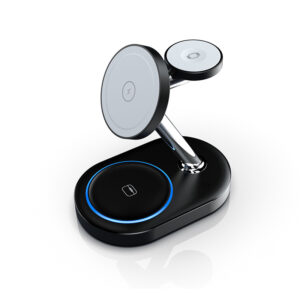
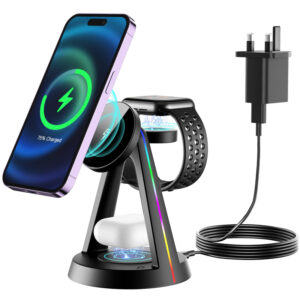
A flat pad is the cheapest shape and disappears into a desk or a hotel room. A stand lifts the phone to a readable angle, which suits bedside and video use. A multi-device base adds a second pad for earbuds and a puck for a watch so three devices charge from one cable. Each shape has its own tooling and its own packaging.
Wattage, heat and materials
15W is the practical ceiling for most phone wireless charging, and the charger will hold that rate only while it stays cool. Aluminium, ABS, bamboo and fabric surfaces are all available; the material also decides how the product feels in a hotel room, on a nightstand or on a retail shelf.
OEM programmes
Colour, finish, moulded logo, cable length, travel case and retail carton are all editable from a 200 pcs trial order per model. Wireless products usually ship with their own power supply and cable, and the carton can be re-drawn for marketplaces with your barcode and labels.
Certification and testing for wireless products
Wireless charging adds two things to the paperwork: the Qi or Qi2 compliance document, and the EMC and radio tests that come with any product containing a coil and a switching supply. Reports are supplied by market — CE and RoHS for the EU and UK, FCC for the United States, and the regional equivalents elsewhere. Every batch is then checked for output at the pad, temperature rise after an hour of charging, alignment tolerance and magnet strength, because those four numbers decide whether the product holds its rate in daily use.
Frequently asked questions
- Do wireless chargers work through a case? Through most cases under 3mm; thick wallets and metal plates interfere.
- Is wireless charging slower than wired? Yes for phones — typically 15W versus 20W-45W wired, which is why many buyers use both.
- Which standard should I specify? Qi2 if the product targets recent phones; baseline Qi if it must cover older devices too.