
Test reports, labels & documents: buyer questions
Test reports, certificates, rating labels, declarations and the document trail behind a charger.
-

 After a failed test, when is a retest enough and when is a redesign needed?
A retest is justified only if you can show that the failure came from a test or sample error and not from the design.
-
What should a recall-ready traceability file contain for a charger?
It should let you answer quickly which units are affected, where they are and who has them.
-
What goes into an FCC supplier’s declaration of conformity file for a USB charger?
Under FCC rules, Class B external switching power supplies can be authorized by SDoC or certification.
-
What is the difference between a pre-production sample and a production sample in test records?
A pre-production sample is built before mass production to confirm the design, tooling and process, and may still have hand-made parts or trial settings.
-
What decides how long a safety certification takes, and how can it be planned around?
The time depends on how ready the product and documents are, the lab's queue, the number of tests and standards, whether tests fail and whether a factory inspection is needed.
-
How many samples should be sent to a test lab, and what should be recorded for each?
Send the number of units the lab lists in writing, with a few spares, and give each unit a unique ID.
-
How should a brand track certificate renewal dates so nothing lapses?
Keep one register of every certificate with its model, issuer, number, dates and owner, set reminders well before each date and tie renewals and follow-up inspections to named people.
-
How should a charger model-numbering scheme be set up so certificates and variants stay traceable?
Use a simple structure with a base model number for the electrical design, separate suffixes for plug type and colour and a clear rule for when a change needs a new number.
-
How long should QC records be kept so a recall can be traced to a batch?
Give every batch a code, link it to the components and inspection records and keep them for the whole sale life of the product plus a safe margin that covers warranty and liability.
-
How long should a charger maker keep technical files and test reports?
Keep them for as long as the product is sold and for a comfortable period after, covering warranty claims and any questions from regulators or retailers.
-
When does a design change need a delta report instead of a full retest?
It depends on how much the change affects safety and performance.
-
What is the difference between ‘tested to’, ‘listed’ and ‘certified’ on a charger?
They are not the same.
-
How should product and label photos be archived at sample approval?
Photograph every approved sample from set views, including the label, the plug, the ports and the packaging, with a scale and a date.
-
What does a laboratory’s accreditation scope show, and why should a buyer check it?
An accreditation certificate is not a blanket approval.
-
What FCC statement belongs in a charger’s user manual?
For a charger treated as a Class B digital device, the manual must carry the FCC's Class B note from 47 CFR 15.105(b), or similar wording, in a prominent place.
-
Can one set of certificates cover both the black and white versions of a charger?
A single set of certificates can often cover both colours if the only difference is the colour of the same plastic, and the certifier has confirmed that the materials are equivalent in safety terms.
-
How should a certificate’s scope be kept in step with a design change?
Treat the certificate as a description of one specific design.
-
How can a buyer judge whether a factory’s test equipment is calibrated?
Ask to see calibration certificates and equipment labels for the instruments used in your product's tests, and check that they are in date, traceable to a recognised standard and match the equipment on the line.
-
How do we read the summary page of a charger test report, and what should be checked first?
Start with five things: that the model number and ratings match your product, which standard and edition was used, who tested it and when, the overall verdict, and any conditions or limits written on the page.
-
What is a critical-component list in a certification report, and why does substituting a part matter?
A critical-component list is the table in a safety report that names the parts that affect safety, with their maker, model, ratings and approvals.
-
What should a buyer’s compliance checklist ask for on each charger SKU for the US and Canada?
Ask for one file per SKU: the safety listing, radio-interference paperwork, energy-efficiency registration where it applies, battery transport tests, labels and a change record.
-
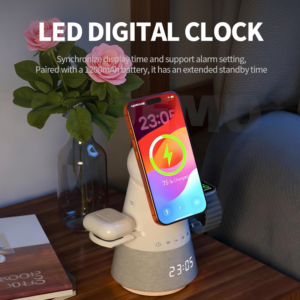 Do chargers with Bluetooth speakers need extra approvals?
Yes. Adding Bluetooth brings the product under radio requirements for the Bluetooth radio as well as the wireless charging function. In the EU that means RED with relevant radio and EMC standards; in the US, FCC authorisation for the Bluetooth transmitter.
-
 How do we keep compliance documents current when a component changes?
Require the factory to notify component changes in advance, assess each change against the test reports' critical components list, involve the test lab when needed, and update the technical file, DoC and batch records.
-
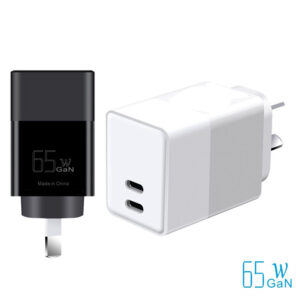 Does a change of plastic colour need retesting?
Often a full retest isn't needed, but the change must be assessed. Colourants can affect flammability, chemical content (RoHS, REACH) and sometimes heat behaviour. Document the assessment and update the technical file.
-
What is a CB scheme report, and when is it enough?
A CB test report and certificate under the IECEE scheme shows a charger was tested to an IEC standard such as IEC 62368-1. It helps obtain national approvals and supports technical files, but on its own it isn't a market-access mark.
-
 Does a USB-C cable bundled with our charger need its own certification?
USB cables mostly fall outside the Low Voltage Directive, but RoHS, REACH and general product safety still apply. USB-IF certification is voluntary and needed only to use the USB-IF logos.
-
How do we check that a charger test report really covers our model?
Match the model number, ratings, photos, critical components and the issuing lab's details against your product. A report for a similar model is not the same thing.
-
Which markings must appear on a charger’s rating label?
Electrical ratings, model and maker identification, and the conformity and disposal marks for each market. Keep the label in sync with the test report.
-
Who counts as the manufacturer when we sell a private-label charger under our brand?
Under EU rules, if your name or trademark goes on the product, you take on the manufacturer's obligations, even though a factory made it.