
US & Canada rules: buyer questions
FCC, ISED, UL/CSA/ETL, DOE, CPSC, Prop 65 and carry-on battery rules for chargers sold in the United States and Canada.
-

 Which Canadian safety marks are accepted on a charger: cUL, CSA or ETL?
Canada requires electrical products to be certified by a certification body accredited by the Standards Council of Canada.
-
What are an NRTL and an SCC-accredited body, and why do they matter for chargers?
An NRTL is a laboratory recognized by OSHA to test and certify products to US safety standards, and an SCC-accredited certification body is recognized in Canada for electrical products.
-
Is FCC Form 740 still required for a charger shipment into the US?
No.
-
Does a charger sold in Canada need bilingual English and French labelling?
For prepackaged consumer products, Canada's Consumer Packaging and Labelling rules require certain information, such as the product identity and net quantity, to be shown in both English and French.
-
What does the Roman numeral on a charger label, such as VI, mean for US energy rules?
The numeral shows which efficiency level the external power supply is declared to meet.
-
Do California’s battery-charger efficiency rules affect a charger sold online to California buyers?
Possibly.
-
How can a buyer check that a UL, ETL or CSA listing on a charger is real?
Look up the listing yourself in the certification body's public directory, using the file or certificate number and model name, and check that the manufacturer, model, ratings and status match your product.
-
What must an importer report to Health Canada if a charger is linked to a fire or injury?
Under section 14 of the Canada Consumer Product Safety Act, an importer must report an incident to Health Canada and to the person who supplied the product.
-
Does a charger imported into the US need a country-of-origin mark?
Under US customs marking law, imported articles must generally be marked with the English name of the country of origin, in a conspicuous place, in a legible and permanent way, so that the final buyer can see it.
-
What documents does a Canadian retailer usually ask a charger supplier for?
Expect requests for proof of electrical safety certification from a recognised Canadian body, evidence of energy efficiency compliance where it applies, bilingual labelling and packaging, any radio-equipment documents and your contact and recall procedures.
-
What proof do US marketplaces usually ask for on a USB-C charger listing?
Marketplaces set their own rules and change them often, so read the current policy for your category first.
-
What do Canada’s energy efficiency regulations require for chargers and power supplies?
Natural Resources Canada regulates the energy efficiency of external power supplies and battery chargers.
-
How should a brand check that its lab or certification body is still FCC-recognised before booking?
Search for the lab in the FCC's public test firm search, confirm its status and that its accreditation covers the rule parts you need, and ask your certification body to confirm the same.
-
Does selling chargers in Quebec require French labelling and manuals?
Yes, in practice you should prepare French.
-
Does an importer of a private-label charger have to certify it with the Department of Energy?
Not entirely.
-
What does an FCC ID on a charger tell a buyer, and how can it be looked up?
An FCC ID shows that a device went through the FCC's Certification route and has a public grant record.
-
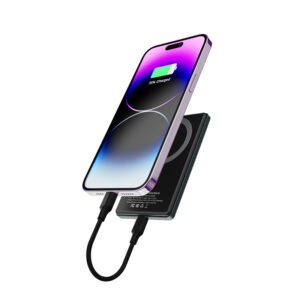 Who must hold a UN 38.3 test summary for a power bank shipped to the US?
US hazmat rules say every manufacturer and later distributor of lithium batteries must make a UN 38.3 test summary available. A general compliance statement is not enough.
-
When does a charger brand have to report a safety complaint to the CPSC?
Manufacturers, importers, distributors and retailers must report within 24 hours of getting information that reasonably supports a hazard. Waiting until you know the root cause is not an excuse.
-
Can we keep using our Chinese test lab for FCC reports after the ‘bad labs’ rules?
It depends on who owns and controls the lab and whether the FCC recognises it. Check both before you book, and keep an eye on a proposal that could widen the restrictions.
-
When does a US retailer ask for UL or ETL listing even though the law does not?
No federal law makes UL or ETL listing mandatory for a consumer charger, but retailers, marketplaces and insurers often set it as a condition of sale. Plan for it before you commit to volume.
-
Does a USB charger sold in the US need FCC certification or a supplier’s declaration?
A typical USB charger with no radio transmitter is authorised through the supplier's declaration of conformity, with a US responsible party. A wireless charger is different and needs a separate look.
-
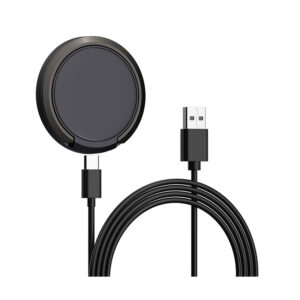 Should magnetic chargers carry warnings about pacemakers and cards?
Apple and the US FDA advise keeping magnetic phones and accessories away from implanted medical devices; Apple cites more than 15 cm, or more than 30 cm when wirelessly charging. A clear warning in the manual and on the listing is sensible, along with advice on cards with magnetic stripes.
-
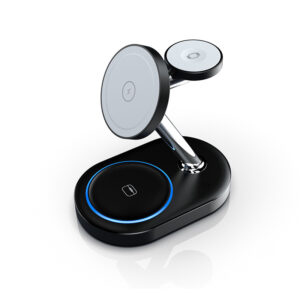 What does ISED require for chargers and wireless chargers sold in Canada?
Innovation, Science and Economic Development Canada (ISED) sets radio and interference rules. Wireless chargers are radio apparatus and typically need certification under RSS-216, while ICES-003 covers unintentional emissions. Electrical safety and bilingual labelling are separate requirements.
-
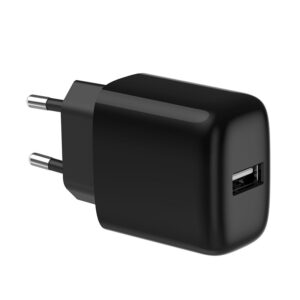 Can we put USB logos on our charger packaging?
USB-IF logos, including the USB Type-C and USB PD certified logos, are trademarks. Using them requires the product to pass USB-IF certification and the company to agree to USB-IF's logo licensing terms. Describing a product as having a USB-C port in plain text is different from using the logo.
-
Do chargers sold in California need a Proposition 65 warning?
Prop 65 requires a clear and reasonable warning when a product exposes Californians to listed chemicals above safe-harbour levels, unless an exemption applies. Whether a charger needs one depends on its materials and exposures, so it is a product-by-product decision.
-
 How do we handle a product-safety recall for chargers?
Assess the risk, stop sales, notify authorities through the required channels, inform customers with a clear recall notice, offer a remedy, collect affected units and record everything. In the EU, GPSR sets specific duties and a recall notice format.
-
Which energy-efficiency rules apply to chargers in the US?
US Department of Energy (DOE) efficiency standards for external power supplies apply to most chargers. Level VI limits have applied since 2016, products must be certified to DOE, and nameplates carry the 'VI' mark. California has its own appliance efficiency rules too.
-
What can we say about ‘MagSafe compatible’ on our packaging?
MagSafe is an Apple trademark, and Apple runs a programme for accessories made for MagSafe. Use Apple's terms only in line with Apple's guidelines and your licence status. Describe magnetic charging in neutral terms when in doubt.
-
How do we prove a ‘Qi2 certified’ claim on a listing?
Qi2 and the Qi2 logo are trademarks of the Wireless Power Consortium. Use them only for products that have passed WPC certification and appear in the WPC product database, and keep the certification evidence on file.
-
What do Amazon and big retailers ask for when listing chargers?
Typically: test reports and certificates for the target market, a Declaration of Conformity, label and packaging photos, product safety information, and for power banks, battery documents. Exact requirements vary by marketplace, category and country.
-
Do wireless chargers go under FCC Part 15 or Part 18 in the US?
It depends on the design. The FCC's guidance on wireless power transfer (KDB 680106) explains when each applies. Your test lab should decide the route with you.