
Talk · Compliance · US & Canada rules
Does a USB charger sold in the US need FCC certification or a supplier’s declaration?
A typical USB charger with no radio transmitter is authorised through the supplier's declaration of conformity, with a US responsible party. A wireless charger is different and needs a separate look.
 Wecent Editorial Team
Updated
3 min read

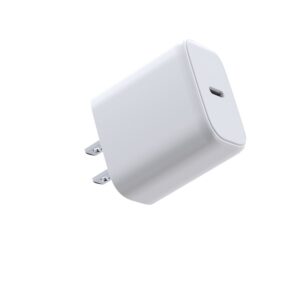
We are importing a USB-C wall charger for the US market under our brand. The factory has a test report but says it does not have an ‘FCC certificate’. Do we need one, and who is responsible for the paperwork?
Short answer: For a plain USB wall charger that only contains digital circuitry and no radio, the FCC route is normally the supplier’s declaration of conformity (SDoC), not a certificate from a certification body. The responsible party must be located in the United States. Certification is optional for such products and required for products with radio transmitters, such as many wireless chargers.
Two routes: SDoC and certification
The FCC describes two equipment authorization procedures. Certification is issued by an FCC-recognised certification body based on test data from an accredited lab, and the product appears in a public FCC database. SDoC lets the party responsible for compliance verify the product itself, with no filing to the FCC or a certification body. SDoC products are not listed in an FCC database.
Which route a USB charger uses
The FCC states that equipment containing only digital circuitry, with no radio transmitter, such as computer peripherals and switching power supplies, is subject to approval using SDoC, and may optionally use certification. Section 15.101 of the FCC rules lists Class B external switching power supplies as authorised by SDoC or certification.
Who the responsible party is
The FCC states that the responsible party under SDoC must be located in the United States. For a private-label charger, that is usually the importer or the brand’s US entity, not the overseas factory. Section 2.906 also says SDoC applies to products that are identical to the sample tested, so a design change that affects emissions needs re-evaluation.
What must be done and kept
- Test the product to the applicable Part 15 limits at a lab that is allowed to be used for FCC work.
- Keep the test report and supporting records, as the FCC may ask for them.
- Provide the compliance information that comes with the product, which includes a compliance statement and the US responsible party’s contact details.
- Apply the required labelling and user information for the product type.
Where wireless chargers differ
A wireless charger contains a transmitter-like function, so it may fall under a different rule part and need certification. See our separate post on Part 15 versus Part 18 for wireless chargers.
Practical advice
Ask your supplier for the FCC test report and the name of the lab, check that the model number and the tested configuration match your product, and agree who is the US responsible party before the first order.
Sources checked on 24 Oct 2026: FCC: Equipment authorization procedures; eCFR: 47 CFR 15.101; eCFR: 47 CFR 2.906.
Where this answer says to confirm with Wecent, the detail is not published on the product page and has to come from the datasheet or the factory. General facts come from the regulators, standards bodies or device makers named in the text.
Three more perspectives
Products discussed in this thread

Related articles & topics
Have a sourcing question about your own programme?
Ask our team More US & Canada rules questions