
EU, UK & other-market rules: buyer questions
Earlier answers on EU, UK, Japan and other non-US markets. Wecent’s current focus for new compliance content is the United States and Canada.
-

 Should our chargers carry CE or UKCA marking for Great Britain?
For electrical equipment, EMC and radio equipment, the UK has extended recognition of CE marking indefinitely through the Product Safety and Metrology etc. (Amendment) Regulations 2024. Businesses can use either CE or UKCA for Great Britain; Northern Ireland follows EU rules.
-
 What traceability information must a charger carry under the EU GPSR?
Under GPSR, manufacturers must make sure products carry a type, batch or serial number, and the manufacturer's name, trademark, postal and electronic address. Importers add their own details. Where size doesn't allow, information goes on packaging or a document.
-
What are the rules for CE marking size and placement on a charger?
The CE marking must keep its prescribed proportions, be at least 5 mm high unless the product's legislation says otherwise, and be visible, legible and indelible on the product or its data plate. Only if that's impossible can it go on packaging and documents.
-
What does PSE mean for chargers sold in Japan?
PSE is the mark under Japan's Electrical Appliances and Materials Safety Act (DENAN). AC adapters are 'specified' products needing the diamond PSE mark and a conformity assessment by a registered body; power banks fall under the round PSE mark. The Japanese importer carries the main duties.
-
Do we need a WEEE registration in each EU country?
Yes, generally. WEEE producer obligations are national: producers register in each member state where they place electrical equipment on the market. Sellers without an establishment in a country selling directly there usually appoint an authorised representative.
-
What packaging and recycling marks do chargers need in France and Germany?
France requires the Triman logo with sorting information (Info-tri) on many consumer products and packaging, plus WEEE marking. Germany requires WEEE marking and registration under ElektroG, and packaging registration under VerpackG. Both need producer registration.
-
What is EPREL, and does it apply to chargers?
EPREL is the EU database for products that carry an EU energy label. Chargers and external power supplies don't carry an energy label, so they aren't registered in EPREL. Their efficiency is regulated by Ecodesign rules instead.
-
What language requirements apply to charger manuals in the EU?
Instructions and safety information must be in a language easily understood by users in each member state where the charger is sold, as determined by that state. Plan multilingual manuals or country-specific inserts early.
-
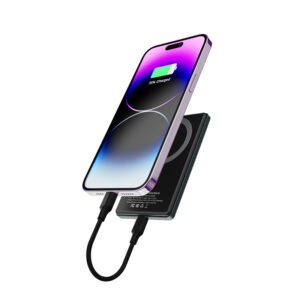 How do we handle battery rules for a magnetic power bank?
Power banks bring battery-specific requirements on top of charger rules: transport testing (UN38.3), battery safety standards, EU Battery Regulation obligations, labelling and take-back. Plan these before the first shipment.
-
What must a charger’s EU Declaration of Conformity include?
Product identification, manufacturer details, the directives and standards applied, a statement of conformity, and a signature with place and date. It must match the product and labels exactly.
-
What does the EU General Product Safety Regulation change for charger sellers?
The GPSR has applied since 13 December 2024. It strengthens traceability, online listing information, the role of an EU responsible operator and accident reporting, alongside the product-specific directives.
-
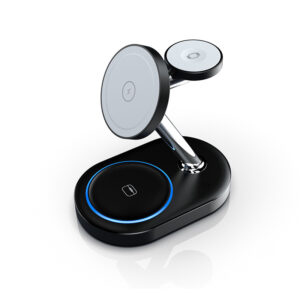 Do wireless chargers need Radio Equipment Directive approval in the EU?
Yes. Inductive wireless chargers are generally treated as radio equipment in the EU, so the RED route applies rather than the Low Voltage and EMC Directives alone.
-
What does the EU common charger rule mean for the chargers we sell?
The rule mainly regulates devices, not chargers: USB-C ports, USB PD for fast charging, unbundling and labels. It still shapes what charger buyers expect.
-
Which documents should a charger importer keep ready for EU market surveillance?
Authorities can ask for the Declaration of Conformity and the technical documentation, and expect them quickly. The importer has to be able to produce them, even if the factory wrote them.