
Talk · Compliance · EU, UK & other-market rules
Do wireless chargers need Radio Equipment Directive approval in the EU?
Yes. Inductive wireless chargers are generally treated as radio equipment in the EU, so the RED route applies rather than the Low Voltage and EMC Directives alone.
 Wecent Editorial Team
Updated
3 min read
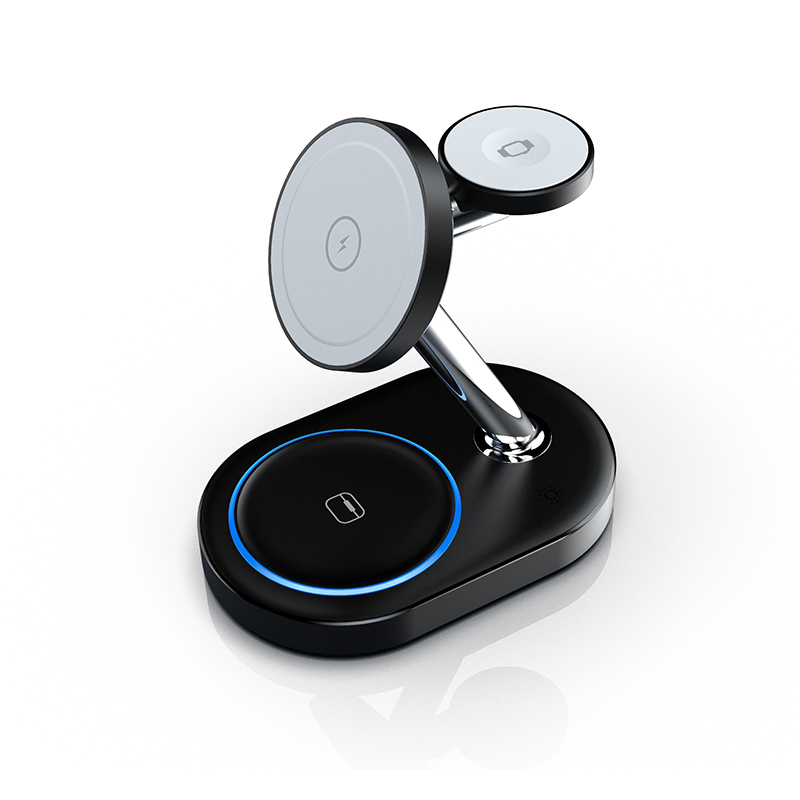
We sell GaN wall chargers with CE under the Low Voltage and EMC Directives. Now we want to add a 3-in-1 wireless charger (Y302 type). Is the CE route the same?
Short answer: Not quite. Inductive wireless chargers are generally treated as radio equipment in the EU, so they go through the Radio Equipment Directive (2014/53/EU). RED covers safety, EMC and efficient use of the radio spectrum in one directive. Expect radio testing against a harmonised standard for wireless power transfer, such as ETSI EN 303 417, alongside safety and EMC.
Why a wireless charger counts as radio equipment
A Qi charger transfers power through a magnetic field and exchanges data with the phone over that same link. EU guidance treats this kind of wireless power transfer equipment as radio equipment, which brings it under RED rather than under the Low Voltage and EMC Directives on their own.
What RED covers
- Article 3.1(a): health and safety, usually shown with IEC/EN 62368-1 and RF exposure assessment.
- Article 3.1(b): EMC, with the EMC standards for radio equipment.
- Article 3.2: efficient use of the spectrum, typically with ETSI EN 303 417 for wireless power transmission systems.
What changes in your documents
- The EU Declaration of Conformity refers to Directive 2014/53/EU. A separate LVD or EMC declaration isn’t needed for the same product.
- The technical file includes radio test reports and an RF exposure assessment.
- User information includes the frequency band and maximum power where RED requires it.
- If you sell the wireless charger with a separate wall adapter, the adapter keeps its own LVD/EMC route and Ecodesign obligations.
Notified body involvement
If the harmonised standards are applied in full, the manufacturer can usually do the conformity assessment itself. A notified body is needed when they aren’t applied or only partly applied. Ask your adviser which route the reports support.
Qi certification is separate
WPC Qi or Qi2 certification proves interoperability with the Qi standard. It isn’t legal market access. A charger can be Qi-certified and still need RED conformity, and the reverse.
UK and other markets
Great Britain has its own Radio Equipment Regulations with a similar structure. Other markets, such as the US with FCC rules, have their own approval routes.
This is a summary. Confirm with Wecent which RED reports exist for the model, and with your notified body or adviser for the applicable standards.
Where this answer says confirm with Wecent, the detail is not published on the product page and has to come from the datasheet or the factory. General facts come from the standards bodies, regulators or device makers named in the text.
Three more perspectives
Products discussed in this thread
Related articles & topics
Have a sourcing question about your own programme?
Ask our team More EU, UK & other-market rules questions