
Everyday home & office use: buyer questions
How people actually use GaN and wireless chargers day to day: overnight charging, cables, laptops, phones and tablets.
-

 What is a good charging setup for a home office with three devices?
Use one multiport USB-C charger with enough total power for the laptop plus the other devices, a few good cables of the right length, and a tidy spot on the desk.
-
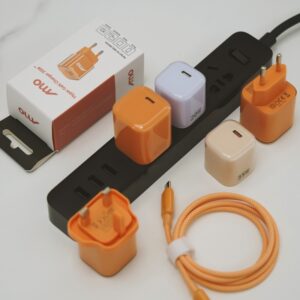 When is a wired charger the better choice than a wireless one at night?
A cable is often the better choice when you need a reliable full charge, because it makes less heat and does not depend on alignment.
-
Does fast charging damage a phone battery?
Fast charging adds some heat, but phones manage it by slowing down when the battery is warm or nearly full. Heat and time at full charge matter more than the charger's wattage.
-
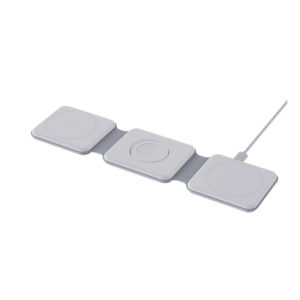 How do I use a wireless charger so my phone actually charges?
Plug the charger in, centre the phone, keep the gap clear and use a good adapter. Most wireless charging problems come from one of those four things.
-
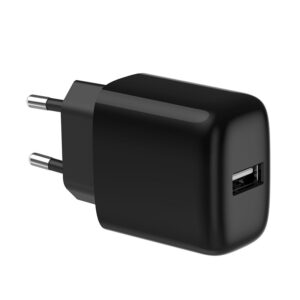 Can customers charge a phone and tablet overnight from one charger?
Yes, with a dual-port charger that provides enough power for both. Overnight there's plenty of time, so speed matters less than reliability. Use good cables, a ventilated spot, and the devices' own battery-care settings.
-
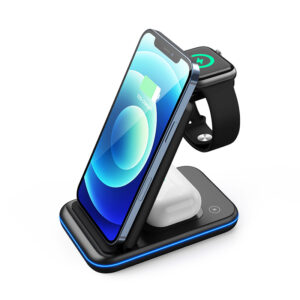 Can a 3-in-1 wireless charger run from a laptop USB port?
Usually not well. Most laptop USB ports supply far less power than a 3-in-1 charger needs. The charger may run slowly, charge only one device, or keep resetting. Use the recommended wall adapter.
-
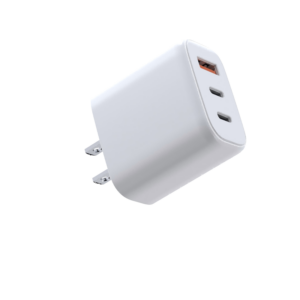 How do users read port labels such as PD and QC on a charger?
PD means USB Power Delivery, the standard used by USB-C phones, tablets and laptops. QC refers to Qualcomm Quick Charge, mainly on older Android phones. Wattage labels show maximum output. Use the PD port for most modern devices.
-
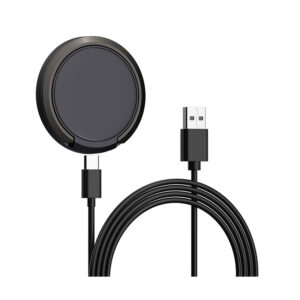 Can a wireless charger charge a phone through a pop-socket or ring holder?
Usually not reliably. Grips and rings lift the phone off the coil, and metal parts can trigger foreign-object protection or heat up. Remove the accessory, use a detachable magnetic version, or charge by cable.
-
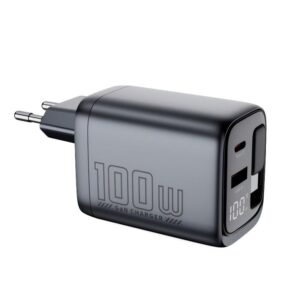 How do we use a retractable-cable charger without wearing the cable?
Pull only what you need, keep the cable straight from the outlet, guide it back, avoid sharp bends near the device, and don't use the cable to hold or swing the charger. These habits extend the life of both cable and mechanism.
-
Can a charger be shared between USB-C iPhones and Lightning devices?
Yes. The same USB-C PD charger charges both; only the cable differs. Use USB-C to USB-C for iPhone 15 and later, and USB-C to Lightning for earlier models and Lightning accessories. A multi-port charger can do both at once.
-
Can a foldable 3-in-1 charger be used flat on a desk?
Many foldable 3-in-1 chargers can be used fully opened and flat, or partly upright, depending on design. Check the manual for supported positions, make sure each device sits on its coil, and keep the hinge from being forced.
-
Is it okay to charge a phone while gaming on a wireless pad?
It works, but gaming and wireless charging both produce heat. The phone will slow or pause charging to protect itself, and the battery may barely gain charge. For long sessions, a cable is cooler and faster.
-
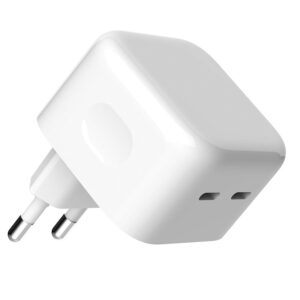 Can kids’ tablets use the same charger as adult phones?
Usually yes, if both use USB-C and the charger supports USB Power Delivery. The tablet takes the power it needs. Use sturdy cables, keep chargers out of reach of young children, and supervise charging in bedrooms.
-
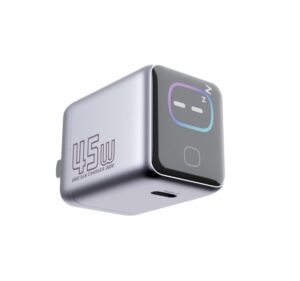
 Can a smart-screen charger’s display be turned off?
It depends on the model. Some displays dim or turn off after a few seconds, some have a button or setting, and some stay on while charging. Check the manual; if the display can't be turned off, placement helps.
-
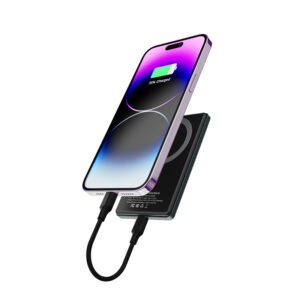 What is pass-through charging on a magnetic power bank?
Pass-through charging lets a power bank charge a phone while the power bank itself is connected to a charger. Not all power banks support it, and it generates more heat. Check the manual before using it.
-
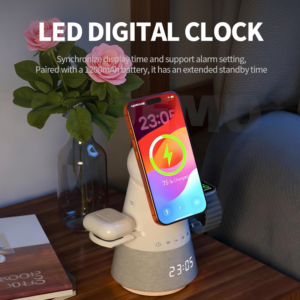 How should a speaker-and-charger device be used at night?
Dim or turn off lights, set volume and alarm features before bed, place it on a hard surface with space around it, and keep the phone centred. Disconnect Bluetooth if you don't want notifications through the speaker.
-
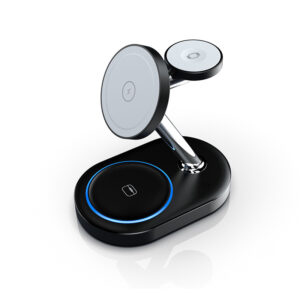 Can an Apple Watch charge on a generic 3-in-1 stand?
Only if the stand has an Apple Watch-compatible charging module. Apple Watch doesn't charge on a standard Qi pad; it uses its own magnetic charging. Check the stand's watch module and which watch models it supports.
-
Should users unplug the cable from the phone first or the charger from the wall?
For a well-made USB-C charger, either order is fine. Pull by the plug, not the cable, don't leave a cable dangling from a live charger where it can be stepped on, and unplug chargers that won't be used for a long time.
-
Can a wireless charger be used under a desk surface?
Only with chargers designed for it. Standard pads and stands are designed for direct contact with the phone, typically within a few millimetres. Desk tops are usually too thick for reliable charging and may trap heat.
-
Can a USB-C charger power a laptop with a nearly empty battery?
Usually yes, if the charger meets the laptop's power needs. With a very low or fully empty battery, some laptops need a few minutes of charging before they start, and lower-wattage chargers may not start them at all.
-
What happens when a wireless charger and a cable are connected to the phone at the same time?
The phone chooses one source, usually the cable, and stops or reduces wireless charging. Nothing is damaged, but the wireless charger may keep warming the phone slightly, so it's better to use one method at a time.
-
What should users expect from fast charging after 80%?
Fast charging is fastest at low battery levels. Above roughly 50–80%, the phone reduces current to protect the battery, so the last part takes noticeably longer. That's normal and the same with any charger.
-
Can a charger be used with a non-original cable?
Yes, if the cable is well made and rated for the power needed. A 3A cable is fine for phones and up to 60W; laptops above 60W need a 5A e-marked cable, and above 100W an EPR (240W) cable. Damaged or unmarked cables are the real risk.
-
Does wireless charging wear out a battery faster than wired charging?
Battery ageing is driven mainly by heat, time at high charge and cycles. Wireless charging tends to run warmer, so good placement and cool conditions matter, but sensible wireless use doesn't by itself ruin a battery.
-
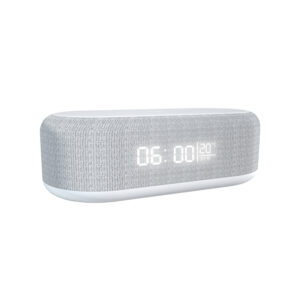 Is it safe to leave a phone on a wireless charger all night?
Yes, for a phone and a certified or well-tested charger: the phone manages charging and stops when full. Heat is the main concern, so use good placement, avoid thick cases and bedding, and let optimised charging work.
-
How do we explain optimised or adaptive charging to customers?
Phones and watches deliberately pause or slow charging, often around 80%, to reduce battery ageing. It looks like a charger fault but is a device feature, and it can be checked or switched off in the device settings.
-
 Is it safe to charge earbuds on a high-wattage charger?
Yes, with a compliant charger. Earbuds draw only what they're designed for, usually at 5V. The charger's maximum rating doesn't push extra power into them.
-
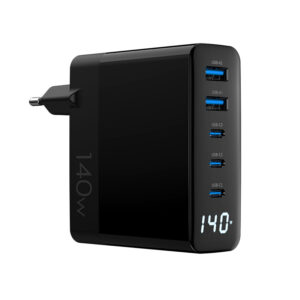
Can two laptops share one 140W multi-port charger?
Usually yes, but each laptop gets its share, not 140W. Check the port table for the two-laptop combination before you promise it.
-
Can users charge a phone in a wallet case on a wireless charger?
Usually not with cards inside. Cards and metal can be damaged or trigger protection, and thick wallet cases increase coil distance. Remove cards or use a case built for wireless charging.
-
Why does a phone show ‘charging slowly’ with a brand-new charger?
It's usually the cable, the port, or the phone's own heat and battery logic, not a fault in the new charger. A few checks tell you which.
-
Is it safe to plug a GaN charger into a power strip or extension lead?
Generally yes, if the strip is in good condition and not overloaded. The charger's own load is modest. The risks are daisy-chaining, cheap strips and covered, crowded sockets.
-
Can we use a 100W laptop charger to charge a phone overnight?
Yes, with a standards-compliant USB-C PD charger. The phone negotiates only what it needs, and its own battery management controls overnight charging.
-
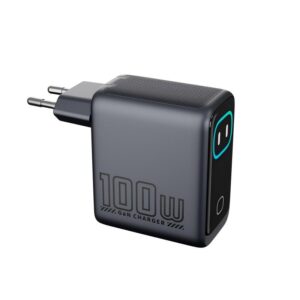 What does the power display on a smart-screen GaN charger actually measure, and how accurate is it?
The display shows the charger's own output reading. It is useful for spotting cable and negotiation problems, but it is not a lab meter, and it does not show battery or wall power.