
Talk · Use · Everyday home & office use
Can we use a 100W laptop charger to charge a phone overnight?
Yes, with a standards-compliant USB-C PD charger. The phone negotiates only what it needs, and its own battery management controls overnight charging.
 Wecent Editorial Team
Updated
3 min read
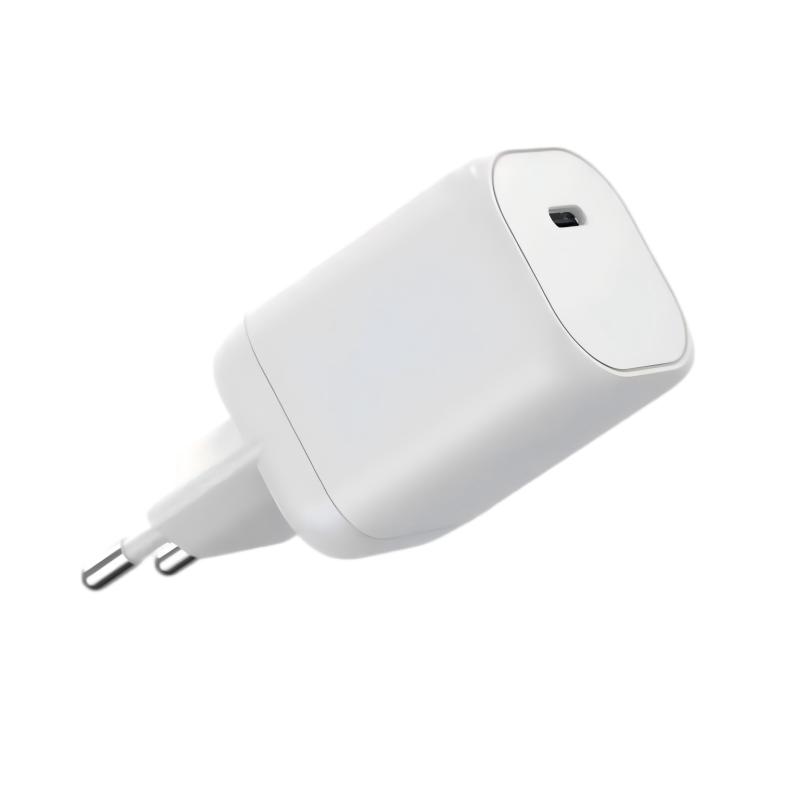
Customers ask whether they can charge their phone overnight on our 100W WET-100W-C laptop charger, so they only need one charger when travelling. Is that safe, or will the high wattage harm the phone battery?
Short answer: Yes. Over USB-C, a phone and a USB PD charger agree on a power profile before anything above the basic 5V level flows. The phone requests what it can accept, and the charger can’t push more. Overnight battery care is handled by the phone’s own software, not by the charger’s maximum rating.
Why the wattage on the label isn’t what the phone gets
“100W” is the maximum the charger can deliver to a device that asks for it. USB Power Delivery starts at 5V. The charger then advertises the voltage and current combinations it supports, the phone picks one within its limits, and the charger supplies it. A phone that can accept around 20–30W takes around 20–30W, whether the charger is rated 30W or 100W.
What protects the battery overnight
Charge control is done inside the phone. Modern phones slow charging as the battery fills, and many have features that hold the charge at a lower level and finish just before you usually wake up. Apple calls this Optimised Battery Charging, and Android makers have their own versions. These work the same on any compliant charger.
Where some caution still makes sense
- Heat: charge on a hard surface, not under a pillow or in bedding. This advice applies to any charger.
- Cable condition: a damaged cable is a bigger risk than the charger rating. Replace frayed or loose cables.
- Uncertified chargers: the negotiation only protects the phone if the charger follows the standard. Use certified products.
- Non-PD devices: very old phones charging over USB-A use simpler methods, but they still only draw what they are designed for.
What to tell customers
A short line works: “Safe for phones, tablets and laptops: each device only takes the power it needs.” Add the usual advice about ventilation and cable condition. Don’t promise that one charger will make every device charge at its top speed, because that also depends on the cable and on the device’s supported profiles.
A point to confirm
If you want to state supported fast-charging standards on the listing, for example PPS for Samsung phones, take them from the WET-100W-C datasheet and confirm with Wecent. The product page does not list the per-port profiles.
Where this answer says confirm with Wecent, the detail is not published on the product page and has to come from the datasheet or the factory. General facts come from the standards bodies, regulators or device makers named in the text.
Three more perspectives
Products discussed in this thread

Related articles & topics
Have a sourcing question about your own programme?
Ask our team More Everyday home & office use questions