
Factory & QC failure analysis: buyer questions
How factory and QC teams find the cause of charger defects, returns and batch problems.
-

 Why do plug blades come out of spec on length or spacing in some lots?
Common causes are tooling wear, a moulding process that moves the blades, inconsistent blade material or bending, and a change of supplier or lot.
-
Why does a charger miss its efficiency target at 10 percent load?
At light load the useful output is small, so fixed losses weigh more.
-
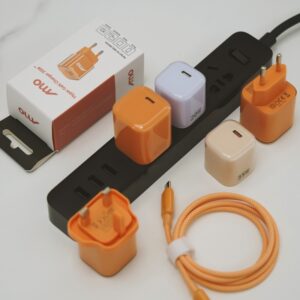 Why does burn-in find early failures from one component lot?
Burn-in runs units under stress to bring out weak parts early.
-
Why do charger labels peel or smudge after the climatic test?
The label material, adhesive, ink or the shell surface was not suited to heat and humidity.
-
Why does output voltage vary between units in the same batch under load?
Some variation is normal.
-
Why does a charger pass EMC in the lab but fail on a second batch?
The lab tested one sample.
-
Why does output ripple exceed the limit on a batch?
Ripple is the small fluctuation left on the DC output.
-
Why does flux residue appear on a charger board, and is it a defect?
Flux is used in soldering to help the solder flow, and some residue is normal, especially with no-clean fluxes.
-
Why does a surge test damage a charger that otherwise works?
A surge test applies a short, high-voltage pulse to the input to simulate lightning or switching events.
-
Why does a charger fail the high-temperature operating test?
A charger fails a high-temperature test when parts get too hot for their rating or the case exceeds its temperature limit.
-
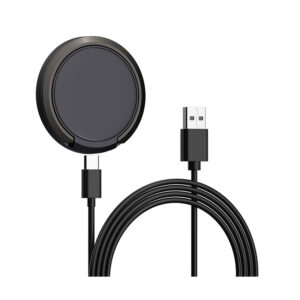 Why do coil-based chargers show different efficiency from lot to lot?
Efficiency in a wireless charger depends on small physical details: the coil winding, the ferrite shield, the gap between coil and surface and the tolerance of capacitors and other parts.
-
Why does a cable’s strain relief crack in flex testing?
Strain relief cracks when the material is too hard or brittle, the shape ends abruptly, the moulding left stress in the part or the test is run cold.
-
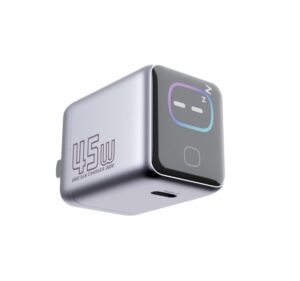
 Why does a firmware version mismatch appear within one carton of smart chargers?
Firmware mix-ups come from programming stations that were not updated, leftover boards from older runs, rework units flashed with a different version or labels that do not match the contents.
-
Why do two lots of the same shell differ in colour?
Colour differences between lots come from the plastic resin batch, the amount and type of colour concentrate, the temperature and time in the mould, the share of reground material and even the lighting used to judge it.
-
Why do printed logos pass the first check and fail an abrasion test?
A logo can look fine when new yet bond weakly to the surface.
-
Why does measured no-load power sit above the target on some samples?
No-load power is the small amount a charger draws with nothing connected.
-
How do wrong plug types end up in a mixed carton, and how is it prevented?
Mixed plug types almost always come from a changeover or packing mistake: a bin of the wrong parts left on the line, a label mismatch or a packer working from memory.
-
Why does a batch of magnetic chargers show uneven pull force?
Pull force varies when the magnets, the way they are fitted or the parts around them vary from unit to unit.
-
Why do cartons arrive crushed even when the master carton passed its drop test?
A drop test checks impact, but crushed cartons usually come from stacking load, humidity and pallet handling over days or weeks, which a drop does not measure.
-
Why do ultrasonic-welded shells leak or separate after thermal cycling?
Ultrasonic welds that open after thermal cycling usually had a marginal bond to begin with.
-
Why does the same charger pass in one lab and fail in another?
Two labs can give different results on the same charger because of differences in setup, cables, equipment, load conditions, interpretation of the standard and sample variation.
-
Why does a retractable cable fail after a few hundred cycles?
A retractable cable flexes at the same points every time it is pulled and wound, so conductor fatigue near the reel or the connector is the most common cause.
-
Why does a plug fail the pull-out or bending test?
A plug that fails the pull-out or bending test almost always has a retention problem: the blade is not held firmly by the moulded plastic, the plastic around the blade is too weak, or the blade itself is out of specification.
-
Why does a drop test crack the shell at the plug-blade seam?
A crack at the blade seam usually points to a weak weld line, thin walls near the blade root or a brittle material, and the fix is in the mould and the process, not in thicker packaging.
-
Why does a batch fail the hi-pot test at final inspection?
Most hi-pot failures come from insulation distances, contamination, damaged insulation or a wrongly set test. Stop the line, isolate the batch and find the pattern before anyone adjusts the limit.
-
 Why is the printed logo rubbing off our chargers?
Logo wear usually comes from the print method, ink adhesion to that plastic, the print position, or harsh cleaning. Collect examples, check where wear happens, and ask the factory about print method, curing and rub tests.
-
What should we do when a returned charger shows no fault?
No-fault-found returns are common. Test under the customer's conditions, ask about their device, cable and power source, record the result, and look for patterns before deciding the charger is fine.
-
Why does a plug head feel loose in the charger?
A little play can be normal in interchangeable designs, but a head that doesn't click, wobbles noticeably or falls out has a worn latch, debris, damage or the wrong head. Stop using a loose head in a wall socket.
-
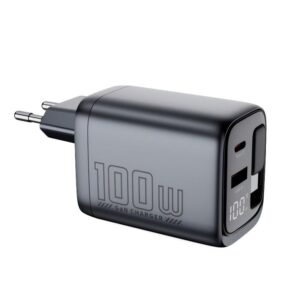 A customer says their GaN charger buzzes or gets hot. Is that a defect, and what evidence do we need for an RMA?
Faint coil noise and a warm case under load are normal for switching chargers. Loud noise, a burning smell, discoloration or a case too hot to hold are not. Capture the conditions before you ship the unit back.