
Talk · Troubleshooting · Factory & QC failure analysis
Why does a drop test crack the shell at the plug-blade seam?
A crack at the blade seam usually points to a weak weld line, thin walls near the blade root or a brittle material, and the fix is in the mould and the process, not in thicker packaging.
 Wecent Editorial Team
Updated
3 min read
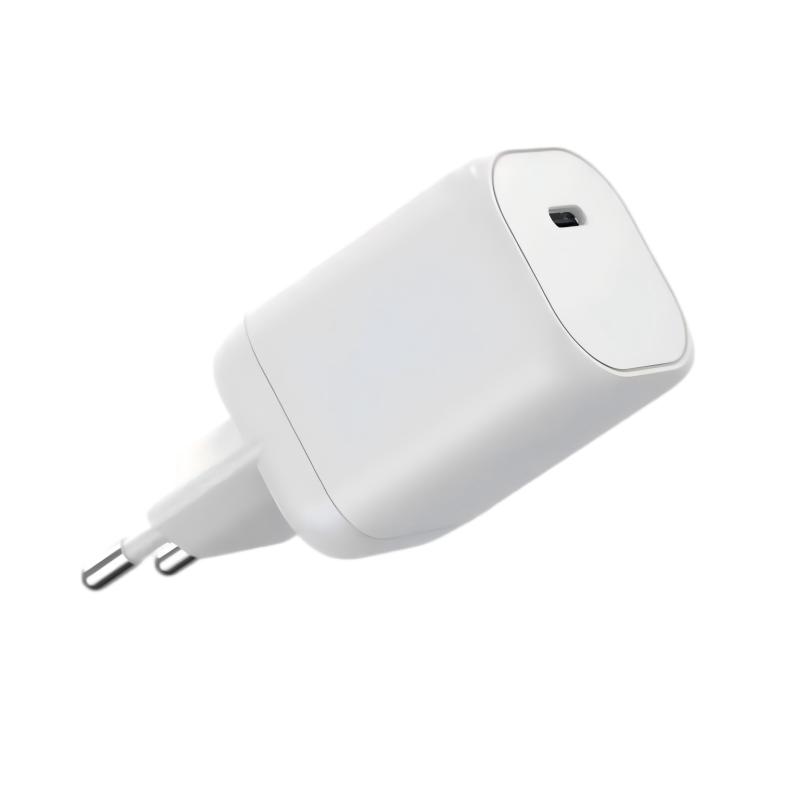
In a drop test, several of our wall chargers cracked at the seam around the plug blades. The factory suggests thicker cartons. What is actually causing the crack and what should we change?
Short answer: A crack at the plug-blade seam usually means the weakest part of the shell met the highest load. The blades act as a lever when the charger lands, and weld lines, thin walls, sharp corners or a brittle plastic can all start a crack there. Ask for a mould and process review, not only thicker packaging.
Why this spot fails
When a wall charger falls plug-first, the blades push into the housing. When it lands on its side, the blades and the heavy internal parts load the seam. The area around the blades is where stress concentrates, and any weakness shows up there first.
Common causes
- Weld line. Where melted plastic flows around the blade insert and meets, the join can be weaker than the surrounding material.
- Thin walls or sharp corners. Little material near the blade root, or a sharp inside corner, concentrates stress.
- Material. A brittle or recycled plastic, a wrong grade, or plastic that was not dried before moulding.
- Welding or snap-fit. A poor ultrasonic weld, too little weld energy, or snap features that are too small for the load.
- Internal parts. Components that are not secured and hit the shell on impact.
- Test conditions. Drops on a harder surface than specified, or on a cold unit, where plastic is more brittle.
How to find the cause
- Look at the crack: does it follow a weld line, start at a corner, or run along the weld seam?
- Check the wall thickness near the blade root on a failed unit, against the drawing.
- Check the material certificate and batch against the approved specification.
- Compare failed and passing units for weld settings, mould cavity and date code.
- Repeat the drop test with a documented height, surface and temperature to confirm it.
What to ask the factory to change
- Move the gate or adjust flow so the weld line sits away from the high-stress area.
- Add a radius at sharp corners and increase thickness near the blade root.
- Review the material grade and the drying process.
- Review weld parameters and the fit of the two halves.
- Secure internal components so they do not hit the shell.
Why packaging is not the answer
Thicker cartons protect the charger in transit, but customers drop chargers out of the box. A shell that cracks at the seam can expose internal parts, which is a safety question and not only a cosmetic one. Treat the crack as a design and process issue.
Check after the change
Repeat the drop test on a sample from the first corrected production lot, not only on engineering samples, and keep the record.
Where this answer says to confirm with Wecent, the detail is not published on the product page and has to come from the datasheet or the factory. General facts come from the regulators, standards bodies or device makers named in the text.
Three more perspectives
Products discussed in this thread

Related articles & topics
Have a sourcing question about your own programme?
Ask our team More Factory & QC failure analysis questions