
Wired GaN chargers: wattage, ports & protocols: buyer questions
Wattage, port layout, USB Power Delivery, PPS and device-compatibility questions for choosing wired GaN chargers.
-

 What do PPS and AVS each do, and does a mixed-device charger need both?
Both are ways for a USB Power Delivery charger to adjust its voltage to what a device asks.
-
What are the pros and cons of a 120W charger between 100W and 140W?
A 120W model fills the gap for laptops that need more than 100W but not the full 140W, and may be smaller and cheaper than the 140W unit.
-
Is a 2C1A or a 1C1A the better volume seller for a phone-focused range?
For most buyers, 2C1A (two USB-C ports and one USB-A) sells well because it charges several devices and covers older accessories, while 1C1A is simpler, cheaper and has fewer power-split problems.
-
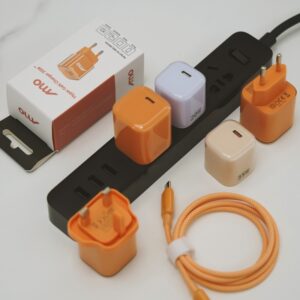 Which wattage suits Chromebooks, Windows ultrabooks and gaming handhelds in one mixed bundle?
There is no single perfect wattage, but a 65W USB-C charger covers many Chromebooks and ultrabooks, and a few gaming handhelds charge acceptably on it.
-
What does a 35W dual-port charger offer compared with a single-port 30W model?
The dual-port model lets customers charge two devices at once, such as a phone and earbuds or a phone and a tablet, but the 35W is shared, so each device gets less when both are connected.
-
When does a single-port 65W charger beat a 2C1A model for an OEM range?
A single-port 65W charger wins when customers only need to power a laptop or one device quickly, when low cost, small size and low heat matter most and when you want a simple, reliable product with fewer returns.
-
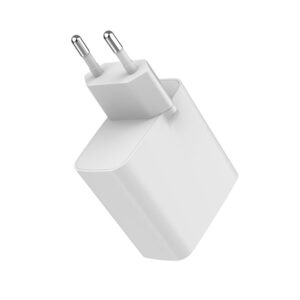 Is 45W the right upper limit for a charger sold mainly for phones and tablets?
For most phones and tablets 45W is plenty, but the newest phones are starting to ask for more, so a range that stops at 45W needs a clear reason and a 65W step above it.
-
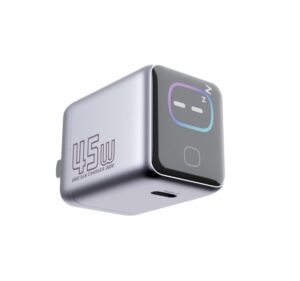
 What is a GaN charger, and is it different from a normal charger?
A GaN charger uses gallium nitride transistors instead of silicon. The result is usually a smaller, cooler charger at the same wattage, not a different kind of plug or port.
-
 What is a USB-C charger, and how is it different from older chargers?
USB-C is the connector. USB Power Delivery is the protocol that sets the power. A good USB-C charger combines both and can serve phones, tablets and laptops.
-
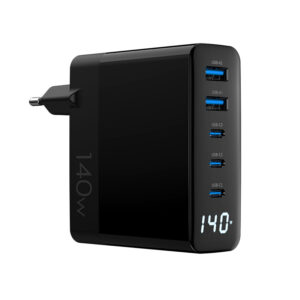 How many ports should a family charging station have?
Count the devices a household charges at the same time, not the total it owns. Most families need four to six ports, with enough USB-C ports and total power for phones, a tablet and earbuds; a laptop needs a higher-power port.
-
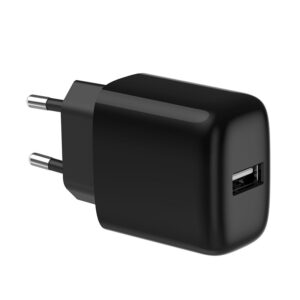 Which charger should we offer for small tablets like iPad mini and Android tablets?
Most current small tablets charge over USB-C Power Delivery, and a 20W to 30W USB-C PD charger covers most of them. Check each tablet maker's recommended charger and whether Samsung models benefit from PPS.
-
Is a 40W charger worth stocking between 35W and 45W models?
Only if it fills a real gap for your customers. Check what the phones and devices you sell actually draw, how the power is split across ports, and whether a third model adds clarity or confusion to your range.
-
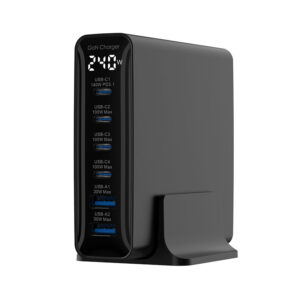 What charger do we need for a USB-C monitor or dock?
Check the monitor's or dock's power input: some have their own mains supply, others take USB-C power and pass it to the laptop. Size the charger for the laptop's needs plus the dock or monitor's own consumption.
-
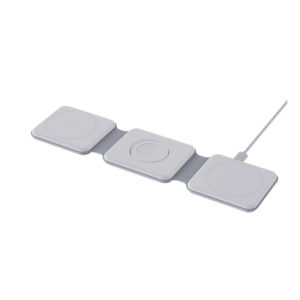 Which models suit a corporate gift for mixed iPhone and Android staff?
Choose products that work with both: a USB-C PD wall charger with PPS, a flat Qi wireless pad, or a 3-in-1 with a standard Qi phone pad. Avoid gifts that depend on Apple Watch or magnetic alignment unless most recipients use iPhones.
-
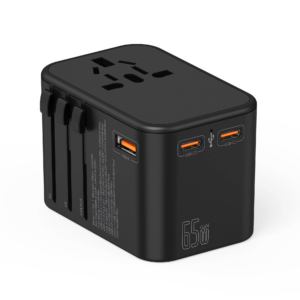 What should a hotel room charger support for international guests?
USB-C PD with enough power for a phone and a tablet or light laptop, at least one USB-A port for older cables, reliable wireless charging if offered, and simple, robust design. Guests bring their own cables, so ports matter more than plugs.
-
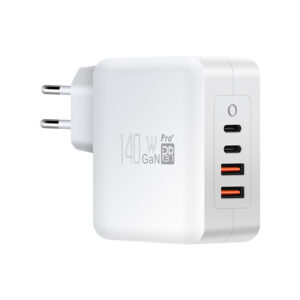 How do we choose between a 140W 2C2A and a 140W 3C2A charger?
Both share 140W. A 3C2A adds a third USB-C port for another modern device but splits power more ways. Choose by how many USB-C devices users connect at once and what the laptop port gets in each combination.
-
 What is the right charger for a drone or camera that charges by USB-C?
Check whether the device or battery charger uses USB PD and at what wattage. Many cameras and drone battery hubs charge from USB-C PD; some need specific voltages. A 65W–100W PD charger covers most, but follow the device maker's specification.
-
Which charger fits a Nintendo Switch or handheld gaming device?
Most handhelds charge over USB-C with USB Power Delivery. For handheld charging, a quality PD charger at or above the original adapter's wattage works for most. Docked TV mode can have stricter needs, so check the console maker's guidance.
-
Which charger wattage fits a 14-inch MacBook Pro and an iPhone together?
Start from the MacBook's own adapter rating and add the iPhone's share. A 100W multi-port charger usually covers a 14-inch MacBook Pro plus an iPhone, but check how the charger splits power when both ports are in use.
-
Does a 100W charger damage a phone that only needs 20W?
No. With USB Power Delivery, the phone requests the power it can take, and the charger supplies only what's negotiated. A 100W charger charges a 20W phone at the phone's own speed.
-
Does GaN matter for a 20W charger?
At 20W, a well-designed silicon charger can already be small and efficient. GaN's advantages of size and heat show more clearly at 45W and above. For 20W, choose on quality, size, protocols and price rather than the GaN label.
-
Which charger works for a Dell or Lenovo USB-C laptop?
Most current Dell and Lenovo USB-C laptops charge from a USB PD charger at 20V. Match the wattage to the laptop's original adapter, use a 5A cable above 60W, and check the maker's notes for models with special requirements.
-
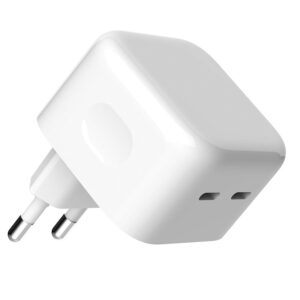 Which charger should we recommend for Google Pixel phones?
Pixel phones charge over USB-C with USB Power Delivery. Recent models also use PPS for their fastest modes. Match the claim to the specific model's published charging spec.
-
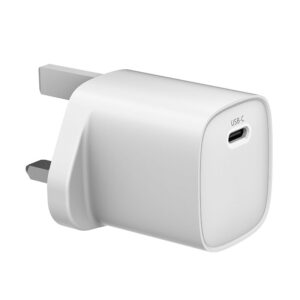 What is the real difference between the USB-A and USB-C ports on the same charger?
USB-C carries USB Power Delivery for phones, tablets and laptops. USB-A uses older, lower-power methods and suits accessories and older cables.
-
Is a 20W charger fast enough for most iPhone users?
For many iPhone models, 20W is the classic fast-charging level. Apple now lists higher adapters for the fastest charging on recent models, so the answer depends on which iPhones your customers use.
-
Is a 240W USB-C charger useful for anything today?
240W is the top of USB PD 3.1, but few devices draw it. Its value today is mostly multi-device desks, high-power laptops and headroom.
-
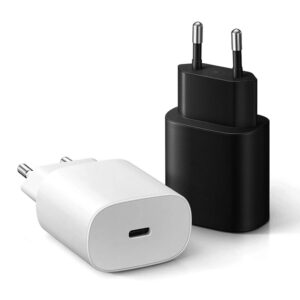 Do our chargers need PPS to support Samsung Super Fast Charging?
Yes. Samsung's Super Fast Charging runs on USB PD with the Programmable Power Supply (PPS) feature. Without PPS, a Galaxy phone falls back to slower charging.
-
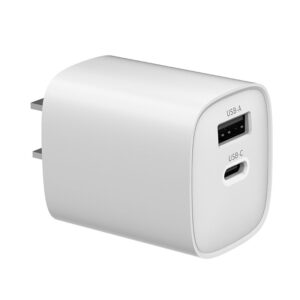 Is a 33W charger enough for an iPad Pro and a phone at the same time?
A 33W charger can charge both, but not both at full speed. What matters is how the charger splits power when two ports are in use.
-
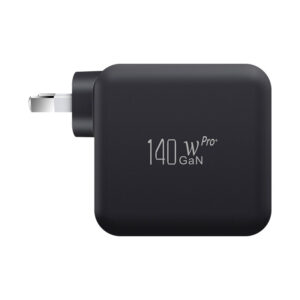 Will a 140W GaN charger fast-charge a 16-inch MacBook Pro over any USB-C cable?
Not over any cable. Above 60W the cable is part of the power path, and 140W needs the right cable and the right charger profile.
-
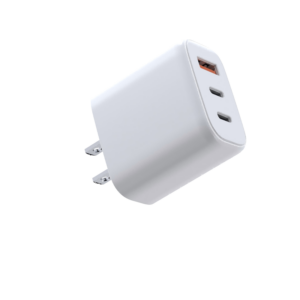 Why does a multi-port GaN charger lower the power when we plug in a second device?
The rated wattage is a total. When a second device connects, the charger shares it between ports, and the split follows the model's power-allocation table.