
Talk · Selection · Wired GaN chargers: wattage, ports & protocols
Which charger should we recommend for Google Pixel phones?
Pixel phones charge over USB-C with USB Power Delivery. Recent models also use PPS for their fastest modes. Match the claim to the specific model's published charging spec.
 Wecent Editorial Team
Updated
3 min read
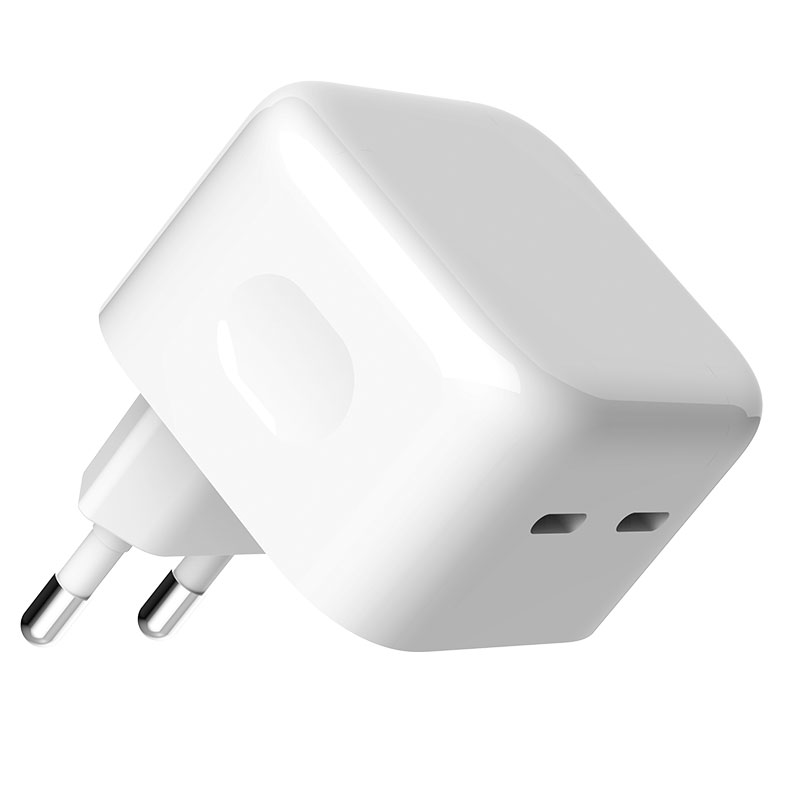
Our retail customer wants a charger recommendation for Pixel owners. Would our 35W GaN/PD charger or a 65W model be the better match?
Short answer: Pixel phones charge over USB-C using USB Power Delivery, so any compliant USB-C PD charger will charge them. Recent Pixel models reach their fastest wired speeds with chargers that support PPS. Check the wattage Google publishes for the specific model. A 35W charger with PPS often covers a single Pixel; a 65W model makes sense if the customer also charges a laptop.
How Pixel charging works
Google designs Pixel phones around USB-C and USB Power Delivery. Google’s own chargers use USB PD, and recent Pixel models use PPS for their top charging speeds. Each Pixel model’s spec page lists its wired charging rate. Use that number, not a general assumption.
What to check in the charger
- USB PD on the USB-C port. Essential.
- PPS support and its range. Needed for the fastest modes on PPS-capable Pixels. Confirm with Wecent whether the 35W model supports PPS and which range; the product page doesn’t list it.
- Wattage. At or above the phone’s published rate for top speed. Above that rate, more watts don’t make the phone faster.
- Cable. USB-C to USB-C. A 3A cable is enough for phone speeds.
Choosing between 35W and 65W
- 35W: compact, covers one Pixel at its usual fast rate if PPS is supported.
- 65W: same phone speed, plus a laptop or tablet, and a second device on the other port.
Wireless charging
Pixels with wireless charging use Qi. Some Pixel models have their own wireless fast-charging methods with Google’s charger. On standard Qi pads, they charge at standard Qi rates. Check Google’s specs for the model before making wireless speed claims.
Multi-device households
Families often have a Pixel next to an iPhone or Samsung phone. A USB-C PD charger with PPS covers all three. Mentioning that on the listing widens its appeal without making model-specific claims.
Wording the claim
“Compatible with Google Pixel fast charging (USB PD/PPS)” is accurate if the charger supports PPS. Use Google’s trademarks only as allowed, and avoid “Made for Pixel” unless you are in Google’s programme.
What we can’t confirm
Google changes charging specs between generations. We don’t list per-model rates here. Check the live Google Store spec page for each model you name.
Where this answer says confirm with Wecent, the detail is not published on the product page and has to come from the datasheet or the factory. General facts come from the standards bodies, regulators or device makers named in the text.
Three more perspectives
Products discussed in this thread

Related articles & topics
Have a sourcing question about your own programme?
Ask our team More Wired GaN chargers: wattage, ports & protocols questions