
Talk · Selection · Wired GaN chargers: wattage, ports & protocols
How many ports should a family charging station have?
Count the devices a household charges at the same time, not the total it owns. Most families need four to six ports, with enough USB-C ports and total power for phones, a tablet and earbuds; a laptop needs a higher-power port.
 Wecent Editorial Team
Updated
2 min read
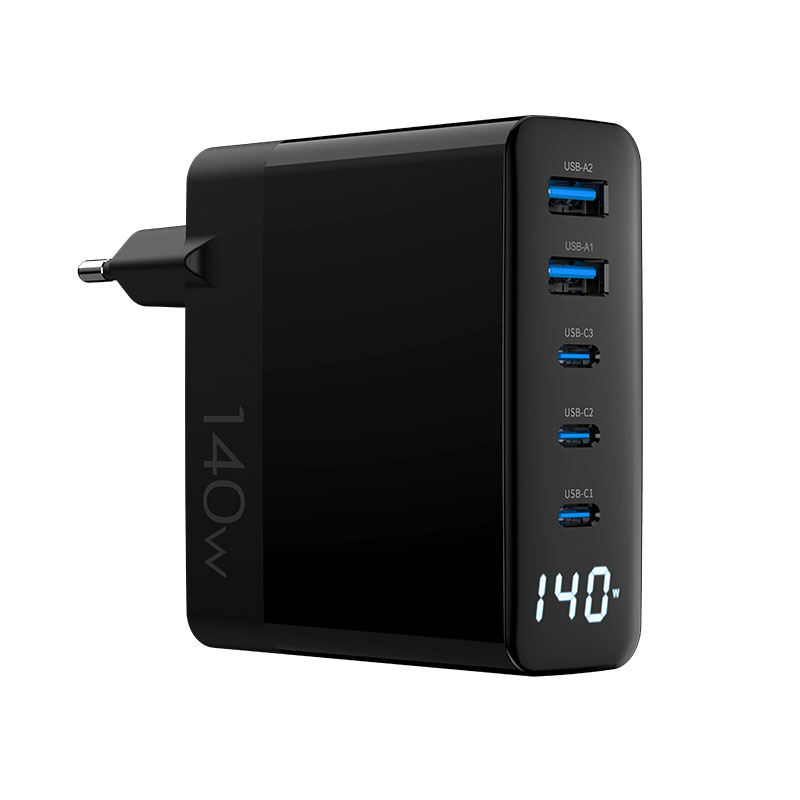
We want to sell a charging station for families. How many ports should it have and what mix?
Short answer: Base it on how many devices charge at once, typically in the evening. For a family of four, that’s often four phones plus a tablet or earbuds, so four to six ports cover most homes. Favour USB-C ports for current phones and tablets, keep one or two USB-A for older devices, and check the per-port output when all ports are busy. If laptops will be charged too, at least one high-power USB-C port is needed.
Count simultaneous devices
Households own many devices, but not all charge at the same time. The useful figure is how many are connected together, usually in the evening or overnight. A family of four might charge four phones, one tablet and a pair of earbuds. Watches and earbuds often charge on their own wireless pads or cables, which may or may not share the station.
USB-C and USB-A mix
Most current phones and tablets use USB-C, so the majority of ports should be USB-C. One or two USB-A ports remain handy for older devices, toys, lamps and earbud cases that came with USB-A cables. Too many USB-A ports date the product quickly.
Total power and sharing
A station with six ports and modest total power may give each device only a little when all are busy. Look at the specification for what each port provides when every port is in use. Overnight charging is forgiving, but families also use stations for quick top-ups before school or work, where a weak share disappoints.
Laptops
If the station is meant to charge a laptop, it needs at least one USB-C port with enough power for that laptop, and the total must still cover the other devices. Otherwise, market it clearly as a phone and tablet station.
Wireless pads
A built-in wireless pad is convenient for one phone, but it adds heat and draws from the same total. It’s a good feature if the total power is generous.
Placement and heat
Stations sit on kitchen counters and hall tables with several devices around them. Recommend a ventilated spot away from sinks, and devices laid side by side rather than stacked.
Confirm with Wecent the per-port output when all ports are busy for each multi-port model.
Where this answer says confirm with Wecent, the detail is not published on the product page and has to come from the datasheet or the factory. General facts come from the standards bodies, regulators or device makers named in the text.
Three more perspectives
Products discussed in this thread

Related articles & topics
Have a sourcing question about your own programme?
Ask our team More Wired GaN chargers: wattage, ports & protocols questions