
Two brands brief the same GaN charger manufacturer on the same week. The first asks for a 65W two-port charger with their logo and a retail box. The second asks for “a premium GaN line” and a launch date. Six weeks later the first has an approved golden sample and a production slot; the second is still reviewing enclosure concepts, because the brief never settled the platform, the ports, the markets or the quantity. The difference is not the supplier; it is the sequence in which the decisions were made.
GaN charger manufacturer for brands: the five decisions that precede the price
Five decisions turn a brief into a programme.
The platform, the wattage and port layout, the target markets and plug strategy, the branding and packaging level, and the opening quantity. A manufacturer can quote a number without them, but the number will be an assumption, and every later change moves the tooling, the certification scope or the schedule rather than only the cost.
For a brand, the ordering matters because the first two decisions determine the engineering work, the third determines the compliance work, and the last two determine the commercial commitment. Suppliers are usually comfortable with the last three and least comfortable with the first two, which is why a brief that opens with packaging and price tends to produce a quotation that cannot survive contact with the engineering.
Decision 1: which platform carries the product
Ask which certified platform the product will be built on before discussing anything else.
A platform fixes the topology, the controller family, the port layouts already characterised and the markets already covered by reports. Where the brand’s requirement fits inside one, the programme is a re-badge with a documentation update; where it does not, the programme becomes a development project with tooling, sample loops and a new test submission. The same physical product can therefore be a six-week order or a two-quarter project depending on this single answer.
| Decision | What it fixes | Commercial consequence |
|---|---|---|
| Platform | Topology, controller, ports, reports | Tooling, MOQ, schedule |
| Wattage and ports | Thermal load and power-sharing rule | Enclosure volume and firmware |
| Markets and plugs | Certification scope and plug kit | Documentation and SKU count |
| Branding level | Finish, label, packaging | Artwork, print plates, approval gates |
| Opening quantity | Amortisation of fixed lines | Unit price and repeat-order terms |
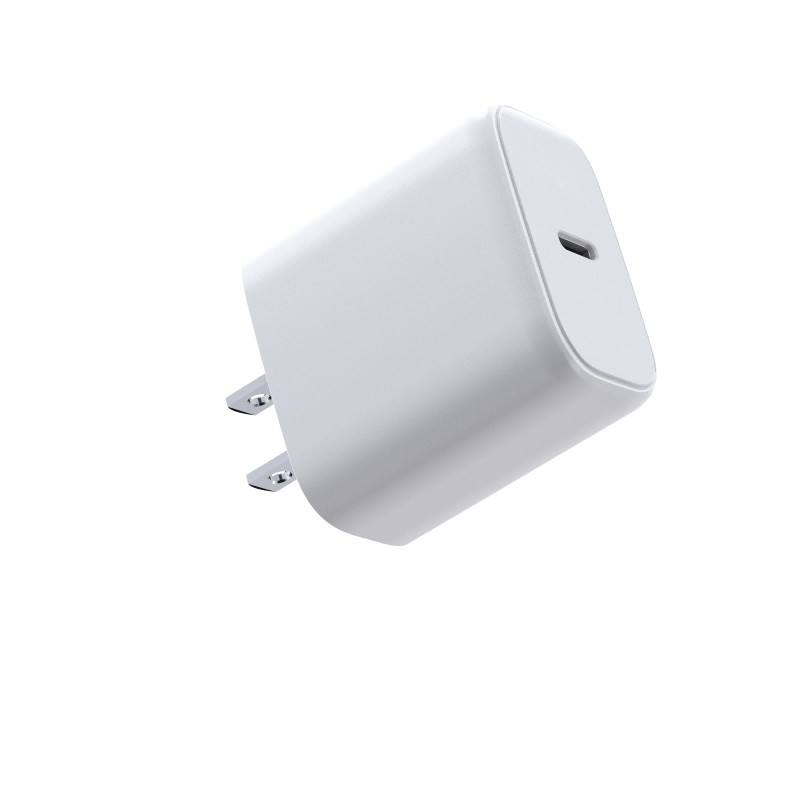
Decision 2: wattage tiers and port layout
Ports consume the volume that the thermal path also needs, so the layout is an engineering decision with a commercial consequence.
A 65W single-port design and a 65W two-port design are different products: the second carries more switching devices, a more complex sharing rule in firmware and less surface area per watt to remove heat. For a brand, the practical rule is to specify the port layout the channel asks for and to resist adding ports the customer has not requested, because each addition raises the thermal load and the firmware work without adding a buyer.
Decision 3: markets and plug strategy
The market list decides both the certification scope and the number of SKUs.
Fixed plugs multiply the finished-goods count by the number of markets; a plug kit assembled to the destination keeps one body and differentiates at packing, provided the packing line verifies the allocation. For a brand, the choice should follow the channel: a single-market listing rarely benefits from an interchangeable system, while a distributor serving several countries usually does. Wecent Group prepares certification groundwork for CE, FCC, RoHS, PSE and KC and confirms the current status per model.
Decision 4: branding level and packaging route
Branding is the cheapest differentiator and the easiest place to create operational complexity.
A logo and a label cost almost nothing; a custom colour and finish require a physical sample because texture changes how the colour reads; a custom retail box adds print plates, an insert and language versions. Each level should be approved against a physical object rather than a screen, and the packaging route should be planned against the full market list at the start, because a reprint before the order is cheap and a reprint after the cartons are printed is not.
Decision 5: opening quantity and the repeat-order frame
On a platform model, a branded run can open at 200 pieces per model with logo, colour, label and packaging applied.
The opening quantity decides how the fixed cost lines are amortised, and it also sets the frame for the repeat order. Ask what the second order will be priced against – the same platform and the approved sample – and ask which documents will be retained. A brand that fixes the platform and the sample at the start gets a repeat order rather than a new negotiation, which is usually worth more than the last few percent of the first price.
What the brand should own and what the factory should own
The division of responsibility is what makes a programme run on time.
The brand owns the platform choice, the market list, the specification, the artwork approval and the launch date. The factory owns the platform recommendation, the worst-case build for testing, the test submission and the process validation. Where those responsibilities are shared without a tie-breaker, the programme waits. A single project owner on the factory side, from quotation through reorders, removes most of the daily friction.

FAQ
What is the fastest route to a branded GaN charger?
A re-badge of a certified platform: logo, colour, label and packaging applied to an existing design. It removes the tooling calendar and most of the certification calendar at once. A re-badge of a certified platform with the logo, colour, label and packaging applied removes the tooling calendar and most of the certification calendar at once, which is why it is the fastest route.
Can we change the port layout after the first order?
Within tested limits, usually with a documentation update and a sample verification. A change that moves the internal layout or the thermal behaviour may require a review. Within tested limits it is usually a documentation update and a sample verification, while a change that moves the internal layout or the thermal behaviour may require a review rather than a note.
How many markets can one platform serve?
As many as its reports and plug kits cover. Ask which markets the platform is prepared for and what a new market would require before adding it to the label. Ask which markets the platform is prepared for and what a new market would require before adding it to the label, because the reports and the plug kits set the limit of coverage.
What should we approve physically?
The branded sample, the label content and the packaging proof. Colour, finish and print do not survive a screen, so each should be approved on a physical object. Approve the branded sample, the label content and the packaging proof on physical objects, because colour, finish and print do not survive a screen or a PDF. Approve each of the three on the physical object.
What protects the repeat order?
The platform, the approved sample and the artwork revision, referenced in the purchase order. Where a component changes, the change-notification process should require written approval. Reference the platform, the approved sample and the artwork revision in the purchase order, and require written approval through the change-notification process when a component changes rather than afterwards. Name the notice period in the terms.
Next step
Send the platform you are considering, the port layout, the market list and the opening quantity to Wecent Group through the contact page. The reply states the platform options, the certification position, the MOQ and the sample timing. Related reading: OEM/ODM manufacturing, GaN charger applications and quality control. External references: USB-IF documentation, Qualcomm Quick Charge, IEC standards, EU CE marking, FCC equipment authorisation and EU energy-efficient products.
{“@context”:”https://schema.org”,”@type”:”FAQPage”,”mainEntity”:[{“@type”:”Question”,”name”:”What is the fastest route to a branded GaN charger?”,”acceptedAnswer”:{“@type”:”Answer”,”text”:”A re-badge of a certified platform: logo, colour, label and packaging applied to an existing design. It removes the tooling calendar and most of the certification calendar at once.”}},{“@type”:”Question”,”name”:”Can we change the port layout after the first order?”,”acceptedAnswer”:{“@type”:”Answer”,”text”:”Within tested limits, usually with a documentation update and a sample verification. A change that moves the internal layout or the thermal behaviour may require a review.”}},{“@type”:”Question”,”name”:”How many markets can one platform serve?”,”acceptedAnswer”:{“@type”:”Answer”,”text”:”As many as its reports and plug kits cover. Ask which markets the platform is prepared for and what a new market would require before adding it to the label.”}},{“@type”:”Question”,”name”:”What should we approve physically?”,”acceptedAnswer”:{“@type”:”Answer”,”text”:”The branded sample, the label content and the packaging proof. Colour, finish and print do not survive a screen, so each should be approved on a physical object.”}},{“@type”:”Question”,”name”:”What protects the repeat order?”,”acceptedAnswer”:{“@type”:”Answer”,”text”:”The platform, the approved sample and the artwork revision, referenced in the purchase order. Where a component changes, the change-notification process should require written approval.”}}]}