
Two Qi2 programmes shipped in the same quarter. One had the certification scope, the array tolerance and the device list settled before tooling; the other settled them in the week the packaging went to print, and reprinted the cartons twice. The technology was identical; the preparation was not.
Qi2 technology: five items to verify before launch
The implemented profile, the certification scope, the magnet array tolerance, the device and case list, and the packaging wording.
The five are ordered by when they can still be changed cheaply. The profile and the scope belong before the tooling; the array tolerance belongs before the fixture is made; the device list belongs before the packaging; and the wording is the last item that can be corrected without a reprint.
Verification is documentary and measured: each item has a document or a measurement behind it, and each can be requested from the factory before any of them becomes expensive.
Check 1: the implemented profile
The magnetic profile is an implementation choice, not a label.
Ask which profile the platform implements and what power behaviour it supports, then compare that with the retail claim. A product can carry the name of a specification and still implement a lower profile, which is why the claim should follow the implemented behaviour rather than the specification family.
Check 2: the certification scope
Revision, profile and holder.
Read the report for the product revision covered, the profile tested and the company named as the holder. Where the brand appears on the product, the file has to be consistent with that arrangement, and where the configuration differs from the tested one, the difference is assessed. The scope is the document a marketplace or a distributor will ask for.
Check 3: the magnet array tolerance
Concentricity is a production parameter, not a drawing note.
Ask how the array is positioned relative to the coil, which fixture sets both against the same datum, and how concentricity is measured on finished units. A prototype can be perfectly concentric by hand; the production question is what the process holds across a shift. The measurement should exist for finished units rather than only for samples.
Check 4: the device and case list
The delivered power depends on the receiving side.
The list should name the device families supported, the case thickness limit, and the position at which the delivered figure was measured. Without those three items the claim describes the best case, and the first complaint will come from a customer whose case is thicker or whose phone sits slightly differently.
Check 5: the packaging wording
The wording is the last cheap correction.
Before the cartons are printed, the claim can be aligned with the evidence: the profile, the delivered figure with its conditions, and the alignment method described honestly. After printing, a correction is a reprint, which is why this item sits at the end of the list and should be confirmed by both sides.
| Item | What to verify | Evidence | Cost if late |
|---|---|---|---|
| Profile | The implemented behaviour | The report and the characterisation data | A claim that exceeds the product |
| Certification scope | Revision, profile and holder | The report with its scope | A blocked listing |
| Array tolerance | Concentricity on finished units | The fixture record and measurements | Unit-to-unit variation |
| Device and case list | Supported devices and case limit | The measured delivered figure | Support queries and returns |
| Packaging wording | Claim aligned with evidence | The approved artwork revision | A carton reprint |
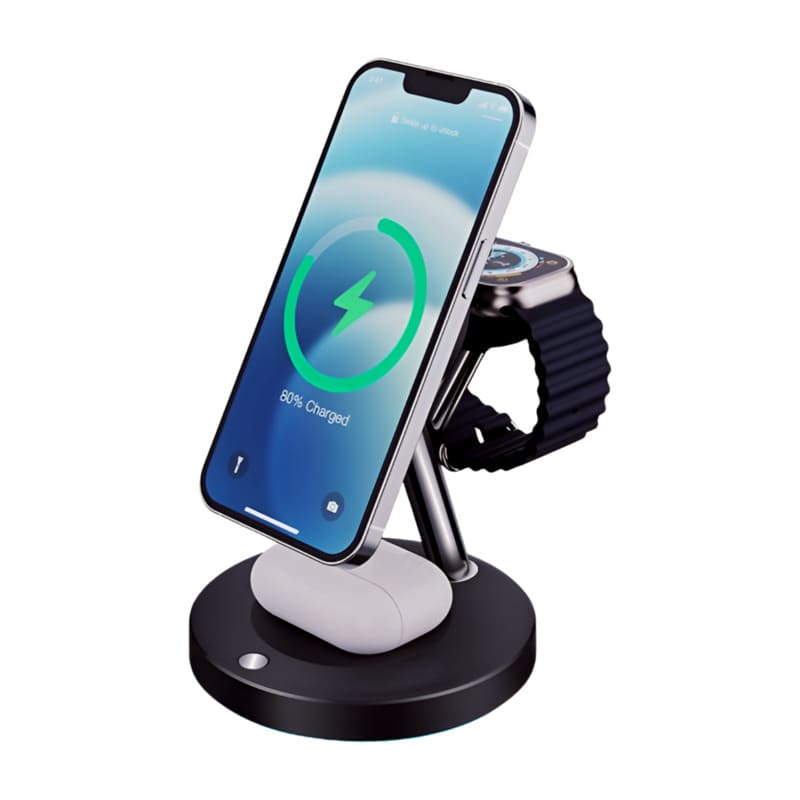
What the technology changes in the product
Three design consequences, each measurable.
The magnet array adds volume and changes the thermal path, because the losses now sit inside a smaller space; the shielding behind the array shapes the field and protects the electronics; and the position of the phone is fixed, which makes the delivered power repeatable and makes the alignment measurement meaningful. The three together explain why a magnetic design is a mechanical project rather than a firmware update.
How the five items are checked in production
Two per unit, three per build.
Delivered power at the alignment position and the functional behaviour are verified on every unit; the array concentricity, the thermal result and the certification revision are confirmed per build and against the file. The plan states which is which, with the limits and the frequency, so the evidence survives the first production run.

Where launches go wrong
Three patterns, and all three are visible before printing.
A packaging claim written from the specification family rather than from the implemented profile; a case limit described as compatible without a measurement; and a certification file naming a revision that has since changed. Each is a documentation gap, and each is cheapest to close before the artwork is approved.
FAQ
Does a Qi2 product work with every magnetic phone?
It works with devices that support the profile it implements. Where the device or its case carries a matching magnet ring the position is held; otherwise the device can still charge where it supports the profile, but the position depends on placement. It works with devices that support the profile it implements, and where the device or its case carries a matching ring the position is held.
How is the array tolerance controlled?
By a fixture that sets the coil and the array against the same datum, and by measuring concentricity on finished units rather than on prototypes. The production measurement is what makes the delivered figure repeatable. The fixture sets the coil and the array against the same datum, and the measurement is taken on finished units rather than on prototypes of the product.
What should the packaging state about power?
The delivered figure, the device and case condition, and the alignment method. That wording follows the certification scope and the measured data, which is why it is confirmed before the cartons are printed. State the delivered figure, the device and case condition and the alignment method, because that wording follows the certification scope and the measured data rather than the marketing description.
Can the file be extended to a new enclosure?
Where the change is assessed against the tested configuration, the scope is extended. A different coil arrangement, a different array or a housing that changes the thermal result is a new configuration and is evaluated as one. Where the change is assessed against the tested configuration the scope is extended, while a different coil arrangement or a housing that moves the thermal result is a new configuration.
Next step
Send the device list, the form factor and the target markets to Wecent Group through the contact page. The reply provides the five items: the implemented profile, the certification scope, the array tolerance measurement, the device and case list and the wording that matches the evidence. Related reading: wireless charger applications, OEM and ODM charger manufacturing and charger quality control. External references: WPC Qi standard, Wireless Power Consortium, WPC knowledge base, IEC standards, UL standards and certification and TUV testing services.
{“@context”:”https://schema.org”,”@type”:”FAQPage”,”mainEntity”:[{“@type”:”Question”,”name”:”Does a Qi2 product work with every magnetic phone?”,”acceptedAnswer”:{“@type”:”Answer”,”text”:”It works with devices that support the profile it implements. Where the device or its case carries a matching magnet ring the position is held; otherwise the device can still charge where it supports the profile, but the position depends on placement.”}},{“@type”:”Question”,”name”:”How is the array tolerance controlled?”,”acceptedAnswer”:{“@type”:”Answer”,”text”:”By a fixture that sets the coil and the array against the same datum, and by measuring concentricity on finished units rather than on prototypes. The production measurement is what makes the delivered figure repeatable.”}},{“@type”:”Question”,”name”:”What should the packaging state about power?”,”acceptedAnswer”:{“@type”:”Answer”,”text”:”The delivered figure, the device and case condition, and the alignment method. That wording follows the certification scope and the measured data, which is why it is confirmed before the cartons are printed.”}},{“@type”:”Question”,”name”:”Can the file be extended to a new enclosure?”,”acceptedAnswer”:{“@type”:”Answer”,”text”:”Where the change is assessed against the tested configuration, the scope is extended. A different coil arrangement, a different array or a housing that changes the thermal result is a new configuration and is evaluated as one.”}}]}