
A brand designed a magnetic charger, printed the platform name on the box and discovered that the name belongs to someone else. The product worked; the packaging did not. The two decisions — the engineering and the branding — are separate, and only one of them is technical.
MagSafe technology: three routes for a brand
Build to the platform’s own accessory rules, build to the open magnetic profile and describe it neutrally, or build a non-magnetic product that charges the same devices.
The three routes differ in the module they use, the alignment behaviour they deliver, the certification they carry and the wording they may print. Choosing between them is a commercial decision with a technical consequence rather than the other way round.
The engineering content is similar across the first two routes: a magnet ring concentric with the coil, shielding behind it, and a thermal path for the losses the array adds. What differs is the permission attached to the name.
Route 1: build to the platform’s accessory rules
Permission, testing and branding discipline.
A product that carries the platform name works to that platform’s requirements for the magnetic interface and the accessory behaviour, and it accepts the branding rules that come with the name. The advantage is the customer’s recognition; the cost is the process, the possible licence terms and the constraint on how the product is described.
Route 2: build to the open magnetic profile
The same alignment behaviour, described in specification terms.
A charger built to the published magnetic profile delivers the alignment behaviour the devices expect and can be certified against the specification, which is what allows it to be sold across device brands rather than for one platform. The packaging describes the profile and the supported devices instead of borrowing a name, which is a difference in wording rather than in function.
Route 3: no magnetic alignment
Charging without holding the position.
A non-magnetic product still charges devices that support the power profile, and the customer has to place them accurately. It is cheaper, needs no array and no shielding change, and it can be sold to every device that supports the profile. The exposure is the experience: misalignment reduces the delivered power, and the customer attributes it to the product.
| Route | Alignment behaviour | Branding | Certification | Fits |
|---|---|---|---|---|
| Platform rules | Fixed position | Governed by the platform | Platform requirements | A channel that expects the name |
| Open profile | Fixed position | Specification described | Against the specification | A multi-brand device list |
| No alignment | User placement | Free | Power profile only | A price-led product |
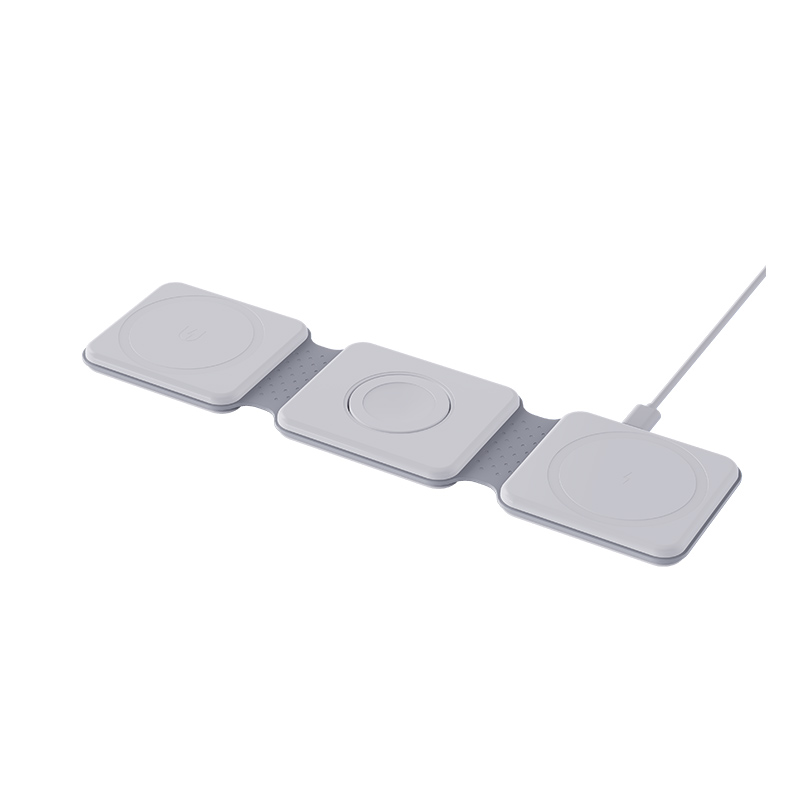
What the array changes in the product
Four items move together when magnetic alignment is added.
The magnet ring and its concentricity with the coil, which is a production tolerance; the shielding behind the array, which protects the electronics and shapes the field; the thermal path, because the array occupies volume and the losses change; and the mechanical revision, because the phone is now held against a defined position. A programme that adds magnets to an existing platform changes all four.
What the customer experiences
Three differences, and only one of them is about power.
The position is repeatable, so the delivered power is consistent rather than dependent on placement; the phone is held, which matters in a car or at a bedside table; and the accessory ecosystem, where a magnetic device can attach to magnetic mounts and accessories. A product that provides the first two without the third still delivers most of the experience.

Choosing the route
Three questions, and the third is often decisive.
Which devices have to be served, because a single-platform list and a multi-brand list point in different directions; whether the channel expects the platform name on the box; and whether the programme has the volume to justify a purpose-designed array rather than a platform that already exists. The answers usually make one route obviously cheaper.
What is verified on a magnetic platform
Three measurements describe a magnetic product: the delivered power at the aligned position, the tolerance the alignment allows before the power falls, and the temperature rise at the coil under sustained load.
The first is the specification item, the second is what the user experiences when the device is placed by hand, and the third decides the derating the product can claim.
Concentricity between the ring and the coil is the production parameter behind the first two. It is measured on finished units because it is set by the assembly fixture and the part tolerances rather than by the design alone.
A programme that names those three can compare two magnetic platforms on behaviour rather than on the description of the alignment.
FAQ
Can a brand use the platform name on its own product?
The name is owned and governed, so using it depends on the platform’s rules and any licence arrangement. A product can deliver the same magnetic behaviour while being described in specification terms, which avoids the question entirely. A product can deliver the same magnetic behaviour while being described in specification terms, which avoids the question of the owned name entirely.
Does a magnetic product need a magnetic case?
The receiving device or its case needs a matching ring for the position to be held. Without it the device can still charge where it supports the profile, but the position is not fixed and the delivered power depends on placement. Without the ring the device still charges where it supports the profile, but the position is not fixed and the delivered power depends on placement.
What changes in production?
Concentricity between the ring and the coil becomes a measured parameter, and the assembly fixture has to set both against the same datum. The delivered power at the alignment position is then verified on finished units. The delivered power at the alignment position is then verified on finished units, because the fixture and the part tolerances set it. It is measured on finished units rather than on the design.
Is the magnetic route worth the cost?
Where the use case involves one-handed placement, a car or a bedside table, the repeatable position is the product. Where the product sits on a desk and the user sees where it lands, the cheaper route usually delivers the same experience. Where the product sits on a desk and the user sees where it lands, the cheaper route usually delivers the same experience.
Next step
Send the device list, the channel and the target markets to Wecent Group through the contact page. The reply states which route fits the requirement, the alignment behaviour, the certification scope and the wording the packaging can carry. Related reading: wireless charger applications, OEM and ODM charger manufacturing and charger quality control. External references: Wireless Power Consortium, WPC Qi standard, WPC knowledge base, IEC standards, UL standards and certification and TUV testing services.
{“@context”:”https://schema.org”,”@type”:”FAQPage”,”mainEntity”:[{“@type”:”Question”,”name”:”Can a brand use the platform name on its own product?”,”acceptedAnswer”:{“@type”:”Answer”,”text”:”The name is owned and governed, so using it depends on the platform’s rules and any licence arrangement. A product can deliver the same magnetic behaviour while being described in specification terms, which avoids the question entirely.”}},{“@type”:”Question”,”name”:”Does a magnetic product need a magnetic case?”,”acceptedAnswer”:{“@type”:”Answer”,”text”:”The receiving device or its case needs a matching ring for the position to be held. Without it the device can still charge where it supports the profile, but the position is not fixed and the delivered power depends on placement.”}},{“@type”:”Question”,”name”:”What changes in production?”,”acceptedAnswer”:{“@type”:”Answer”,”text”:”Concentricity between the ring and the coil becomes a measured parameter, and the assembly fixture has to set both against the same datum. The delivered power at the alignment position is then verified on finished units.”}},{“@type”:”Question”,”name”:”Is the magnetic route worth the cost?”,”acceptedAnswer”:{“@type”:”Answer”,”text”:”Where the use case involves one-handed placement, a car or a bedside table, the repeatable position is the product. Where the product sits on a desk and the user sees where it lands, the cheaper route usually delivers the same experience.”}}]}