
Talk · Selection · Wired GaN chargers: wattage, ports & protocols
Does a 100W charger damage a phone that only needs 20W?
No. With USB Power Delivery, the phone requests the power it can take, and the charger supplies only what's negotiated. A 100W charger charges a 20W phone at the phone's own speed.
 Wecent Editorial Team
Updated
3 min read
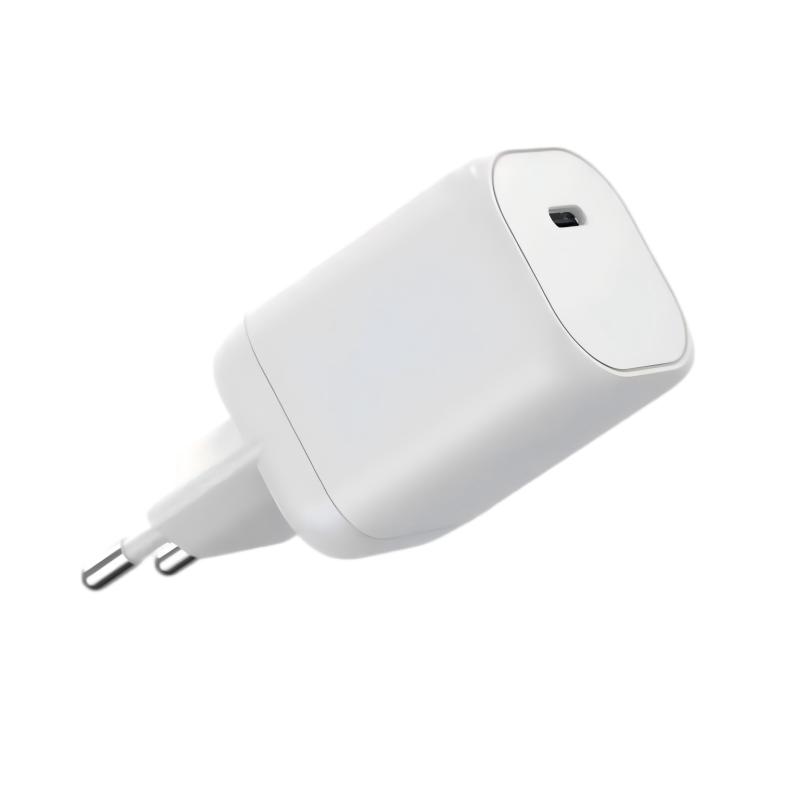
Customers ask whether our 100W laptop charger is safe for their phone, which normally uses a 20W charger. What’s the answer?
Short answer: Yes, it’s safe. USB-C chargers using Power Delivery start at 5V and only change voltage or current after the phone requests it. The phone asks for what it supports, and the charger supplies up to that. A 100W charger simply has spare capacity the phone doesn’t use. Charging speed will be roughly the same as on a good 20W charger, sometimes a little faster if the phone supports more.
How power negotiation works
USB PD chargers advertise a set of profiles, for example 5V, 9V, 15V and 20V at various currents. The phone chooses a profile it supports. Until then, the charger supplies 5V. The charger never forces 20V or high current on a device that hasn’t requested it.
Wattage is a maximum
A charger’s wattage is the maximum it can supply. The device decides how much it draws, up to its own limit. A phone that charges at up to 20–27W draws that, no matter whether the charger can supply 30W or 100W.
What users may notice
- Charging speed about the same as with the phone’s normal charger.
- Slightly faster if the phone supports more than its usual charger provides.
- No extra heat in the phone from the charger’s higher rating.
When to be cautious
- Damaged cables or chargers, in any case.
- Uncertified or unbranded chargers that may not follow the standard properly.
- Older devices with USB-A to proprietary cables; use their recommended chargers.
Multi-port chargers
On a multi-port 100W charger, the phone gets what it requests from the port it’s on, within the port’s allocation. Laptops and phones can share safely.
Why one charger for everything is useful
A single USB-C PD charger for laptop and phone reduces the number of chargers to carry and buy. That’s part of the reasoning behind the EU common charger rules.
Wireless chargers
The same principle applies to wireless chargers: the phone and charger negotiate power. A charger that offers higher output charges a phone at the level the phone accepts.
How to say it
“Your phone only takes the power it needs. A 100W charger is safe to use with phones, tablets and earbuds, and it will charge them at their normal speed.”
Our products
Confirm with Wecent the PD profiles and protections each charger supports before listing compatibility claims.
Where this answer says confirm with Wecent, the detail is not published on the product page and has to come from the datasheet or the factory. General facts come from the standards bodies, regulators or device makers named in the text.
Three more perspectives
Products discussed in this thread

Related articles & topics
Have a sourcing question about your own programme?
Ask our team More Wired GaN chargers: wattage, ports & protocols questions