
Talk · Purchasing · Channels & supplier management
Should our single hero charger SKU be 65W or 100W for laptop users?
65W covers most thin-and-light laptops and phones in a smaller body. 100W gives headroom for larger laptops and two-device use. Your customers' devices should decide.
 Wecent Editorial Team
Updated
3 min read
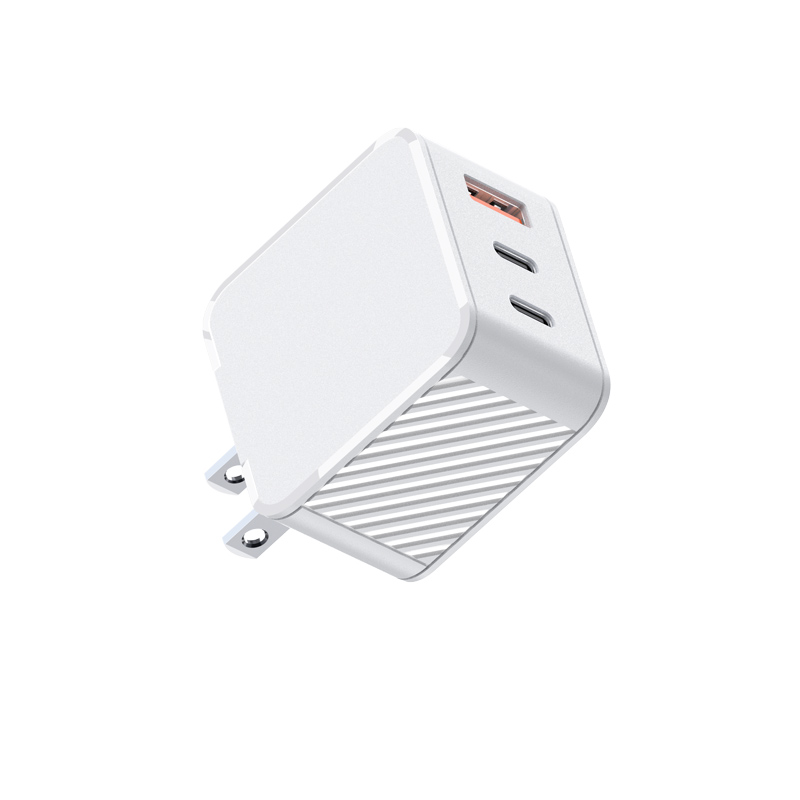
We can only launch one charger SKU this year, aimed at laptop users who also charge a phone. Should it be 65W like the Custom 65W model, or 100W like the WET-100W-C?
Short answer: If most of your customers use thin-and-light laptops (13–14-inch ultrabooks, MacBook Air-class), 65W is usually enough and sells on size and price. If many use 15–16-inch laptops, or charge a laptop and phone together, 100W gives the headroom they’ll notice. Check the device mix before you choose.
Start from the devices, not the number
A laptop’s own charger rating is a good guide to what it can use. Apple, for example, lists recommended adapters per Mac model on its support site, and Windows makers do the same. Collect the recommended wattages of the laptops your customers use most and see where the bulk sits.
Where 65W fits
- Laptops whose own charger is 65W or less.
- One laptop at a time, with occasional phone charging.
- Customers who travel and value size and weight.
- A lower price point and a wider audience.
Where 100W fits
- Larger laptops whose own charger is above 65W. These charge on 65W but more slowly, and may not charge under heavy load.
- A laptop and phone charging together at full speed, because on a multi-port charger the total is shared.
- Customers who want one charger for everything.
Size, heat and price
A 100W GaN charger is usually bigger and heavier than a 65W model, and costs more per unit. For travel-focused customers, size can matter more than headroom. For desk use, the extra power is often worth it. Your positioning should match where the charger is used most.
Hidden requirements of 100W
To get above 60W over USB-C, the cable must be a 5A e-marked cable. If your customers use their own 3A cables, a 100W charger behaves like a 60W one for the laptop. If you go for 100W, either bundle a 5A cable or state the requirement clearly.
A way to decide
- List your top laptop models and their recommended charger wattages.
- Estimate how many customers charge two devices at once.
- Compare unit prices for 65W and 100W at your quantity, including a cable if you bundle one.
- Pick the model that covers the large majority without leaving them on “slow charger” warnings.
Confirm the per-port and shared-output values of the specific model with Wecent before you put them on the listing.
Where this answer says confirm with Wecent, the detail is not published on the product page and has to come from the datasheet or the factory. General facts come from the standards bodies, regulators or device makers named in the text.
Three more perspectives
Products discussed in this thread


Related articles & topics
Have a sourcing question about your own programme?
Ask our team More Channels & supplier management questions