
Channels & supplier management: buyer questions
Questions on choosing sales channels, ranges and suppliers, and on managing a charger supplier once the first order is placed.
-
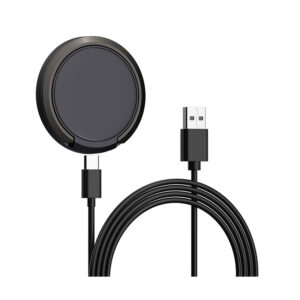
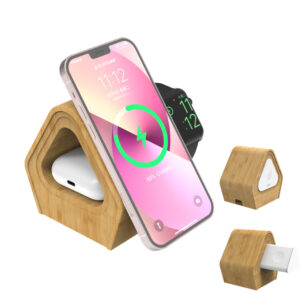
 Is a bamboo wireless charger worth stocking for eco-minded corporate buyers?
Often yes, as a premium gift or desk item, if you keep the claims honest.
-
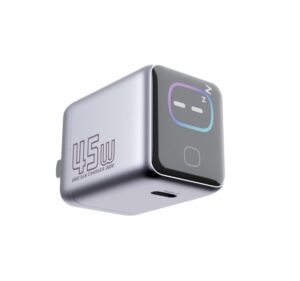
 Does splitting volume across two charger factories improve or hurt quality?
It can do both.
-
How do we organise after-sales support when selling chargers on marketplaces in several countries?
Use one shared inbox or help desk for all marketplaces, with written response times, templates for common questions, a simple returns and warranty policy and a log of faults by model and batch.
-
 Is the WEX140S AI-display charger worth carrying next to a plain 140W model?
Carry both only if you can show two different buyers: one who wants the simpler, lower-cost 140W charger and one who values the screen as a premium feature.
-
How should a charger be prepared for a crowdfunding campaign?
Have a working, tested prototype, a factory commitment with quotes, a certification plan and a timeline with generous buffers.
-
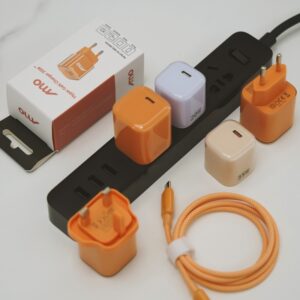 Can chargers be made for a licensed-character or co-branded range, and who approves the artwork?
Yes, but the licensor controls the artwork and quality, so the process has formal approval stages.
-
What should an OEM agreement say about display-text changes on smart-screen chargers?
Treat display text as part of the product.
-
What should a school or university bulk charger purchase specify?
Specify what the chargers must do and how you will check it: power and port types, safety and energy marks, durability, warranty, labelling, packaging and delivery.
-
How can a distributor use a sample kit to win a retailer’s first order?
Build a compact kit that lets the buyer see, feel and verify the range: two or three best sellers, packaging, a one-page line sheet, the compliance documents a retailer will ask for and a clear first-order offer.
-
How do we run a video factory audit before travelling to China?
A video audit is a structured live walk-through, not a casual call.
-
Should inspection happen at the factory or at the forwarder’s warehouse?
Inspect at the factory whenever you can, because that is where fixes are cheapest and fastest, and the goods have not left the supplier's control.
-
What should a distribution agreement for private-label chargers cover?
A distribution agreement should state the territory, the products covered, exclusivity and minimums, pricing and payment, warranty and returns, compliance duties, brand use and what happens at the end.
-
How many chargers should we budget as trade-show samples and demos?
Plan in three groups: demo units that stay on the booth, samples that you hand to qualified buyers, and spares for damage and replacements.
-
When is a third-party pre-shipment inspection worth paying for on a charger order?
Pay for one when the order is large, the supplier is new, the product is new or the cost of a bad batch is higher than the inspection fee. It is least useful when it only repeats the factory's own check.
-
What should we plan when building a charger line for Australia and New Zealand?
Plan for the Type I plug, local electrical safety and EMC requirements, registration under the local scheme, and the role of the local importer or supplier. Then choose models, packaging and stock levels for a smaller, seasonal market.
-
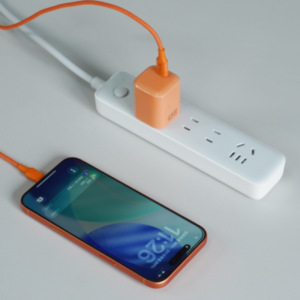 Is the 45W Cosmic Orange charger a good fit for a youth-focused retail range?
A bold colour can help a charger stand out with younger buyers, and 45W covers phones, tablets and many lightweight laptops. Check the colour's appeal with your audience, its price point, and how it fits with the rest of the range.
-
Should we buy a smart-screen charger or a standard one for e-commerce bundles?
A smart-screen charger stands out in listings and photos and can justify a higher bundle price. A standard charger keeps cost and support simpler. Use smart-screen models for premium bundles and standard ones for value bundles.
-
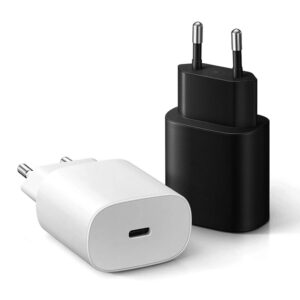 How do we choose between a 25W Samsung-oriented charger and a generic 20W charger?
If many buyers use Samsung Galaxy phones, a 25W charger with USB PD and PPS gives them 'Super fast charging'. For iPhone-heavy or mixed audiences, a 20W PD charger covers iPhone fast charging at lower cost. A PPS-capable 25W can serve both.
-
 What is a sensible spare-parts and replacement stock for a 1,000-unit corporate rollout?
Plan spares for early failures, damage, loss and new joiners, plus consumables like cables and adapters. Many buyers hold a few percent of units and a larger share of cables. Adjust after the first months using real data.
-
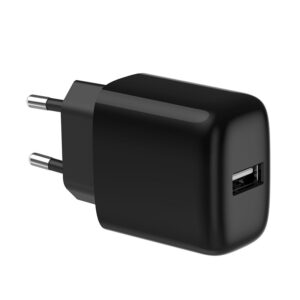 How do we plan stock for a charger range across 20W, 45W, 65W and 100W?
Plan each wattage by its own demand, margin and lead time, not as equal shares. Phone chargers usually sell in the largest volumes; laptop chargers carry higher value and more variation. Review sell-through monthly and reorder by tier.
-
Should a hotel buy wall chargers or wireless pads for guest rooms?
Wall chargers with USB-C work for nearly every guest device. Wireless pads are convenient but only suit wireless-capable phones without bulky cases. Many hotels pair both.
-
Should our travel range use a foldable-plug charger like the Ice Cube or fixed-plug models?
Foldable pins protect bags and pockets and suit single-region travellers. Interchangeable-head models suit multi-region travel. Many travel ranges carry both.
-
 Should our single hero charger SKU be 65W or 100W for laptop users?
65W covers most thin-and-light laptops and phones in a smaller body. 100W gives headroom for larger laptops and two-device use. Your customers' devices should decide.
-
Is a 200-piece trial order enough to test a new charger SKU on Amazon?
It is enough to test listing quality, reviews and returns. It is often not enough to test demand, because the fixed costs are the same as for a larger order.
-
Can one 100W travel adapter SKU with EU/UK/US/AUS plugs cover all our export markets?
One hardware platform can serve several regions, but each market still needs its own conformity evidence for the plug configurations you actually ship.