
Talk · Purchasing · Channels & supplier management
Can one 100W travel adapter SKU with EU/UK/US/AUS plugs cover all our export markets?
One hardware platform can serve several regions, but each market still needs its own conformity evidence for the plug configurations you actually ship.
 Wecent Editorial Team
Updated
4 min read

We are an importer launching a 100W GaN travel adapter (based on the WET-100W-C) in Germany, the UK, the US and Australia. The model ships with EU, UK, US and AUS plugs. Can we run it as one SKU, and does one certificate cover all four markets?
Short answer: Yes to one hardware SKU, no to one certificate. The same electronics and housing can serve all four markets, but each market has its own conformity route, and the evidence has to cover every plug configuration you put in the box.
Why one platform works
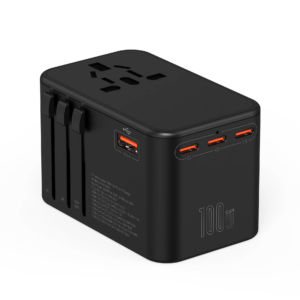
On Wecent’s 100W travel adapters (WET-100W-C, -CA and -CC), the plug is the only region-specific part; the power stage, ports and shell stay the same. That is what lets one production line serve several regions. For a buyer this means one sample approval, one set of incoming-inspection criteria and one forecast for the core unit. The regional variation sits in the plug parts and the printed materials.
Why one certificate does not
Each market has its own legal route:
- EU: CE marking under the Low Voltage, EMC and RoHS Directives, with a Declaration of Conformity issued by the party placing the product on the market.
- Great Britain: the UK’s own conformity route (UKCA, or CE where UK rules still accept it), with a UK declaration.
- Australia/New Zealand: RCM, registration of the responsible supplier, and plug compliance with AS/NZS 3112.
- United States: FCC authorisation for the electronics and, in practice, an NRTL safety listing (UL, ETL or similar), because most retailers and marketplaces ask for one.
An IEC 62368-1 CB test report can be reused as the technical basis for several of these, which saves retesting. It does not replace the mark, declaration or registration each market needs.
What to check before you commit to one SKU
- Ask which plug configurations each test report and certificate actually lists. An interchangeable plug that was never assessed is a gap, even if the adapter body was.
- Confirm who is named as manufacturer and importer on each declaration, and whether the files can be issued under your brand. Wecent’s product pages say certification files are available on request. Ask for the documents and check their scope instead of relying on a list of logos.
- Plan labels and manuals for every market: language, markings, importer address and disposal symbols.
- Decide whether you ship all four plugs in every box or regional kits. Shipping all four simplifies stock. Regional kits lower unit cost and make each box’s compliance story simpler.
Limits of this answer
This is general guidance, not legal advice. Requirements change, and some channels (large retailers, travel retail, Amazon categories) add their own document rules. Have your compliance partner or notified body confirm the final scope for each market before launch.
Facts cited here come from the named standards bodies, regulators, Apple support documentation and Wecent product pages. Points marked “ask”, “confirm” or “check” are recommendations or open questions to settle with your supplier, not verified specifications.
Three more perspectives
Products discussed in this thread

Related articles & topics
- One Charger, Four Markets: EU, UK, US and AUS Plug Strategy for OEM Programs
- CE Certification for Chargers: Directives, Documents and Marking
- UKCA Certification for Chargers: Four Decisions for the UK Market
- RCM Certification for Chargers: A Checklist for the Australian Market
- FCC Authorisation for Chargers: Routes, Records and What Drives the Cost
- UL Certification for Chargers: What the Listing Covers and What It Costs
Have a sourcing question about your own programme?
Ask our team More Channels & supplier management questions