
Selling the same charger in the EU, the UK, the US and Australia usually starts as a product question and becomes an inventory question. Three approaches are common, and the right one depends on how many SKUs your channel can absorb and how much certification work you want at launch.
This guide is part of our Charger Export & Market Entry. Read the full topic guide for the decisions that come before and after this step.
Three ways to serve four markets
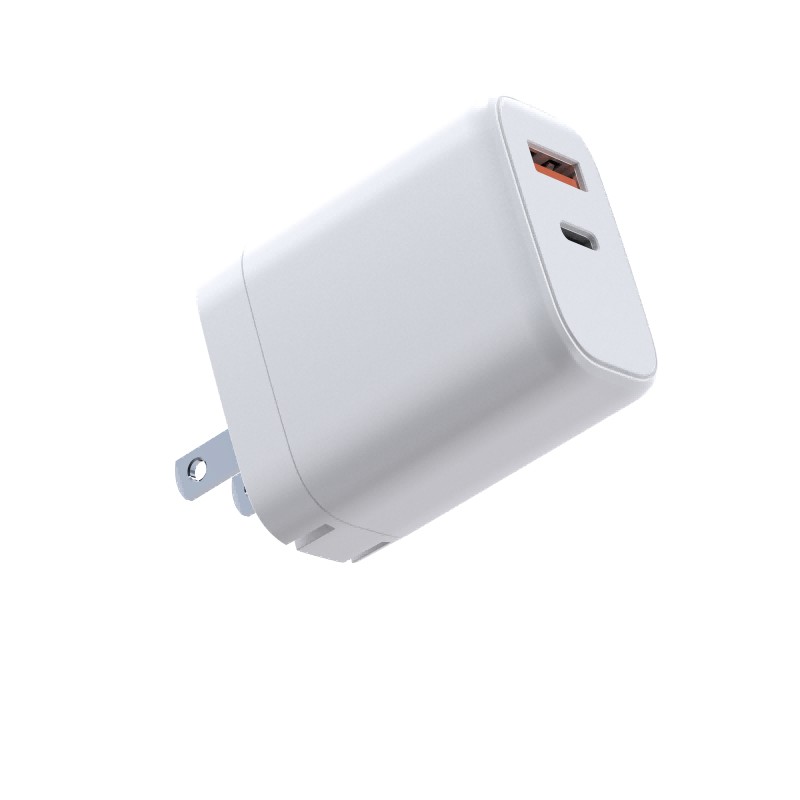
The first is a fixed plug per market: four SKUs of the same wattage, each with its own mains connection. The second is an interchangeable plug system, where one body accepts market-specific plug heads. The third is a plug kit, where the correct plug is assembled into the package for the destination market at the packing stage. Each has a different effect on tooling, certification, packaging and stock.
| Approach | SKU count | Best for | Main trade-off |
|---|---|---|---|
| Fixed plug per market | Highest | Single-market volume programmes | Forecast and stock complexity |
| Interchangeable plug system | Low | Travel and multi-region retail | Mechanical design and tooling |
| Plug kit assembled to destination | Low | Distributors serving several countries | Packing control and market allocation |
Fixed plug SKUs: simple but expensive to stock
A fixed plug simplifies the product and the certification per market, and it is the natural choice for a programme sold mainly in one country. The cost appears in the supply chain: four market versions mean four forecasts, four safety stocks and a real risk of being long in one market and short in another. For a brand without distributor-level demand visibility, that risk often outweighs the product simplicity.
Interchangeable plug systems
An interchangeable system keeps one electrical platform and changes only the plug head. It reduces SKU count and suits travel-oriented products, where the customer values the ability to move between countries. The trade-off is mechanical: the interface must be robust, the retention must be secure and the design must pass the applicable mechanical and electrical tests. It is a tooling decision made once and reused across the range.
Plug kits assembled to destination
A plug kit carries the market-specific plug in the package and assembles it for the destination. The product remains one platform, and the differentiation happens at packing. This approach suits distributors who serve several countries from one order, and it allows a brand to keep a single product identity across markets. Its discipline requirement is packing control: the correct plug must be in the correct box, verified at the packing gate.
What certification asks for in each market
Certification follows the markets where the product is placed, not where it is manufactured or packed. The EU framework, the UK requirements, the US equipment authorisation route and the Australian requirements each bring their own documentation, and a product supplied with a plug kit must be certified for every market the kit serves. Where the platform already holds reports, extending to another market is a documentation exercise; where it does not, each market adds test scope.
Packaging and labelling across four markets
Packaging carries language, ratings, importer details and warnings, and those differ by market. A common approach is a master packaging design with market-specific back panels or sleeves, printed in the required languages. The risk to manage is version control: a box printed for one market but packed with a plug for another is both a compliance and a customer-service problem.
Inventory and SKU-count trade-offs
The plug kit and the interchangeable system reduce finished-goods SKUs, but they do not remove complexity; they move it to the packing line or to a component that must be stocked. The fixed-plug approach moves complexity into forecasting. The right answer depends on which of those your organisation manages better, and on whether the channel buys in market-sized quantities or in mixed orders.
Landed cost comparison
Compare the three approaches on landed cost per sellable unit, not on the charger price. Include the tooling or plug-head cost, the certification scope, the packaging version count, the packing labour and the inventory carrying cost of the SKU structure. In many programmes the plug-kit approach wins on total cost even though the product itself is slightly more expensive to build.
How to specify the strategy in an RFQ
- Markets to be served at launch and in year one
- Whether the channel buys per market or in mixed orders
- Preferred approach: fixed, interchangeable or kit
- Certification status required per market
- Packaging language versions and importer details
- Packing verification requirement for plug allocation
FAQs
Can one charger serve the EU, UK, US and AUS?
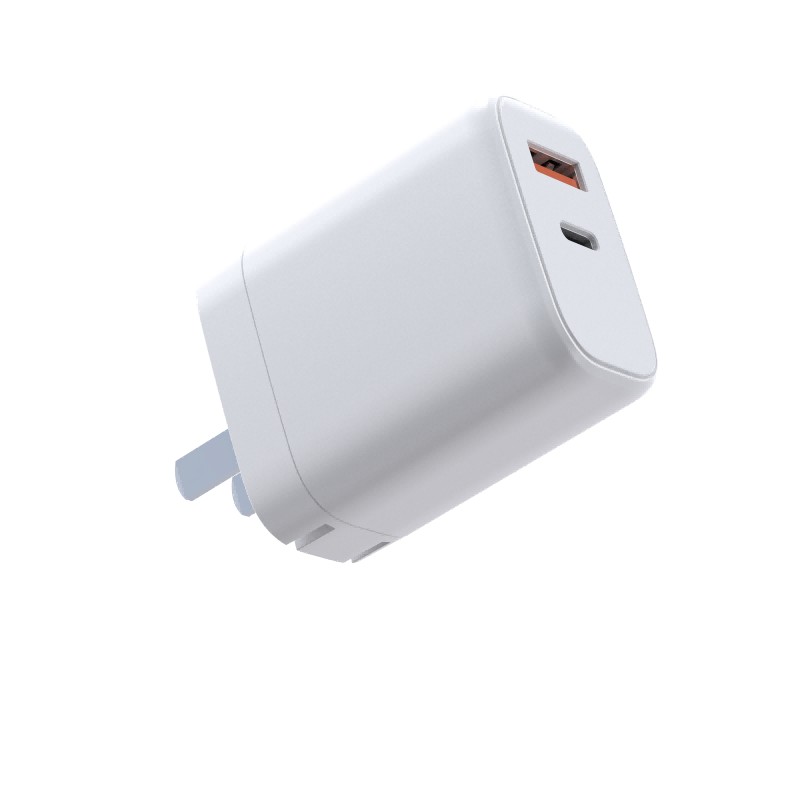
One electrical platform can, with the appropriate mains connection for each market. Whether that is delivered as an interchangeable head or as a plug kit is a commercial and mechanical decision rather than an electrical one.
Do interchangeable plugs need separate certification?
The platform is certified as a family, with each plug variant assessed as part of the family where the design allows. The test house determines the worst-case variant; a plug head that changes the mechanical or electrical interface may require additional assessment.
Which plug strategy has the lowest SKU count?
The plug-kit approach, followed by the interchangeable system. Both keep one product body and differentiate at the plug level, which reduces finished-goods SKUs compared with fixed-plug versions for every market.
Next step
Wecent Group assembles EU, UK, US and AUS plug kits to destination from certified platforms, with the plug allocation verified at packing. Send your market list and channel structure to the contact page. Related reading: travel GaN adapters, EU and US certification, certification project plan and wholesale chargers. External references: EU CE marking, FCC equipment authorisation, IEC standards, USB-IF documentation, EU energy-efficient products and ICC Incoterms.
More on this topic: charger adapters from 20W to 240W, travel wireless chargers and GaN chargers from 20W to 240W, travel chargers and plug kits.