
Charger Adapter
A charger adapter turns a wall socket into the voltage your device needs. The two decisions that matter are the plug — fixed or interchangeable — and the band, which decides what the adapter can feed. WECENT builds 20W to 240W, from 200 pcs per model.
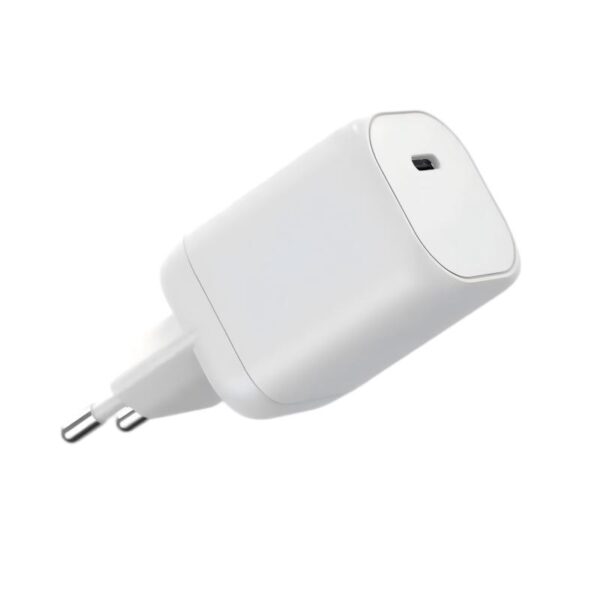
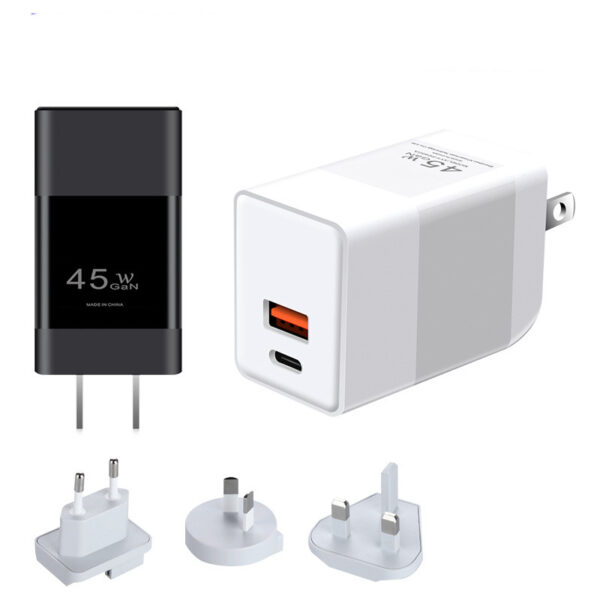
The plug decision is commercial rather than electrical: the same board ships behind a fixed plug for a domestic programme, or behind an interchangeable EU/UK/US/AUS kit that collapses four markets into one SKU. The band decision is the electrical one, and it follows the devices rather than the price list.
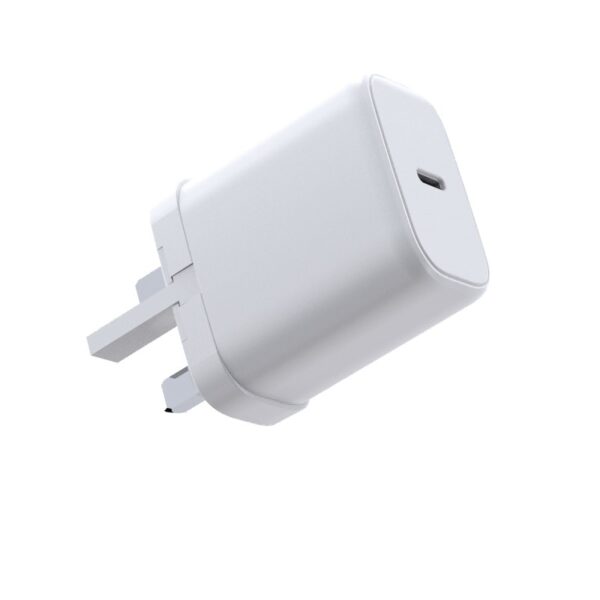
The plug decision is a commercial decision
Electrically, an adapter for the EU and an adapter for the UK can be the same board in a different housing. Commercially they are different products: separate SKUs, separate cartons, separate forecasting. An interchangeable plug kit collapses them back into one SKU that serves several markets, at the cost of a slightly larger box and a slightly higher unit price.
The band decision is the other half. An adapter that can feed a phone is a small, cheap product; one that can feed a laptop is neither. Choosing a band above what the devices negotiate buys headroom and a bigger bill; choosing below it means the device charges at its own maximum and never at the rate the box implies.
- Fixed plug. Cheapest per unit and the smallest pack — right for a single-market domestic programme.
- Interchangeable kit. One SKU for the EU, the UK, the US and Australia; fewer SKUs to forecast and stock.
- The band. Buy headroom where the fleet includes laptops; stay in the entry band where it does not.
Which band fits which job
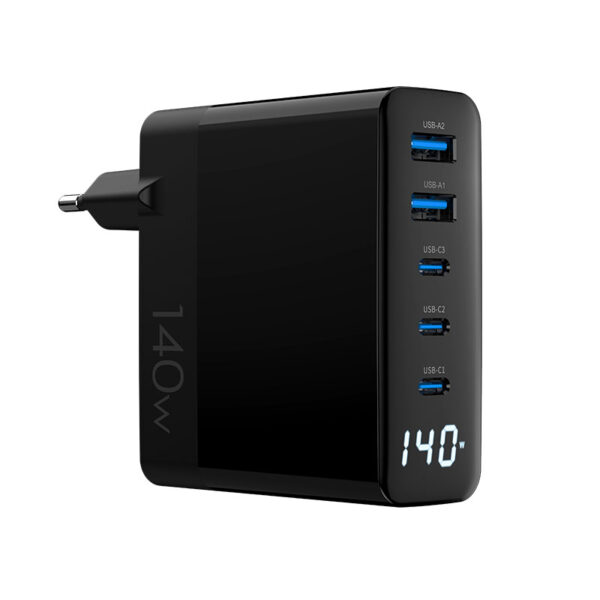
The bands are the same ones the rest of the range uses: 20W to 45W for phones, earbuds and tablets; 65W to 100W for thin-and-light laptops and the laptop-plus-phone case; 140W to 240W for desks where a docking station would otherwise sit.
| What you are choosing | 20W – 45W | 65W – 240W |
|---|---|---|
| Devices covered | Phones, earbuds, tablets | Thin-and-light and performance laptops, docks |
| Size and cost | Smallest and cheapest | Larger; multi-port models cost more to build |
| Port layout | Single port, or 1A1C | 1A1C up to 2A3C |
| Typical channel | In-box, retail, gifting | Travel retail, laptop accessory, desk and docking |
The band-by-band platform list is on the chargers page; the selection logic is in the wattage guide.
Putting your brand on a charger adapter
Everything below sits on a platform that is already tested and certified, which keeps the sample at 2–3 days and the MOQ at 200 pcs per model.
- Band and ports — one platform family spans several bands, so a range needs no new electronics.
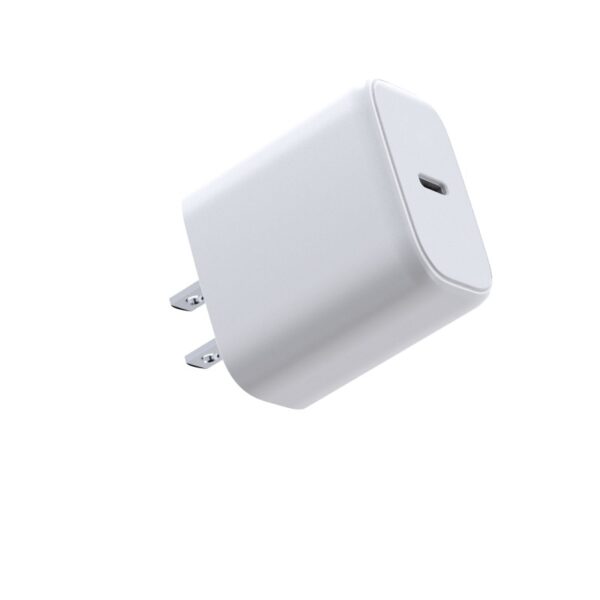
- Plug — fixed or interchangeable EU / UK / US / AUS, plus KR where the channel needs it.
- Shell and finish — black and white as standard, plus custom shell colour and surface texture.
- Logo and packaging — silk-screen, laser or UV printing, plus a colour box drawn to your artwork.
Charger adapter range — what we build
| Wattage range | 20W to 240W across the platform family |
|---|---|
| Port layouts | Single port, 1A1C, 1A2C, 2C, 2A2C, 2A3C depending on the band |
| Protocols | PD 2.0/3.0 and QC 2.0/3.0; PPS ranges, AFC, FCP, Apple 2.4A and BC1.2 tested per family |
| Plug types | Fixed or interchangeable EU / UK / US / AUS, plus KR where the channel needs it |
| Mains input | Universal AC input; the marked range is confirmed on the model datasheet |
| Shell | Black and white as standard; custom colour and surface texture available |
| Certifications | CE, RoHS, FCC, UKCA, PSE, KC, SAA and CB reports for a charger adapter, depending on the target market |
| MOQ | 200 pcs per model for a branded charger adapter; a trial quantity can be split across a few SKUs |
| Samples | 2–3 days with your logo and finish applied to the charger adapter |
| Mass production | 7–15 days after sample and artwork approval for the charger adapter |
| Carton | 50 pcs per carton as standard for the charger adapter, or customised to your requirement |
| Warranty | 2 years on the charger adapter, with a 24-hour complaint response and batch traceability |
The rows above describe a standard charger adapter. Custom power stages, coil layouts, plugs and packaging are quoted per project, and every figure is confirmed on the datasheet before a sample is built.
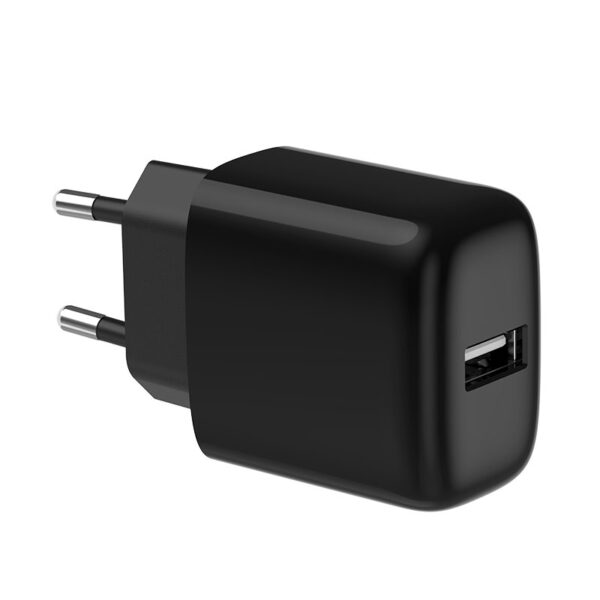
Adapters across the bands
How a charger adapter is built and checked
The electrical platform passes the same route whether the plug is fixed or interchangeable; the plug assembly adds a mechanical check at final inspection, which is where a loose fit is caught.
Material preparation and checking
The power devices, transformer, capacitors, controller, plug assembly and cable are checked against the approved bill of materials before an adapter enters the line.
First-piece quality confirmation
The first unit of a run is built and load-tested against the specification before the line continues, with the plug configuration confirmed on the same unit.
Assembly on static-protected lines
Boards are assembled on static-protected lines to a written operation sheet, and the plug assembly — fixed or interchangeable — is fitted and checked at its own station.
Visual inspection rounds
Repeat inspections verify solder joints, component placement, plug fit, marking legibility and the cosmetic condition of the shell.
Aging under load and electrical testing
Every unit runs an aging cycle under load and is re-measured afterwards, so a platform that runs cool on a bench but not in a closed shell is caught here.
Charging and protocol verification
Output voltage and current are measured across every port, including PPS ranges, with handshake checks for PD 2.0/3.0, QC 2.0/3.0, AFC, FCP, Apple 2.4A and BC1.2.
QA sampling, packing and shipment inspection
Sampling runs before packing, the marking, manual and carton for each plug standard are checked against the approved artwork, and the batch report keeps the shipment traceable per market.
Whether the plug is fixed or interchangeable, the electrical platform passes the same gates; the plug assembly adds a mechanical check at final inspection, which is where a loose fit shows up.
Where a charger adapter gets specified
In-box accessory
Matched to the device and the plug standard of the launch market.
Retail own-brand
A range across bands built on the same platform family.
Travel and hospitality
One SKU with a plug kit per region, or fixed plugs per domestic programme.
Desk and docking
High-wattage multi-port adapters that replace a dock for most fleets.
Certifications and what comes with the shipment
The file for a charger adapter is assembled from the first sample rather than hunted down before dispatch, so the paperwork matches the market the container is going to.
CE / UKCA
European Union and United Kingdom market access for the finished unit and its power supply.
FCC
United States electromagnetic compliance for the finished unit.
RoHS / REACH
Restricted-substance documentation for the European market.
PSE / KC
Japan and Korea market documentation, quoted with the plug kit.
CB / SAA / GS / ETL
Additional reports quoted where the channel or retailer requires them.
ErP efficiency
Efficiency documentation for the EU external power supply regulation.
Reference standards behind this page: Wireless Power Consortium (Qi / Qi2), EU external power supply regulation (ErP), EU CE marking and the USB Implementers Forum for USB-C and Power Delivery specifications.
Related guides and platforms
Wireless charger adapters
The adapter behind a wireless pad, and why it caps the rate.
GaN chargers
What gallium nitride changes about size and heat.
20W charger
The entry band for phone programmes.
EU / UK / US / AUS plug strategy
One SKU with a plug kit, or separate regional SKUs.
Choosing a wattage band
How the bands map onto devices.
All chargers and adapters
The full platform list with wattage, ports and MOQ.
Multi-port chargers
Several outputs on one housing, and how the budget is shared.
Charger adapter — FAQs
What is the difference between a charger and an adapter?
In practice they are the same product: a unit that converts mains power to the voltage a device negotiates over USB-C. “Adapter” is usually used when the unit also serves as a plug-format converter, which is why the plug decision dominates the specification.
Should I choose a fixed plug or a kit?
A fixed plug is cheaper and packs smaller, and it is right for a domestic programme. An interchangeable kit costs more per unit but collapses the EU, the UK, the US and Australia into one SKU — usually the better answer when the same product ships to several markets.
How do I choose the wattage?
From the devices, not from the price list. 20W to 45W covers phones, earbuds and tablets; 65W to 100W covers thin-and-light laptops and the laptop-plus-phone case; 140W and above is for desks where a dock would otherwise sit.
Does a higher-wattage adapter damage a phone?
No. The device negotiates the rate it supports, and a higher-rated adapter simply has more headroom available. The adapter only delivers what the device asks for.
What is the minimum order?
200 pcs per model, and on a plug-kit SKU that single threshold covers every market the kit serves. A fixed-plug programme is quoted per market instead, and the difference in SKU count is usually the deciding factor.
How fast are samples and production?
Samples ship in 2–3 days with your logo and finish applied; mass production runs 7–15 days after sample and artwork approval.
Which protocols are supported?
PD 2.0/3.0 and QC 2.0/3.0, with PPS ranges, AFC, FCP, Apple 2.4A and BC1.2 verified per family and stated on the model datasheet.
Which certifications apply?
CE, RoHS, FCC, UKCA, PSE, KC, SAA and CB reports depending on the target market, with ErP efficiency documentation for the external power supply.
Can one platform cover several wattages?
Yes — the family spans bands, so a range can be built without new electronics. That is what keeps samples fast and the MOQ at 200 pcs per model.
What is the warranty?
Two years on the adapter, with a 24-hour first response and batch traceability. On a plug product the field failure is more often mechanical than electrical — a plug or a cable — so the complaint record separates the two before a corrective action is agreed.
What is the charger adapter?
It is the unit that converts mains power into the voltage a device negotiates over USB-C, and the word “adapter” is usually used when it also handles the plug format. In practice the same product is sold as a charger or an adapter depending on how the range is described.
What are the different types of charger adapters?
They divide three ways: by band (20W for phones up to 240W for docking replacements), by port layout (single port up to 2A3C) and by plug (fixed for one market, or an interchangeable kit covering the EU, the UK, the US and Australia). Band and plug are the two that change the SKU count.
What are the different types of phone adapters?
For phones the meaningful split is protocol rather than shape: units that support USB-C Power Delivery and the vendor fast-charge profiles, and units that do not. Two adapters can carry the same wattage label and charge the same phone at different rates, which is why the datasheet matters more than the number on the box.
Charger adapters in more detail — types, plugs and what the label means Know more Know less
Charger adapter types
In practice adapters divide three ways: by band, from 20W for phones to 240W for docking replacements; by port layout, from a single port to 2A3C; and by plug, either fixed for one market or interchangeable across the EU, the UK, the US and Australia.
Band and plug are the two that change the commercial picture, because they change how many SKUs a range needs rather than only what each one costs.
Fixed plug vs interchangeable plug kits
A fixed plug is cheaper per unit and packs smaller, which suits a domestic programme where the market is known. An interchangeable kit costs more per unit but collapses four markets into one SKU, and for a distributor that usually outweighs the unit price.
Both are built on the same electrical platform, so the plug decision is commercial rather than technical — and it is usually the first question in a quotation for a travel-facing range.
USB-C, PD and the terms on the label
A wattage figure on its own says little. What matters is the protocol set: a unit that supports USB-C Power Delivery and the vendor fast-charge profiles will charge a given phone at its peak rate, while a nominally identical one without them will not.
Our platforms state PD 2.0/3.0, QC 2.0/3.0, PPS ranges, AFC, FCP, Apple 2.4A and BC1.2 per family on the datasheet, so the comparison is like for like.
Adapter vs charger, and which one a channel asks for
The two words describe the same product; “adapter” is usually used when the unit also handles the plug format or when it is sold alongside a device. For a quotation the useful distinction is the band, the ports and the plug — not the noun.
That is also how the range is organised: one platform family across the bands, with the plug kit chosen per market, so a distributor can list several bands without several tooling projects.
Wholesale and OEM charger adapters
Orders start at 200 pcs per model, and on a plug-kit SKU that single threshold covers every market the kit serves. A fixed-plug programme is quoted per market instead, which is where the SKU count changes.
Certification is prepared per destination with ErP efficiency documentation, and because the plug assembly is part of what the file describes, an interchangeable kit is documented as one product rather than as a base unit with accessories.
Send your spec, get a costed quotation
Tell us the devices, the markets and whether the SKU has to travel. You get the band, the plug decision and pricing at your quantity, with a branded sample in 2–3 days.
- MOQ from 200 pcs per model, splittable across a few SKUs
- Samples in 2–3 days with your logo and finish applied
- Reply within 24 hours on business days