
Wireless Charger Adapter
The adapter behind a wireless charger sets the ceiling for every coil on it. A 15W pad on a weak or non-PD adapter does not fail — it just charges slowly, and the customer blames the pad.
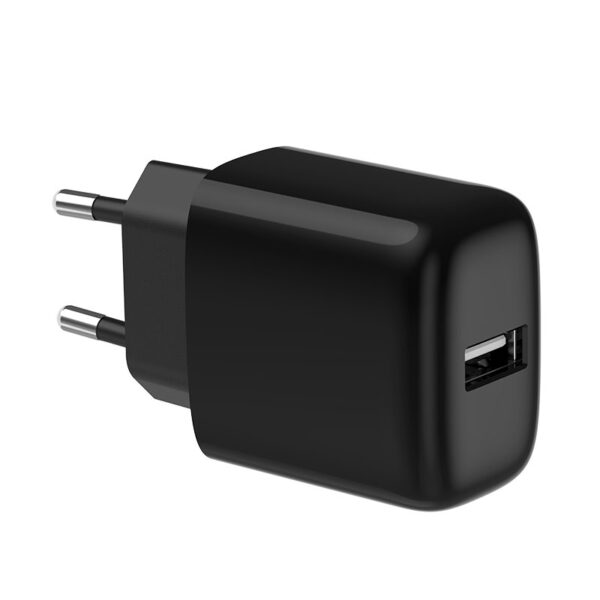
A wireless charging pad needs an adapter that can supply its input requirement and speak the right protocol. If the adapter is underrated or does not support PD, the pad negotiates a lower rate and runs warm. That is why we specify and quote the adapter with the pad rather than leaving it to the customer.
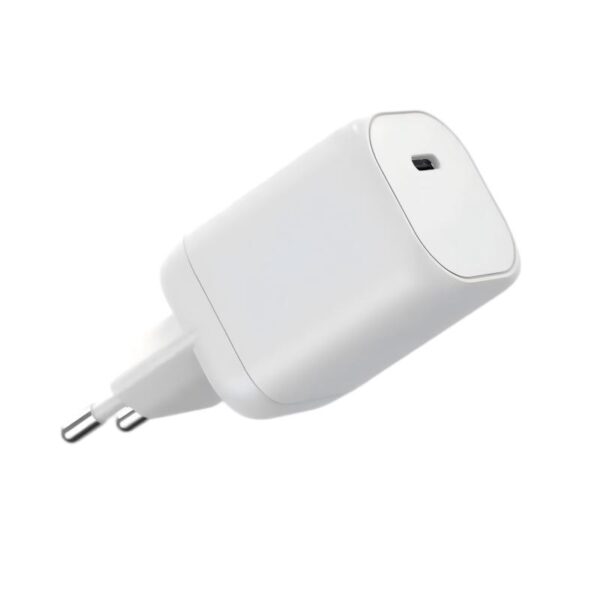
A wireless charger is only as good as the adapter behind it
Wireless transfers energy through a coil with meaningful losses, so the pad needs more input than the rate it delivers to the phone. Feed it from a weak adapter and it does not fail — it quietly negotiates a lower rate and dissipates the difference as heat. On the customer’s desk that reads as “this pad is slow”, and the review rarely mentions the adapter.
The protocol matters as much as the wattage. A pad that negotiates over USB-C Power Delivery needs an adapter that supports it; an older fixed-voltage adapter of nominally the same rating will still be recognised, just at a lower band. Bundling the right adapter removes an entire class of support questions, and it is why the two are specified together.
- Rated for the input, not the output. The adapter has to cover the pad’s input requirement including the coil losses.
- Protocol matched. PD support is what lets the pad negotiate its top band rather than defaulting down.
- Plug kit per market. One pad SKU plus the right adapter for each market is cheaper than separate SKUs.
Ship the adapter in the box, or leave it out?
Including the adapter raises the unit cost and the carton volume, and some channels prefer to assume the customer already owns one. Both are defensible. What is not defensible is shipping a pad without saying which adapter it needs — that is the configuration most likely to generate a slow-charging complaint.
| What you are choosing | Adapter in the box | Pad only |
|---|---|---|
| Customer experience | Works at the rated band out of the box | Depends on what the customer already owns |
| Unit cost and carton | Higher — extra item and a bigger box | Lower, and packs flatter |
| Support load | Lowest — no adapter questions | Higher; slow-charging queries are the common one |
| Best for | Retail, gifting, in-box accessories | Channels where the buyer already has a PD adapter |
Either way the adapter is specified with the pad — the manufacturing note covers how that affects the quotation.
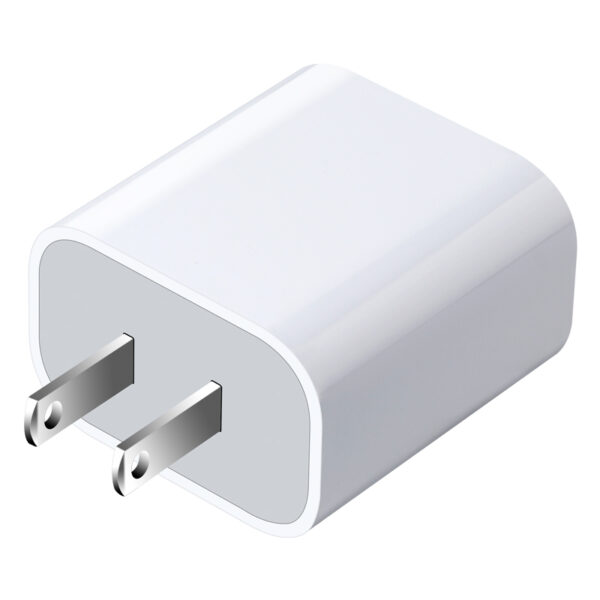
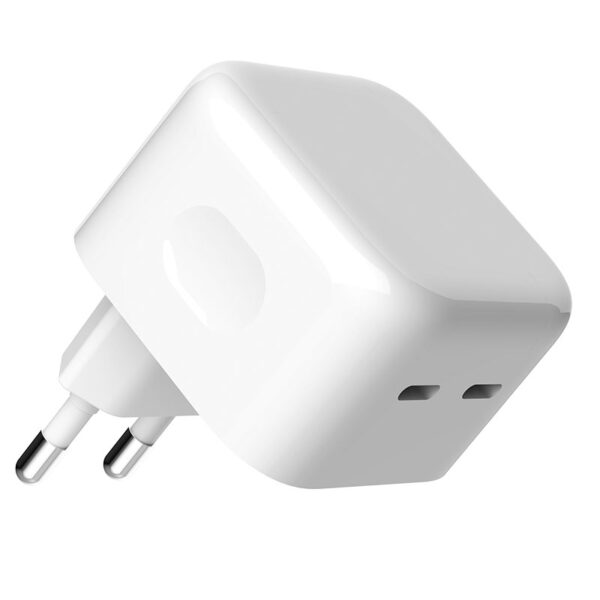
What you can change on the adapter and the set
The adapter is built on the same certified platforms as our standalone chargers, so branding options are the same.
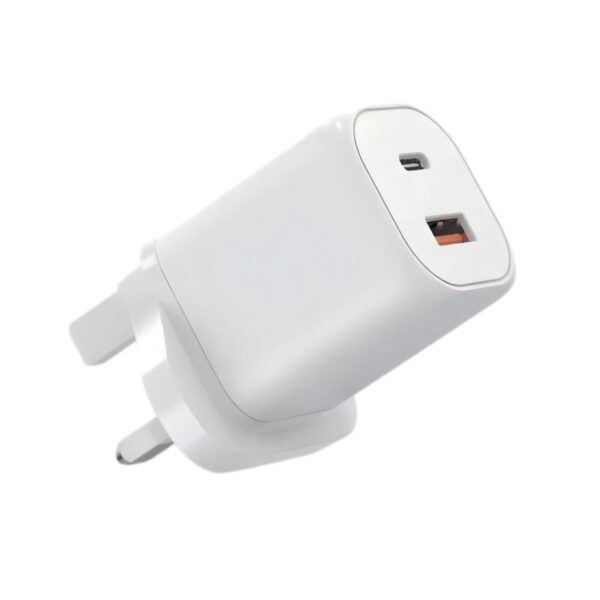
- Rating and ports — matched to the pad’s input requirement, with a spare port if the set should charge a second device.
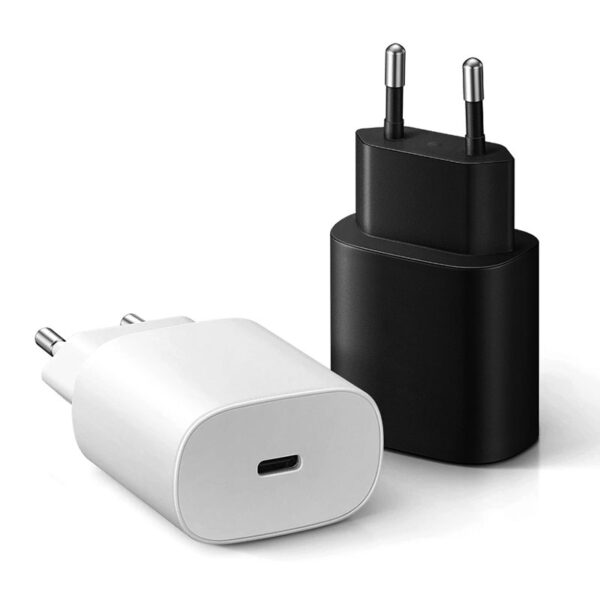
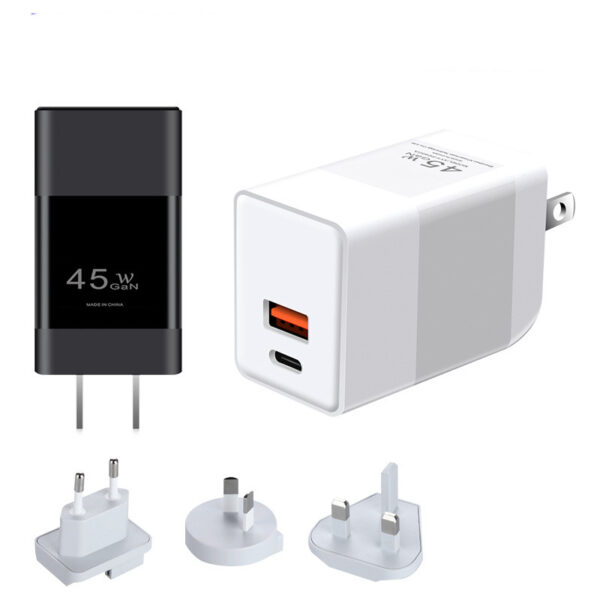
- Plug — fixed or interchangeable EU / UK / US / AUS, so one set covers several markets.
- Finish and logo — shell colour and surface texture, plus printing on the adapter and the pad.
- Packaging — a single box for the set with inserts sized for both items, or two separate SKUs.
Wireless charger adapter — what is specified
| Role | Supplies the pad’s input requirement, including the losses in the coil transfer |
|---|---|
| Protocol | USB-C Power Delivery so the pad can negotiate its top band; PD 2.0/3.0 supported |
| Rating | Matched to the specific pad model — including multi-coil stations, which need more input than a single pad |
| Plug types | Fixed or interchangeable EU / UK / US / AUS |
| Mains input | Universal AC input; the marked range is confirmed on the model datasheet |
| Optional second port | A spare port can be added where the set should also charge a second device |
| Packaging | One box for the set with inserts sized for both items, cartons 50 pcs as standard |
| Certifications | CE, RoHS, FCC, UKCA, PSE, KC, SAA and CB reports for a wireless charging set, depending on the target market |
| MOQ | 200 pcs per model for a branded wireless charging set; a trial quantity can be split across a few SKUs |
| Samples | 2–3 days with your logo and finish applied to the wireless charging set |
| Mass production | 7–15 days after sample and artwork approval for the wireless charging set |
| Warranty | 2 years on the wireless charging set, with a 24-hour complaint response and batch traceability |
The rows above describe a standard wireless charging set. Custom power stages, coil layouts, plugs and packaging are quoted per project, and every figure is confirmed on the datasheet before a sample is built.
Adapters that match the pads
How a wireless charging set is built and checked
The pad and the adapter are aged together rather than separately, because the pairing is what the customer opens and a mismatch between the two is the most common cause of a slow-charging complaint.
Material preparation and checking
The pad, its coil, the adapter and the cable are checked against the approved bill of materials as one set, because a wireless charging set is quoted and shipped as a pairing.
First-piece quality confirmation
The first pad and adapter pair of a run is tested together before the line continues, since the delivered rate depends on the two negotiating correctly.
Assembly on static-protected lines
Boards and adapters are assembled on static-protected lines to written operation sheets, with the pairing recorded rather than left to packing.
Visual inspection rounds
Repeat inspections cover coil seating on the pad, adapter markings, cable condition and the cosmetic state of both items in the set.
Aging under load and electrical testing
The pad and the adapter are aged together rather than separately and re-measured afterwards, which is where a mismatch between the two would show up.
Charging and protocol verification
Output voltage and current are measured on the coil with the supplied adapter, so the rate on the box is the rate the set delivers.
QA sampling, packing and shipment inspection
Sampling runs before packing, the single box and its insert are checked against the approved artwork, and the batch record ties a slow-charging complaint to the exact pairing shipped.
The pad and the adapter are aged together rather than separately, because the pairing is what the customer receives and a mismatch between the two is the most common source of a slow-charging complaint.
Where the adapter decision matters most
Retail and gifting
A set that works out of the box, with no slow-charging queries.
Hotel and office fleets
One adapter rating per pad model, so replacements are unambiguous.
In-box accessories
Matched to the device launch and the plug kit for the launch markets.
Private label
The customer sees the box worked, without a bundle they did not ask for.
Certifications and what comes with the shipment
The file for a wireless charging set is assembled from the first sample rather than hunted down before dispatch, so the paperwork matches the market the container is going to.
CE / UKCA
European Union and United Kingdom market access for the finished unit and its power supply.
FCC
United States electromagnetic compliance for the finished unit.
RoHS / REACH
Restricted-substance documentation for the European market.
PSE / KC
Japan and Korea market documentation, quoted with the plug kit.
CB / SAA / GS / ETL
Additional reports quoted where the channel or retailer requires them.
ErP efficiency
Efficiency documentation for the EU external power supply regulation.
Reference standards behind this page: Wireless Power Consortium (Qi / Qi2), EU external power supply regulation (ErP), EU CE marking and the USB Implementers Forum for USB-C and Power Delivery specifications.
Related guides and platforms
Wireless chargers
Every format, and what decides the rate.
Charger adapters
The full wall adapter range from 20W to 240W.
Magnetic wireless chargers
Why alignment is the other half of the rate question.
Wireless charging stations
Multi-coil units that need more input headroom.
Certification for the EU and US
ErP and safety documentation for both items.
Wireless charger manufacturing
What to check before choosing a factory.
Wireless charger adapter — FAQs
Why does my pad charge slowly?
The most common cause is the adapter. If it is underrated, or does not support USB-C Power Delivery, the pad negotiates a lower band and dissipates the difference as heat. Alignment and case thickness are the other two causes, but the adapter is the one people never check.
Can I use any USB-C charger with a wireless pad?
Only if it can supply the pad’s input requirement and speak the right protocol. A nominally similar adapter without PD support will still work, at a lower band. That is why we publish the input requirement per pad model.
Does a multi-device station need a bigger adapter?
Yes. Every coil draws from the same input, so a station needs more headroom than a single pad. The adapter rating is specified with the station rather than added afterwards.
Should the adapter ship in the box?
That is a channel decision. In the box it works out of the box and generates fewer support questions; sold separately it costs less and packs flatter. Either way the pad’s requirement should be stated on the packaging.
Can the adapter be branded too?
Yes — the same shell colour, finish and printing options as our standalone chargers, and the set can ship in one box with inserts sized for both items.
What is the minimum order?
200 pcs per pad model and 200 pcs per adapter, which is why a set is quoted as one configuration rather than two independent orders. A trial quantity can be split, but the pad and the adapter have to be paired correctly within it.
How fast are samples?
2–3 days with your logo and finish applied for either item, and mass production 7–15 days after sample and artwork approval.
Which certifications apply?
CE, RoHS, FCC, UKCA, PSE, KC, SAA and CB reports depending on the target market, with ErP efficiency documentation for the adapter itself.
Can one adapter SKU cover several markets?
With an interchangeable plug kit, yes. That is usually how a set is specified when the same product ships to the EU, the UK, the US and Australia.
What is the warranty?
Two years on both items when they ship as a set, with a 24-hour first response. This matters more here than anywhere else in the range: if a customer reports slow charging, the batch record shows which adapter went out with which pad, and the diagnosis takes minutes instead of a return.
Can I convert my phone to wireless charging?
Phones without a receiver coil can be adapted with a receiver sleeve or a plug-in receiver, and both work. What you do not get is the thin, fast behaviour of a native implementation — and on a magnetic pad, an adapted phone will not align itself unless it also has a magnet ring.
Can you add wireless charging to any phone?
To almost any phone, with an adapter of some kind, but the quality varies. The practical question for a product is different: if the target phones already have a receiver, the pad only has to negotiate correctly. If they do not, no pad solves it and the product is being specified for the wrong fleet.
Will any phone work with a wireless charger?
Any phone with a receiver charges, at the rate it negotiates with the pad. The pad’s own rating is a ceiling, not a promise: the phone decides. That is why a well-matched pad and adapter pair is worth more than a higher number on the box.
Wireless charger adapters in more detail — ratings, bundling and slow charging Know more Know less
What adapter a wireless charger needs
A wireless charger needs an adapter that can supply its input requirement, which is higher than the rate it delivers to the phone because the coil transfer loses part of it. The adapter also has to support USB-C Power Delivery so the pad can negotiate its top band.
The requirement differs by format: a single pad needs less input than a 3-in-1 board, and a five-coil station needs more again, because every coil draws from the same supply.
Why a wireless charger charges slowly
Four causes, in order of how often they turn up: an adapter that cannot supply the input requirement or does not support PD, a phone that is not centred on the coil, a case that is thick enough to reduce the coupling, and heat — the phone throttles itself as it warms.
Only the first of those is a supply problem, and it is the one customers never check. That is why the pad’s input requirement belongs on the packaging rather than in a manual.
Adapter and cable bundling
Shipping the adapter in the box raises the unit cost and the carton volume; leaving it out lowers both and shifts the problem to the customer. Both are defensible, and the deciding factor is usually the channel: retail and gifting want a set that works out of the box.
When the two ship together the certification describes the set, which is why the adapter rating is fixed at the same time as the pad rather than after it.
Sourcing the set
Tell us the pad model and whether the adapter ships in the box. You get the input requirement, pricing for the set or for each item separately, and the certification list per destination.
Orders start at 200 pcs per model on both items, samples ship in 2–3 days, and the pad and the adapter are aged together before packing because the pairing is what the customer receives.
Wall chargers, wall adapters and plugs — the naming
Customers search for a wall charger, a wall adapter, a plug charger or a wall plug and usually mean the same object: the unit that turns a socket into the voltage a device negotiates. The distinction that matters in a quotation is the plug — fixed for one market, or an interchangeable kit — and the band, not the noun.
Both are built on the same platform, so a range can carry one board under several names for different channels without a second certification project.
Send your spec, get a costed quotation
Tell us the pad model and whether the adapter ships in the box. You get the input requirement for the pad, pricing for the set or for each item, and the certification list per destination.
- MOQ from 200 pcs per model, splittable across a few SKUs
- Samples in 2–3 days with your logo and finish applied
- Reply within 24 hours on business days