
Two bills of materials arrived at the same review. One carried a supplier declaration for every part, with the exemption claimed where an exemption applied. The other carried a single line stating that the product is compliant. The first passed in an afternoon; the second was returned, not because the product was non-compliant but because nothing in the pack demonstrated that it was not.
RoHS compliance for a charger: what the requirement actually covers
The requirement restricts the presence of certain hazardous substances in electrical and electronic equipment.
It applies to the product placed on the market, and the obligation sits with the party that places it there. Conformity is demonstrated through evidence collected along the bill of materials: declarations from the suppliers of each part, supported where necessary by test reports, with any applicable exemption identified rather than assumed.
The requirement is not a test that a product passes once. It is a description of what the product contains, which is why a change to a component is also a change to the evidence.
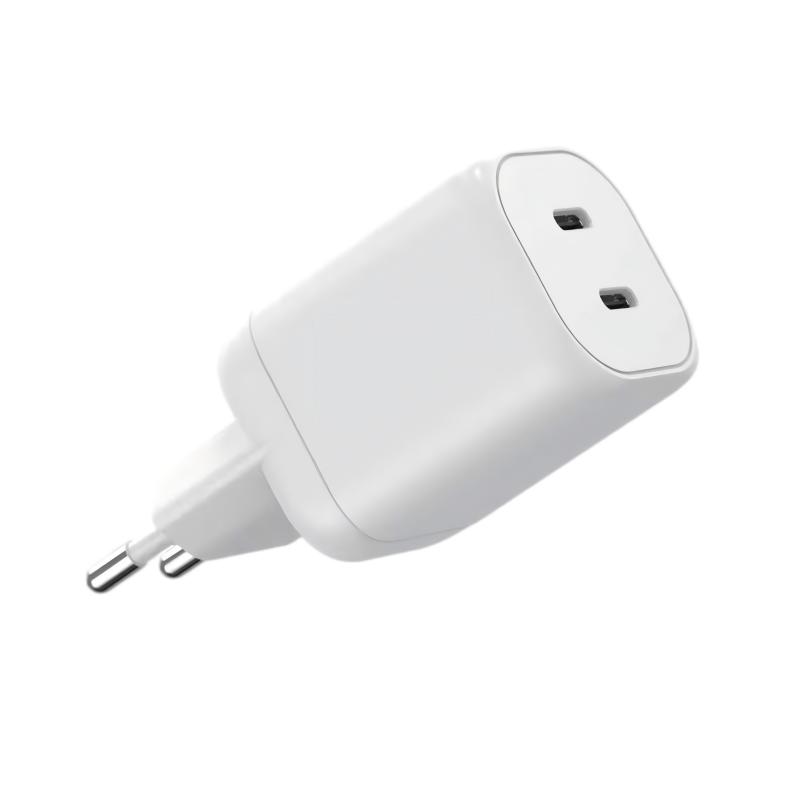
Where the restricted substances appear in a charger
Five places account for most of the risk in this product family.
Solder alloys and the plating on terminals; the housing and the cable insulation, where colourants and stabilisers matter; the contacts and any brass or copper alloy parts; the surface finishes on the connector shells; and the printed circuit board’s own construction and finish. Each is supplied by a different vendor, which is why the evidence has to follow the parts rather than the finished product alone.
The evidence: declarations, reports and exemptions
Three kinds of evidence, used in a defined order.
Supplier declarations are the normal route and cover substances that the supplier has assessed across its own materials. Test reports are used where a material is unproven, where a supplier cannot declare, or where a customer requires measurement. Exemptions are the third element: where a restricted substance is present because an entry in the exemption list covers the application, the file states which exemption applies, because an exemption that is claimed but not named is indistinguishable from a failure.
How the bill of materials becomes the evidence chain
The parts list is the structure of the evidence.
For each part, the file records the supplier, the material or the part number assessed, the declaration or report reference and the date. Where a supplier changes a formulation or a source without changing the part number, the declaration is out of date even though the part number still matches, which is why declarations carry a date and why the file records it. A complete chain allows a single part to be traced and replaced without re-collecting the whole set.
| Evidence | Source | What it covers | Where it breaks |
|---|---|---|---|
| Supplier declaration | The component or material supplier | The materials the supplier assessed | A formulation changed without a part change |
| Test report | A laboratory testing the material | The sample submitted | The sample is not from the production lot |
| Exemption reference | The applicable exemption list | A specific application | An exemption claimed but not identified |
| Evidence chain | The brand or the factory | Every part in the product | A part added without its declaration |
Marking, documentation and the declaration
The documentation is part of the product’s conformity, not a summary of it.
The declaration and the technical documentation describe the product and the requirements applied to it, and the file is kept for as long as the product is placed on the market. Where the product also carries disposal and energy information, those documents belong in the same pack, because a reviewer will read them together. Consistency of the model designation across all of them is the first thing checked.

Change control: when a new part invalidates the evidence
A substitution is an evidence event, not a purchasing decision.
Where a component, a coating, a solder alloy or a cable is replaced, the declaration for the replacement is collected and filed before the part enters production. Where the substitution is made for supply reasons and the declaration is not available, the option is to test the material or to hold the substitution until the evidence exists. Treating the change as equivalent because the specification sheet looks the same is the pattern that produces a file which no longer describes the product.
How change control keeps the file valid
A RoHS file describes a bill of materials at a revision, so any change to a part is a change to the evidence behind it. The practical control is a notification agreement naming the parts that require one and the notice period, rather than a review each time an order is placed.
The parts worth naming are the ones where substitution is commercially tempting: the housing material, the plating on the terminals, the solder alloy and the cable jacket. Each is where a restricted substance is most likely to appear in a cheaper alternative.
Where a substitution happens without notification, the file continues to describe a product that is no longer shipped, and the brand carries the consequence because it places the product on the market.
FAQ
Does a charger need a RoHS test report?
Not necessarily. Supplier declarations along the bill of materials are the normal evidence, and test reports are used where a material is unproven or a customer requires measurement. What matters is that every part is covered by evidence of one of the two kinds. Ask which share of the bill of materials is covered by declarations, and treat the remainder as the risk. A file that declares ninety per cent of the parts and is silent on the rest is not yet a file.
Who is responsible for RoHS conformity?
The party placing the product on the market. Where a brand sells under its own name, that responsibility is the brand’s, even though the declarations originate with component suppliers and are collected through the factory. That responsibility does not move with the manufacturing location, which is why the declarations collected by the factory remain the brand’s evidence rather than the factory’s.
What happens if a supplier cannot provide a declaration?
The material can be tested, the part can be replaced with one that is declared, or the substitution can be held. Recording the part as unproven is not a solution, because the file has to demonstrate conformity rather than note the absence of evidence. Replacing the part is usually faster than testing it, because a declared alternative is available from most component suppliers and the file stays complete through the change.
Do exemptions have to be listed?
Where a restricted substance is present because an exemption covers the application, the exemption is identified in the file. An unnamed exemption cannot be distinguished from a non-conformity during a review. The exemption is identified by its entry rather than by a description, and the entry is what a reviewer compares against the application the substance is used in. and the entry number is quoted in the declaration itself.
How long does the file have to be kept?
For as long as the product is placed on the market and for the period the market’s arrangements require afterwards. In practice the more demanding task is keeping the file current when parts change, rather than storing it. Keep the file with the product revision rather than in a single folder, so that a shipment can be matched to the evidence that covered it at the time it was built.
Next step
Send the bill of materials and the markets to Wecent Group through the contact page. The reply states which parts need declarations, where a test would be required and how the evidence chain is handed over at the end of a programme. Related reading: OEM and ODM charger manufacturing, charger manufacturing services and the factory floor. External references: EU RoHS Directive, EU REACH Regulation, EU CE marking rules, EU energy-efficient products, IEC standards and Intertek testing services.
{“@context”:”https://schema.org”,”@type”:”FAQPage”,”mainEntity”:[{“@type”:”Question”,”name”:”Does a charger need a RoHS test report?”,”acceptedAnswer”:{“@type”:”Answer”,”text”:”Not necessarily. Supplier declarations along the bill of materials are the normal evidence, and test reports are used where a material is unproven or a customer requires measurement. What matters is that every part is covered by evidence of one of the two kinds.”}},{“@type”:”Question”,”name”:”Who is responsible for RoHS conformity?”,”acceptedAnswer”:{“@type”:”Answer”,”text”:”The party placing the product on the market. Where a brand sells under its own name, that responsibility is the brand’s, even though the declarations originate with component suppliers and are collected through the factory.”}},{“@type”:”Question”,”name”:”What happens if a supplier cannot provide a declaration?”,”acceptedAnswer”:{“@type”:”Answer”,”text”:”The material can be tested, the part can be replaced with one that is declared, or the substitution can be held. Recording the part as unproven is not a solution, because the file has to demonstrate conformity rather than note the absence of evidence.”}},{“@type”:”Question”,”name”:”Do exemptions have to be listed?”,”acceptedAnswer”:{“@type”:”Answer”,”text”:”Where a restricted substance is present because an exemption covers the application, the exemption is identified in the file. An unnamed exemption cannot be distinguished from a non-conformity during a review.”}},{“@type”:”Question”,”name”:”How long does the file have to be kept?”,”acceptedAnswer”:{“@type”:”Answer”,”text”:”For as long as the product is placed on the market and for the period the market’s arrangements require afterwards. In practice the more demanding task is keeping the file current when parts change, rather than storing it.”}}]}