
Talk · Selection · Travel plugs, form factor & materials
How do we choose LED indicator colour and brightness for a wall charger?
Pick one clear, simple meaning, such as a single colour that shows the charger is powered or charging, keep the light dim enough for a dark bedroom and bright enough to see in daylight.
 Wecent Editorial Team
Updated
3 min read
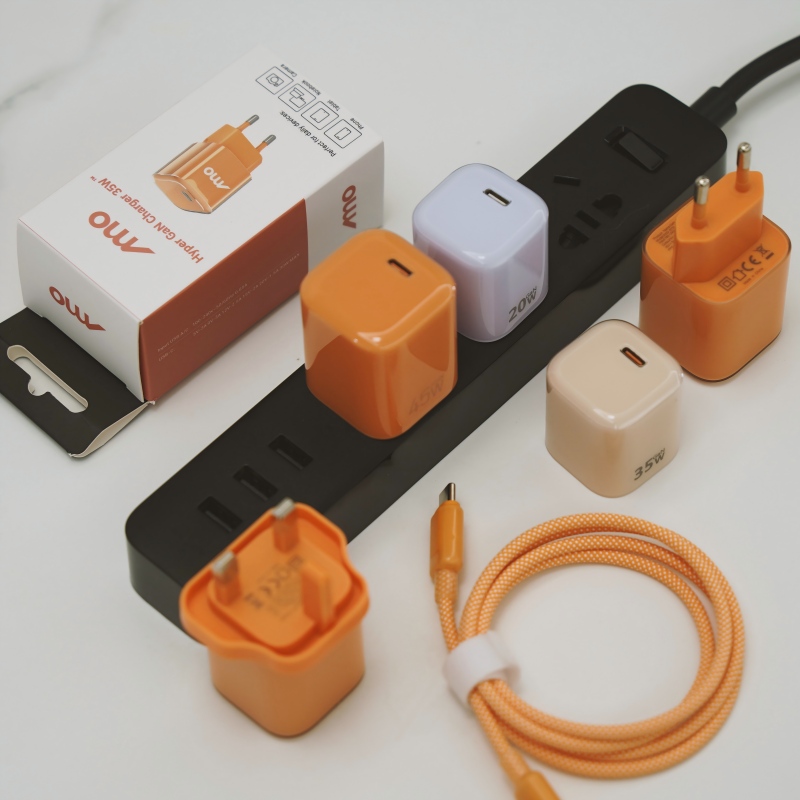
We are adding an LED to a wall charger. What colour and brightness should we choose, and how do we write it into the specification?
Short answer: Pick one clear, simple meaning, such as a single colour that shows the charger is powered or charging, keep the light dim enough for a dark bedroom and bright enough to see in daylight. Specify brightness in a measured unit and a tolerance, and test in a dark room, because LEDs from different batches can vary a lot.
Decide what the light should say
The simplest design is one light that shows power or charging. Extra states, such as full, error or fast charging, need more explanation and can confuse users. If you add states, use different colours or patterns and print a key in the manual.
Colour choice
- White or blue. Look modern, but can be harsh at night.
- Green. Familiar for ‘on’ or ‘charged’.
- Amber or orange. Often used for ‘charging’ or ‘busy’.
- Red. Often means error or low battery, so use with care.
Avoid combinations that colour-blind users cannot distinguish, such as red and green only, and add a pattern or position difference where possible.
Brightness
A light that is fine in a shop can light up a whole bedroom. Choose a low brightness for use in the dark, with enough contrast to see it in daylight. If the charger is for bedroom use, consider a dimmer light or a light that turns off after a while.
How to write the specification
- The LED colour, as a wavelength or a colour name with a tolerance.
- The brightness at a set current and distance, measured in a standard way.
- A tolerance, and a limit between units.
- The viewing angle.
- The behaviour for each state, written in a table.
Test it
Put units in a dark room, compare them against the approved sample and check that the brightness is the same from one unit to the next. Look at it from beside a bed.
Cost and power
An LED draws a small amount of power. Keep it low, especially in no-load, where every milliwatt is part of the efficiency figure.
Quick summary
Keep the meaning simple, the light dim, the specification measurable and test in a dark room.
Bin and batch control
LEDs are sorted into brightness and colour bins by the maker. Ask the factory which bin it buys and make sure all lots use the same one. Mixed bins are the usual cause of lights that look different from one charger to the next.
Where this answer says to confirm with Wecent, the detail is not published on the product page and has to come from the datasheet or the factory. General facts come from the regulators, standards bodies or device makers named in the text.
Three more perspectives
Products discussed in this thread
Related articles & topics
Have a sourcing question about your own programme?
Ask our team More Travel plugs, form factor & materials questions