
Talk · Selection · Travel plugs, form factor & materials
How should a charger’s surface finish (UV coating, spray, IMD) be chosen for a gift range?
Spray and UV coatings give a wide range of looks at moderate cost, but the coating can wear or chip.
 Wecent Editorial Team
Updated
3 min read
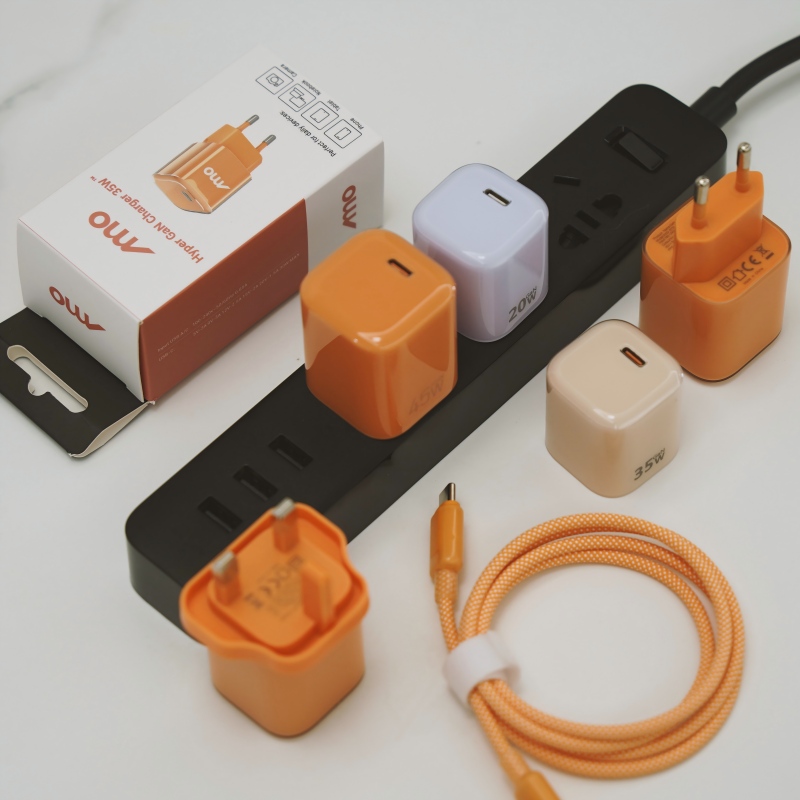
We are launching a gift-range charger and want a premium look. How do UV coating, spray and in-mould decoration compare?
Short answer: Spray and UV coatings give a wide range of looks at moderate cost, but the coating can wear or chip. In-mould decoration puts the pattern inside the surface for better wear resistance, with higher tooling and unit cost. Choose by the look you want, the wear it must survive and the volume you can commit.
Spray painting
- Wide choice of colours and finishes, including soft-touch.
- Moderate cost.
- Can scratch or peel if the preparation or curing is weak.
- Batch-to-batch colour differences need control.
UV coating
- Hard, glossy or matte clear layers that protect the surface.
- Good for a smooth, premium look.
- Shows fingerprints on gloss, and can chip at edges.
- Needs clean surfaces and good curing.
In-mould decoration
- A printed film is placed in the mould, and the plastic is injected behind it.
- The pattern is sealed in and resists wear.
- Rich designs, textures and effects.
- Higher tooling and setup cost, and less flexible to change.
What matters for chargers
- Heat. Surfaces must cope with warm use without softening or yellowing.
- Touch and cleaning. Check how finishes react to sweat, sanitiser and oils.
- Flame rating. Coatings must not compromise the flame rating of the housing. Ask the lab whether a coating affects approval.
- Consistency. Gift ranges often need identical colours across batches.
How to choose
- Define the look and feel.
- Set wear tests: rub, tape, chemical and heat.
- Ask for samples in the real material.
- Compare cost at your volume.
- Check lead time, because finishes add steps.
Control the colour
Fix a master sample, a colour code and a tolerance, and check each batch under standard light.
Plan for the box
A premium finish benefits from a premium box and a clean protective film for transport.
Quick summary
Spray and UV are flexible and affordable; in-mould decoration lasts longest and costs most. Test wear and heat on real samples, fix colour tolerances and confirm with the lab that the finish does not change the approved construction.
A practical sample test
Ask for three samples with each finish. Carry them in a bag for a week, rub them with a cloth and wipe them with sanitiser. Photograph them before and after. The finish that still looks good after this test is usually the one customers will be happy with after months of real use.
Where this answer says to confirm with Wecent, the detail is not published on the product page and has to come from the datasheet or the factory. General facts come from the regulators, standards bodies or device makers named in the text.
Three more perspectives
Products discussed in this thread
Related articles & topics
Have a sourcing question about your own programme?
Ask our team More Travel plugs, form factor & materials questions