
Talk · Selection · Wired GaN chargers: wattage, ports & protocols
Is 45W the right upper limit for a charger sold mainly for phones and tablets?
For most phones and tablets 45W is plenty, but the newest phones are starting to ask for more, so a range that stops at 45W needs a clear reason and a 65W step above it.
 Wecent Editorial Team
Updated
3 min read
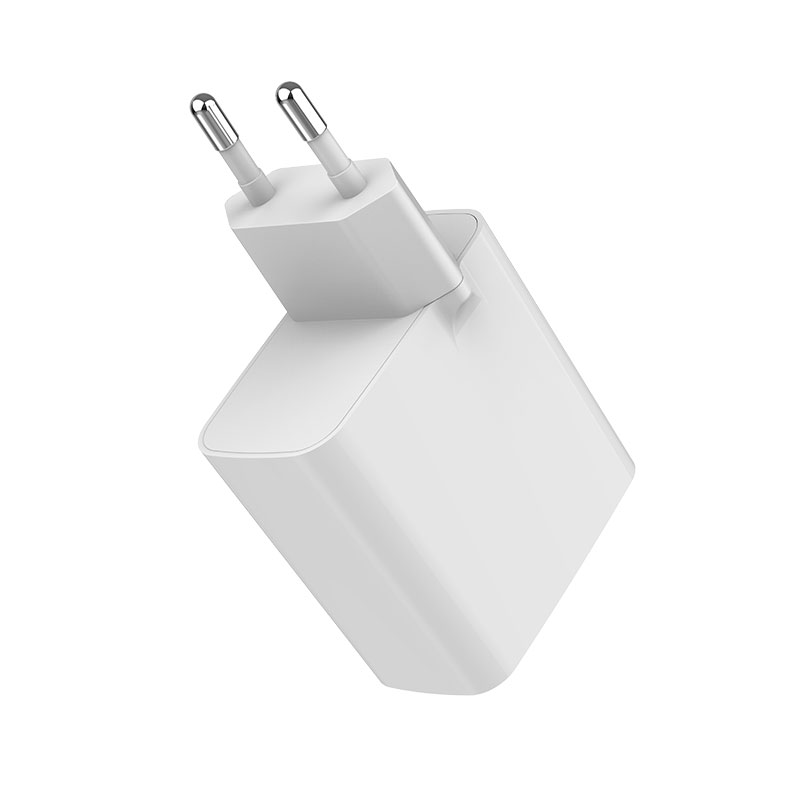
We are trimming our range to a few core models. For customers who mostly charge phones and tablets, we are thinking of making 45W the top model and dropping 65W. Is that sensible, or are we limiting ourselves?
Short answer: 45W is a sensible ceiling for a range aimed at phones and tablets today, because it covers fast charging on most current devices. It is less safe as a permanent ceiling: Apple’s published fast-charge guidance for its newest Pro iPhones points to adapters at or above 60W, and light laptops need more. Keep a 65W model above it, even if it is a low-volume SKU.
What phones actually ask for
Apple’s fast-charge support page lists a 40W adapter or higher for iPhone 17 models to reach 50 percent in about 20 minutes, and a 20W adapter or higher for iPhone 17e and iPhone Air. It lists a 60W-capable adapter that uses Adjustable Voltage Supply and USB Power Delivery 3.2 for its newest Pro models. Android makers publish their own figures, and some models support 45W or more. A 45W charger covers most of these devices, but the newest models are moving above it.
Where 45W is enough
- Most current phones, which charge at 20W to 45W.
- Tablets and earbuds, which draw less than 45W.
- Users who only want one device charged at a time.
Where 45W stops being enough
- Thin-and-light laptops, which commonly need 45W to 65W at full speed.
- Two-device use, where a 45W total is shared between a phone and a tablet.
- Phones that publish higher fast-charge figures than the 45W class.
- Customers who want one charger for phone and laptop.
The cost of dropping 65W
If the range tops out at 45W, a customer with a laptop either buys elsewhere or buys a 45W charger that charges the laptop slowly and returns it. Those returns hurt more than a slow-moving 65W SKU costs to stock.
How to position the two
- 45W: “fast charging for phones and tablets”.
- 65W: “one charger for phone, tablet and thin laptop”.
Check before you decide
- Look at your own sales and returns by wattage. Do not drop a model on opinion alone.
- Check the voltage steps and protocols the 45W model supports, including PPS for Android phones.
- Check what happens when two ports are used at once.
The right answer depends on your customers, but a 45W model with a 65W model above it is a safer range than 45W alone.
Sources checked on 24 Oct 2026: Apple Support: Fast charge your iPhone.
Where this answer says to confirm with Wecent, the detail is not published on the product page and has to come from the datasheet or the factory. General facts come from the regulators, standards bodies or device makers named in the text.
Three more perspectives
Products discussed in this thread
Related articles & topics
Have a sourcing question about your own programme?
Ask our team More Wired GaN chargers: wattage, ports & protocols questions