
Talk · Selection · Wired GaN chargers: wattage, ports & protocols
Is a 33W charger enough for an iPad Pro and a phone at the same time?
A 33W charger can charge both, but not both at full speed. What matters is how the charger splits power when two ports are in use.
 Wecent Editorial Team
Updated
3 min read
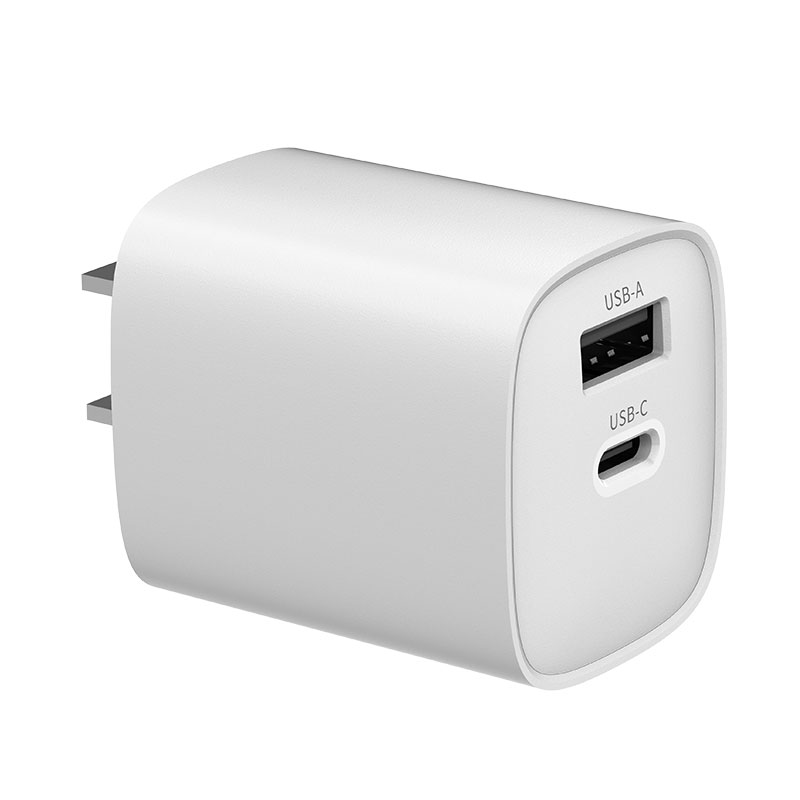
We want a compact travel charger for iPad users. The Custom WEG-33W-1A1C is small and affordable. Will it charge an iPad Pro and an iPhone at the same time, or should we go for a bigger model?
Short answer: It will charge both, but the total stays 33W and has to be shared. On a 1A1C model the USB-A port usually runs a lower-power profile, and using both ports often lowers the USB-C output. For a tablet and phone at full speed, 45W or more with two USB-C ports is the more comfortable choice.
How devices decide what they take
An iPad or iPhone charging over USB-C negotiates power with the charger through USB Power Delivery. Apple’s support documentation says these devices can be charged with compliant third-party USB-C PD adapters. They only draw what they negotiate, so a bigger charger doesn’t harm them. A smaller one simply charges them more slowly.
What happens with two devices on 33W
A 1A1C charger has one USB-C port and one USB-A port. Used alone, the C port can typically offer its highest profile. When the A port is also used, many designs switch the C port to a lower profile so the combined output stays within the rating. The exact split differs by model and is listed in the datasheet, so confirm it with Wecent for the WEG-33W-1A1C. Don’t assume the full 33W stays on the C port.
The A port also needs a USB-A to USB-C or Lightning cable. Many users now only carry USB-C to USB-C cables. If they only have those, the second device can’t use the A port at all.
When 33W is enough
- One device at a time, for example the iPad during the day and the phone overnight.
- Users who value size and weight above speed.
- Older or smaller tablets that don’t draw much power.
When to step up
- Users who charge a tablet and phone at the same time and want both to charge quickly.
- Users with only USB-C cables, who need two C ports.
- Users who might also charge a light laptop. For them, a 65W model such as the WET-67-ACC (2C1A) is a better fit.
What to put on the listing
State the single-port output and the shared output for the two-port case, using the values from the datasheet. “33W total, shared between ports” is clear and accurate. “33W per port” would be wrong.
Where this answer says confirm with Wecent, the detail is not published on the product page and has to come from the datasheet or the factory. General facts come from the standards bodies, regulators or device makers named in the text.
Three more perspectives
Products discussed in this thread
Related articles & topics
Have a sourcing question about your own programme?
Ask our team More Wired GaN chargers: wattage, ports & protocols questions