
A brand rarely launches one charger. It launches a range, and the range is where cost and certification risk accumulate: three wattages, two port layouts, four plug types, and a retail box for each. The difference between a profitable range and an expensive one is usually decided at the platform level, before any branding is applied.
This guide is part of our Programme Execution & After-sales. Read the full topic guide for the decisions that come before and after this step.
What platform sharing actually means
A platform is a certified electrical and mechanical design – the power stage, the control scheme, the safety-critical components and the enclosure architecture – around which several marketable SKUs can be built. Sharing a platform does not mean selling the same product with different names. It means the parts that carry the certification burden stay identical, while the parts the customer sees can change within tested limits.
The variant ladder: free, cheap and expensive changes
Variants fall into three practical tiers. Cosmetic changes – logo, colour, finish, retail box – are cheap and do not touch the electrical design. Configuration changes within tested limits, such as port mix or plug kit, are moderate and may require documentation updates. Structural changes, such as a new enclosure or a different power topology, are effectively a new product and restart the tooling and certification clocks.
| Change | Tier | What it affects |
|---|---|---|
| Logo, colour, finish, retail box | Free | None of the safety-critical design |
| Port mix or plug kit within tested limits | Cheap | Documentation, labels, possibly EMC review |
| Wattage change within the platform | Moderate | Component ratings, thermal verification, worst-case build |
| New enclosure or new topology | Expensive | Tooling, samples, certification |
Which changes keep certification valid
The rule of thumb is that certification follows the safety-critical design. If the parts that determine isolation, creepage, thermal margins and electromagnetic behaviour are unchanged, a derivative can usually be covered by the existing reports with an updated technical file. If any of those change, the test house will want to see the new worst-case configuration. This is why the platform decision should be made before the SKU list is finalised, not after.
Port layout and wattage tiers as a range architecture
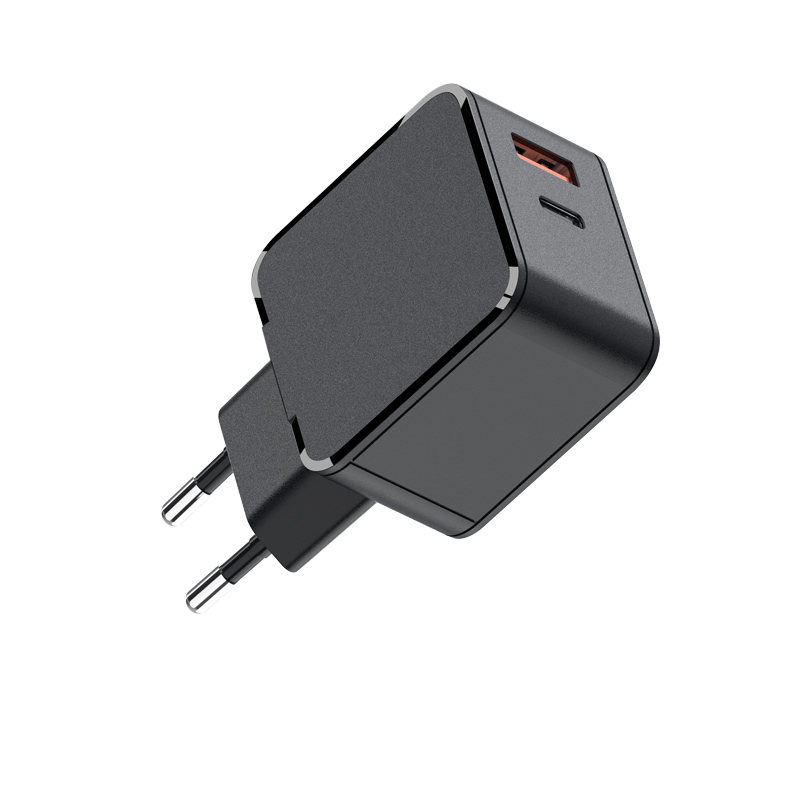
A coherent range solves different jobs rather than repeating the same one. In the GaN category, that usually means a travel-oriented 65W with interchangeable plugs, a 100W multi-port for tablets and thin laptops, and a 140W desktop unit for multi-device charging. Each tier is a platform decision, and each platform can carry several SKUs through colour, branding and packaging variants.
Plug kits: one platform for the EU, UK, US and AUS
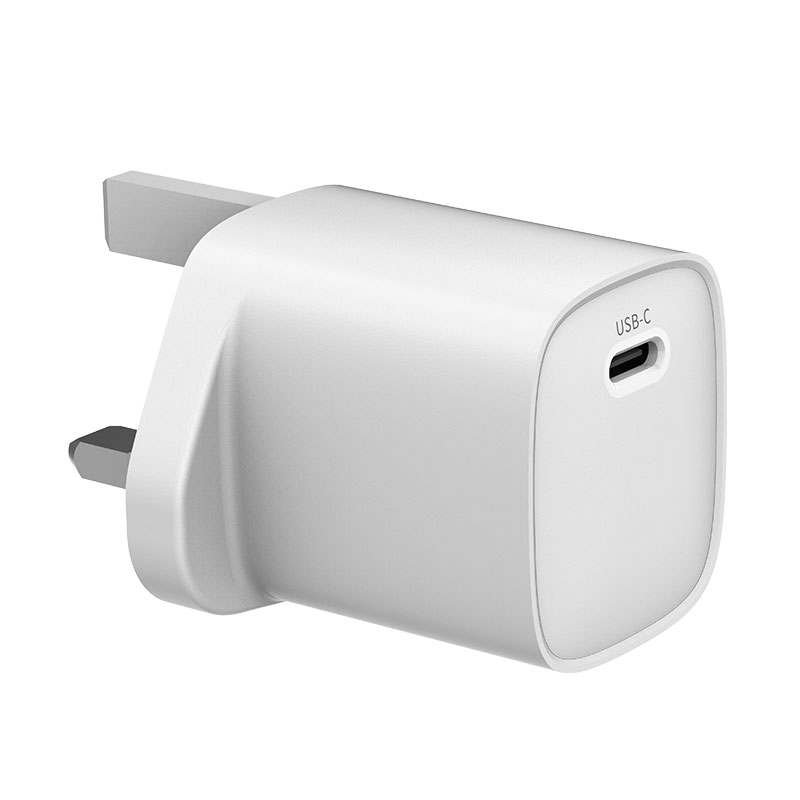
Plug kits allow a single electrical design to serve four markets without four separate platforms. The kit is assembled to the destination market, so the same product can be configured for the EU, the UK, the US or Australia at the packing stage. This reduces SKU count, simplifies forecasting and avoids the cost of carrying four certified variants of the same wattage.
Packaging and branding variants
Packaging is the cheapest way to create a marketable variant and the easiest place to create operational complexity. Print plates, board grade, insert design and language versions should be planned as a small matrix, with one approved master and documented variants. Retail, e-commerce and bundle packaging can usually share the same inner protection, which keeps the approval work to the outer artwork.
How many SKUs a first range should carry
A first range usually works best with three to six SKUs: one entry point, one volume product, one premium or desktop product, plus colour or packaging variants where the channel requires them. More than that multiplies forecasting risk, artwork management and certificate documentation without adding a new customer need. Additional SKUs can be added later from the same platforms as sell-through data arrives.
Cost model: platform range versus tooled SKUs
Compare the two routes on total cost, not unit price. A tooled standalone SKU carries its own enclosure, its own certification and its own sample cycle; a platform SKU shares those costs across the range. The platform route usually wins at low volume and remains competitive at high volume because the tooling investment is spread. The exception is a product with a genuinely different form factor that no platform can cover.
Sequencing the range over twelve months
- Month 0-2: launch the volume SKU from an existing platform to establish the channel
- Month 3-5: add the entry tier and the second colour or packaging variant
- Month 6-9: introduce the multi-port tier, reusing the certification groundwork
- Month 9-12: add the desktop tier or a travel variant if sell-through supports it
Range-planning checklist
- Customer jobs mapped to wattage tiers
- Platform selected per tier, with variant tiers identified
- Plug strategy decided: fixed, interchangeable or kit
- Certification coverage confirmed for each variant
- Packaging matrix and artwork owner agreed
- Launch sequence with dates and quantities
FAQs
Can two wattage SKUs share one mould?
Often yes, if the internal layout and thermal design allow it. The enclosure can be common while the power stage and component ratings differ; the constraint is thermal verification, not the mould itself.
Does a new logo require new certification?
No. The logo, colour and retail box are not part of the safety-critical design. What matters is that the model identification on the label and in the technical file stays consistent with the certified product.
How many SKUs should a first launch include?
Three to six is a practical starting point for most brands: enough to cover the main use cases without multiplying forecasting and artwork work. The range can be extended later from the same platforms.
Next step
Wecent Group builds branded ranges on certified platforms with minimum quantities from 200 pieces per model, so a range can be tested without committing to a container of a single SKU. Send your tier plan and target markets to the contact page. Related reading: tooling and MOQ economics, choosing charger wattage, GaN charger platforms and OEM/ODM manufacturing. External references: USB-IF documentation, IEC standards, EU CE marking, FCC equipment authorisation, EU energy-efficient products.
More on this topic: 3-in-1 wireless chargers and multiple device charging stations, 20W wireless charging and wireless desk chargers, wireless chargers — formats, rates and how to choose, multi-port chargers and Qi2 chargers explained.