
20W Wireless Charger
A 20W wireless charger is one of the most requested and least standardised products in the category. Here is what the number means, which profiles actually deliver it, and how we quote a 15W certified platform against a 20W request.
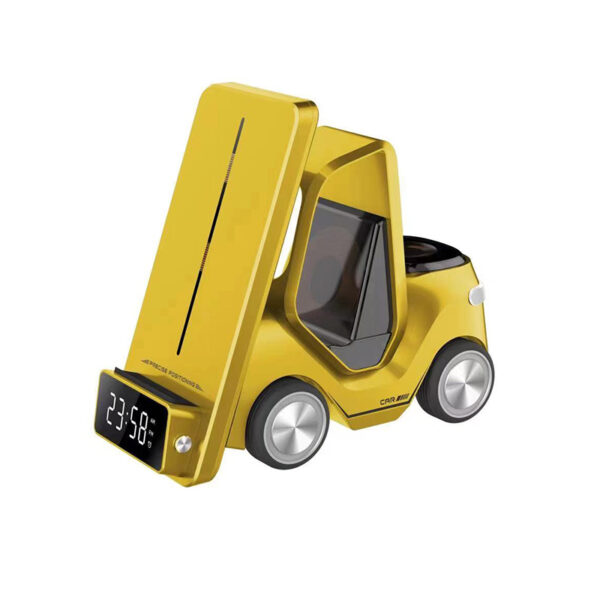
The standardised wireless bands are 5W, 7.5W, 10W and 15W, and Qi2 and MagSafe-compatible platforms run at 15W. A 20W wireless figure normally means a vendor-specific fast-charge profile that only some phone families negotiate. Tell us the target devices and we will confirm which profile is achievable before it goes on the artwork.
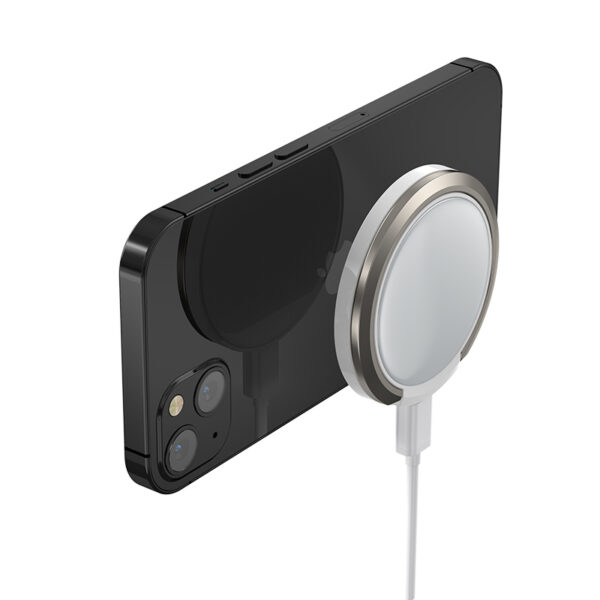
Where the 20W number comes from — and why it is not universal
Wireless charging rates come from two different worlds. The first is the standardised one: Qi and Qi2 define bands that any compatible device can negotiate, which is why a 15W Qi2 unit charges a modern phone at its rated rate without asking what brand it is. The second is the vendor-specific one: individual phone makers defined their own fast wireless profiles, and a phone that supports one of those will show a higher figure on a compatible pad.
That is where “20W wireless charger” usually comes from. It is a real number on a specific pad feeding a specific phone — and it is not something you can print on a box and promise to every customer. For a branded product sold into retail or shipped as an accessory, the honest design decision is either to stay on the certified 15W band, or to name the phone families the higher profile covers.
- Certified band. Qi2 and MagSafe-compatible 15W — works across brands, reusable certification, no per-device claims.
- Vendor profile. A higher figure on one phone family. Confirmable, but the claim has to be qualified on the packaging.
- What we do first. Ask which devices have to be served, then bench-test the profile before the artwork is drawn.
15W wireless or 20W wired?
When a channel asks for 20W, they are usually asking for “fast”, not for wireless. That question has two good answers: a certified 15W wireless platform, which is the highest standardised wireless band, or a 20W wired GaN charger, which delivers the full 20W to any phone over USB-C and costs less to build. Which one fits depends on where the product lives and what the box has to promise.
| What you are choosing | 15W wireless (Qi2 / MagSafe) | 20W wired GaN |
|---|---|---|
| What the customer gets | Wireless convenience at the certified band | The full 20W on any USB-C phone |
| Device coverage | Qi2 / MagSafe-compatible devices | Effectively any USB-C phone |
| Box claim | Standardised and defensible | Standardised and defensible |
| Unit cost | Higher — coil, magnet array, shielding | Lower — no coil or magnet |
Both are quoted from the same factory, so the comparison is like for like — the 20W wired note covers the GaN side, and certification covers what each needs on paper.
What you can change on a 20W programme
Whether the answer turns out to be a wireless platform or a wired one, the branding options are the same as any other branded charger.
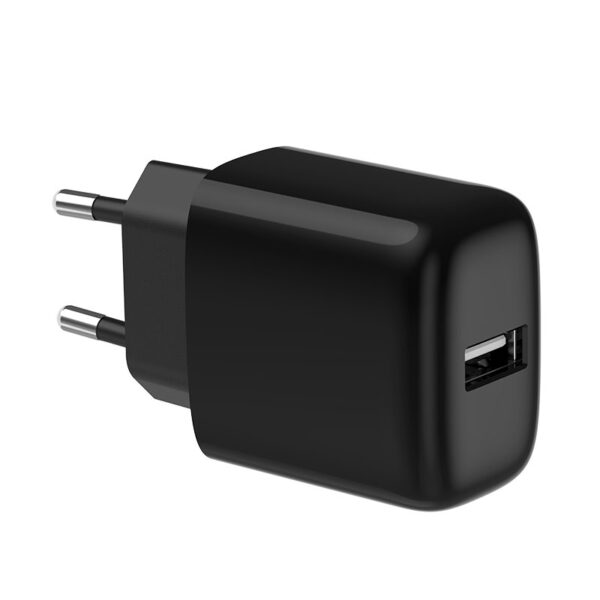
- Form factor — flat pad, magnetic pad, stand, foldable travel unit, or a 20W wall charger with a fixed or interchangeable plug.
- Coil and profile — coil arrangement, and the charging profile confirmed against your target devices.
- Shell and face — ABS, PC, bamboo or wood, PU leather and silicone, in your colour and finish.
- Logo, packaging and bundle — printing, colour box artwork, and a cable or adapter quoted with the set.
20W wireless charger — what is actually specified
| Certified wireless band | Qi2 and MagSafe-compatible 15W; the highest standardised wireless rate we build |
|---|---|
| Higher-rate requests | Vendor-specific profiles are confirmed against your target devices before the specification is fixed |
| Wired alternative | 20W GaN wall charger delivering the full 20W over USB-C — see the 20W charger note |
| Coil layout | Single, magnetic single, or 3-in-1 with watch and earbuds coils |
| Formats | Pad, magnetic pad, stand, foldable travel unit; wall charger on the wired side |
| Housing and finish | ABS, PC, bamboo or wood face, PU leather, silicone; black and white as standard plus custom colour |
| Input | USB-C for wireless units; fixed or interchangeable EU / UK / US / AUS plug on the wired side |
| Certifications | CE, RoHS, FCC, UKCA, PSE, KC, SAA and CB reports for a 20W wireless charging programme, depending on the target market |
| MOQ | 200 pcs per model for a branded 20W wireless charging programme; a trial quantity can be split across a few SKUs |
| Samples | 2–3 days with your logo and finish applied to the 20W wireless charging programme |
| Mass production | 7–15 days after sample and artwork approval for the 20W wireless charging programme |
| Carton | 50 pcs per carton as standard for the 20W wireless charging programme, or customised to your requirement |
The rows above describe a standard 20W wireless charging programme. Custom power stages, coil layouts, plugs and packaging are quoted per project, and every figure is confirmed on the datasheet before a sample is built.
Platforms that answer a 20W brief
Personalized 20W GaN charger
The wired answer: a full 20W on any USB-C phone, EU/UK/US/AUS plugs.
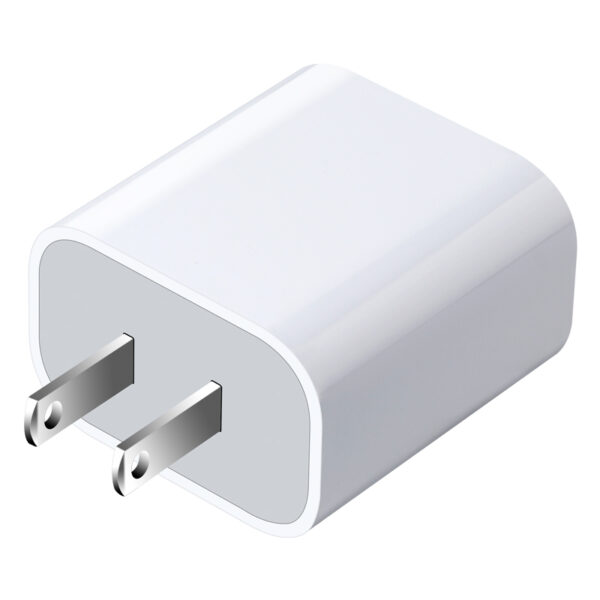
Custom 18/20/30W GaN
One platform spanning 18W, 20W and 30W in 1A1C — the flexible wired option.
How a 20W wireless charging programme is built and checked
Because the delivered rate depends on the adapter as much as on the pad, the route ends with a bench test on the exact set that will ship in the box.
Material preparation and checking
The pad coil, shielding, controller, housing and the adapter that will ship with it are checked against the approved bill of materials as one configuration, not as two separate items.
First-piece quality confirmation
The first pad of a run is tested with the adapter it will ship with, because the rate a 20W wireless charger actually delivers depends on that pairing.
Assembly on static-protected lines
Boards are assembled on static-protected lines to a written operation sheet, with coil seating checked before the housing is closed.
Visual inspection rounds
Repeat inspections cover coil position, the contact surface, cable and adapter markings, and the cosmetic condition of the top face.
Aging under load and electrical testing
Each unit runs an aging cycle under load and is re-measured afterwards, so a pad that reaches the higher band briefly but not sustainably is caught here.
Charging and protocol verification
Output voltage and current are measured on the coil while the phone negotiates its profile, and the delivered rate is compared with the claim on the artwork before it is approved.
QA sampling, packing and shipment inspection
Sampling runs before packing, the set is checked against the approved box and insert artwork, and the batch report records which adapter went out with which pad.
Because the rate a phone actually receives depends on the adapter as much as on the pad, the bench test at gate six is run with the adapter that ships in the box rather than with a laboratory supply.
Where a 20W brief usually ends up
Phone accessory retail
A 15W wireless pad where the box claim stays standardised, or a 20W wired SKU where price matters.
In-box accessory
Whatever the phone in the box actually supports — decided by the devices, not the marketing line.
Gifting
A 20W GaN wall charger reads as the more practical gift and costs less to build.
Travel
Wired 20W with a plug kit, or a foldable magnetic pad where the hotel socket matters.
Certifications and what comes with the shipment
The file for a 20W wireless charging programme is assembled from the first sample rather than hunted down before dispatch, so the paperwork matches the market the container is going to.
CE / UKCA
European Union and United Kingdom market access for the finished unit and its power supply.
FCC
United States electromagnetic compliance for the finished unit.
RoHS / REACH
Restricted-substance documentation for the European market.
PSE / KC
Japan and Korea market documentation, quoted with the plug kit.
CB / SAA / GS / ETL
Additional reports quoted where the channel or retailer requires them.
ErP efficiency
Efficiency documentation for the EU external power supply regulation.
Reference standards behind this page: Wireless Power Consortium (Qi / Qi2), EU external power supply regulation (ErP), EU CE marking and the USB Implementers Forum for USB-C and Power Delivery specifications.
Related guides and platforms
20W charger (wired)
The GaN platform that delivers the full 20W over USB-C.
Wireless charger manufacturing
What to check before choosing a factory.
Magnetic wireless chargers
Why alignment decides the real charging rate.
All wireless chargers
The current wireless range with wattage for each model.
Certification for the EU and US
What the compliance file needs, and when to start it.
Choosing a wattage band
How 20W, 45W, 65W and 100W map onto devices.
20W wireless charger — FAQs
Is there such a thing as a 20W wireless charger?
There are pads that hit 20W on specific phone families, but 20W is not a standardised Qi or Qi2 band. The standardised wireless top end is 15W, which is what a Qi2 or MagSafe-compatible platform delivers across brands. A 20W figure has to be tied to named device families.
Why does my phone show less than 15W on a 15W pad?
Because the phone controls the rate. It throttles for heat, battery level and its own charging curve, so the number moves through a session. A pad that keeps the phone aligned — magnetic, on a Qi2 platform — holds the higher rate for longer.
Can you make a 20W wireless charger for our brand?
Send the device list you have to serve. If the profile is implementable on a platform we build, we will confirm it on a bench test before the artwork is drawn. If it is not, we will say so and quote the 15W wireless or the 20W wired option instead.
Which is cheaper, 20W wired or 15W wireless?
The wired charger. It has no coil, no magnet array and no shielding, and it delivers the full 20W to effectively any USB-C phone. Wireless costs more because of the parts the customer does not see.
What is the minimum order?
200 pcs per model, whether the answer turns out to be a wireless pad or the wired 20W platform. A trial quantity can be split across a few SKUs, and if the 20W wireless claim cannot be supported for your devices we say so before the artwork is drawn rather than after.
How fast are samples?
2–3 days with your logo and finish applied. Mass production runs 7–15 days after sample and artwork approval.
Which certifications apply?
CE, RoHS, FCC, UKCA, PSE, KC, SAA and CB reports depending on the target market, with ErP efficiency documentation where the unit includes a power supply.
Can the packaging claim 20W?
Only where the claim is true for the named devices. We would rather qualify the claim on the box than print a number that a reviewer or a customer can disprove.
Does the pad come with an adapter?
Yes — quoted as a bundle or supplied unit-only. The adapter has to match the pad’s input requirement, so the two are specified together.
What is the warranty?
Two years on the pad and on the adapter when it ships as a set, with a 24-hour first response. Because the adapter rating is part of the specification, a slow-charging complaint can be diagnosed against the shipped configuration instead of blamed on the customer’s own charger.
Is 20W good for a wireless charger?
It is good as a wired rating and unusual as a wireless one. The standardised wireless bands top out at 15W, so a 20W wireless figure comes from a vendor-specific profile that only some phone families negotiate. If the target is “fast for any phone”, 20W wired over USB-C is the honest answer.
Is 20 watt a fast charger?
For phones, yes — most negotiate their peak rate inside that band, which is why 20W is the default for in-box accessories and retail SKUs. A device that asks for more will simply charge at its own maximum, so 20W is rarely the limiting factor on a phone.
Is there a 30W wireless charger?
There are pads that reach higher figures on specific phones, and 30W is one of those vendor-specific cases rather than a standardised band. On our platforms the wireless side is Qi2 and MagSafe-compatible 15W, and 30W is available on the wired side where the claim holds for any USB-C device.
20W wireless charging in more detail — profiles, speed and the wired alternative Know more Know less
What 20W means on a wireless charger
The standardised wireless bands run to 15W, and Qi2 and MagSafe-compatible platforms deliver that. A 20W wireless figure therefore comes from a vendor-specific fast-charge profile rather than from the standard, which means it is real on the phones that implement it and unavailable on the ones that do not.
That is not a defect — it is how wireless fast charging was standardised first by phone makers and only later by the Qi2 reference. The consequence for a product is that the claim has to be qualified on the packaging rather than printed as a universal number.
Fast wireless charging: which profile delivers it
A phone negotiates the rate it can accept, and the pad has to support the same profile. If both do, the phone charges at the higher band; if only the pad does, the phone falls back to what it supports and the difference shows up as heat rather than speed.
For a branded product the reliable route is to name the device families the higher profile covers, or to specify the certified 15W band and keep the claim defensible in every market.
20W wireless vs 20W wired over USB-C
A 20W wired charger delivers the full 20W to any USB-C phone because the negotiation happens over a cable, with no coil losses and no alignment question. It is also cheaper to build: no coil, no magnet array and no shielding.
The wireless version buys convenience — nothing to plug in — and loses the last few watts to the transfer. Which one a channel wants usually comes down to whether the product sits on a desk or travels in a bag.
Sourcing a 20W wireless charger for a brand
Start with the device list rather than the wattage. We confirm which band each target phone actually negotiates, then specify the coil and the adapter so the delivered rate matches the claim on the box.
Orders start at 200 pcs per model, samples ship in 2–3 days with your logo and finish applied, and certification is prepared per destination from the first sample.
Send your spec, get a costed quotation
Send the device list and the markets. You get a straight answer on which wireless profile those devices actually negotiate, the wired alternative if that is the better product, and pricing for both at your quantity.
- MOQ from 200 pcs per model, splittable across a few SKUs
- Samples in 2–3 days with your logo and finish applied
- Reply within 24 hours on business days