
The cheapest wall charger programme is usually the one with the fewest SKUs, not the lowest unit price. Every additional plug type, colour and packaging version multiplies the forecast, the stock and the artwork – and the cost of that multiplication does not appear in the quotation. It appears in the inventory report, three months after launch, when one variant sells out and another sits.
This guide is part of our Charger Factory & Production. Read the full topic guide for the decisions that come before and after this step.
Wall charger manufacturing: the decisions that decide how many SKUs you carry
Three decisions set the SKU count before you discuss price.
The plug strategy, the number of wattage tiers and the number of packaging versions. Choose fixed plugs for four markets and you carry four products; choose a plug kit assembled to the destination and you carry one, differentiated at packing. The engineering is similar; the operational consequence is not.
The reason this matters commercially is that a wall charger is a low-margin, high-volume product where the cost of complexity is paid in working capital rather than in the unit price. A range with twelve SKUs requires twelve forecasts, twelve safety stocks and a packaging version for each. A range with four SKUs built from two platforms and one packaging template requires a quarter of that, and the difference is visible in cash rather than in the quotation.
Decision 1: plug strategy – fixed, interchangeable or kit
This single decision can double or halve the number of products you manage.
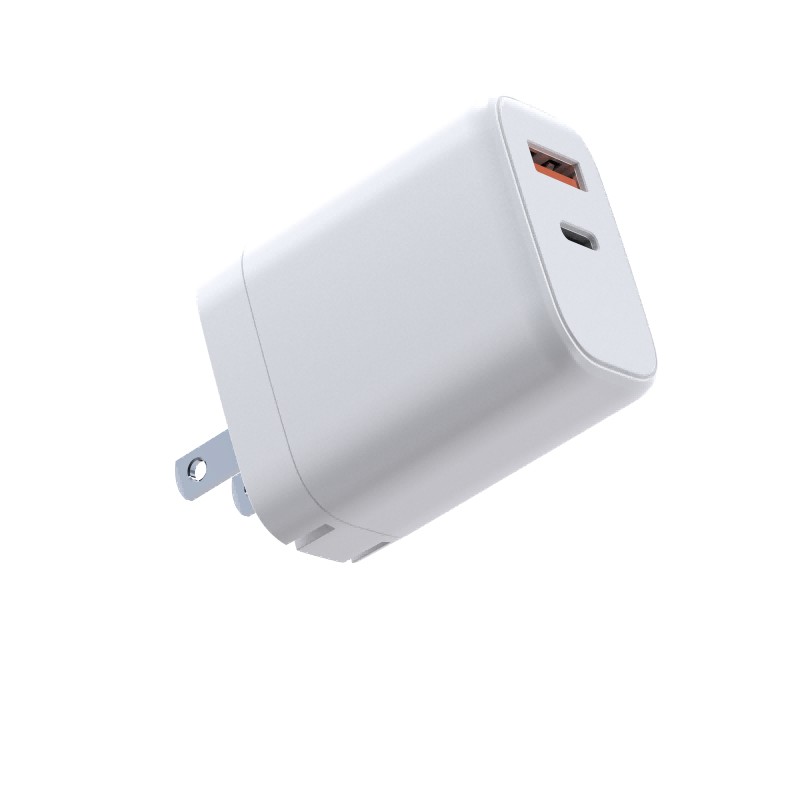
Fixed plugs are simple to build and simple to certify, but they multiply the range by the number of markets. Interchangeable heads reduce the finished-goods count and suit travel-oriented products, at the cost of a more demanding mechanical design. Plug kits keep one product body and differentiate at packing, which suits distributors serving several countries from one order – provided the packing line verifies that the correct plug goes into the correct box. Ask the factory to quote the three routes before choosing, because the cheapest unit price and the lowest total cost are rarely the same route.
| Plug strategy | Finished-goods SKUs | Main trade-off | Best fit |
|---|---|---|---|
| Fixed plug per market | One per market | Forecast and stock complexity | Single-market volume programmes |
| Interchangeable heads | One body, several heads | Mechanical design and tooling | Travel-oriented products |
| Plug kit to destination | One body | Packing control | Distributors serving several countries |
Decision 2: how many wattage tiers to launch with
Launch with the tier your channel asks for, not with the tier list a supplier offers.
A wall charger range usually covers an entry tier for phones and accessories, a middle tier for tablets and thin laptops, and a high tier for multi-device charging. Launching all three at once triples the forecasting problem before any sell-through data exists. Where the tiers share a platform, the follow-on SKUs can be added later with artwork and a sample rather than a development cycle, which is the argument for sequencing the range rather than launching it whole.
Decision 3: packaging versions and language
Packaging is where a small range quietly becomes a large one.
Each language version, each channel format – retail box, e-commerce mailer, bulk carton – and each bundle combination is a separate item to forecast, print and store. A master design with market-specific panels or sleeves usually costs less than separate packaging per market and simplifies version control. Confirm the language list and the importer details before the print plates are produced, because a reprint is cheap before the order and expensive after.
What the platform decision changes
Platform sharing is what makes a small range extendable.
Where the entry and middle tiers sit on one certified platform, a brand can open with the entry product and add the middle tier later without new tooling and without restarting certification. Where each tier is a standalone design, every addition carries a mould, a sample loop and a test programme. Ask which tiers share a platform before finalising the launch SKU list – the answer determines the cost of the second product, which is usually the one that decides whether the range is profitable.
What to verify before the launch order
Confirm the specification, the packaging proof and the certification scope before the first production order.
For a wall charger the specification includes the output and protocol behaviour, the plug configuration, the label content and the cable if one is supplied. The packaging proof should be an assembled box rather than a flat artwork, because it is the only artefact that shows the insert, the print and the language versions together. And the certification scope should name the model and the markets, so the label you print matches the file that covers the product.
How the plug strategy decides the range
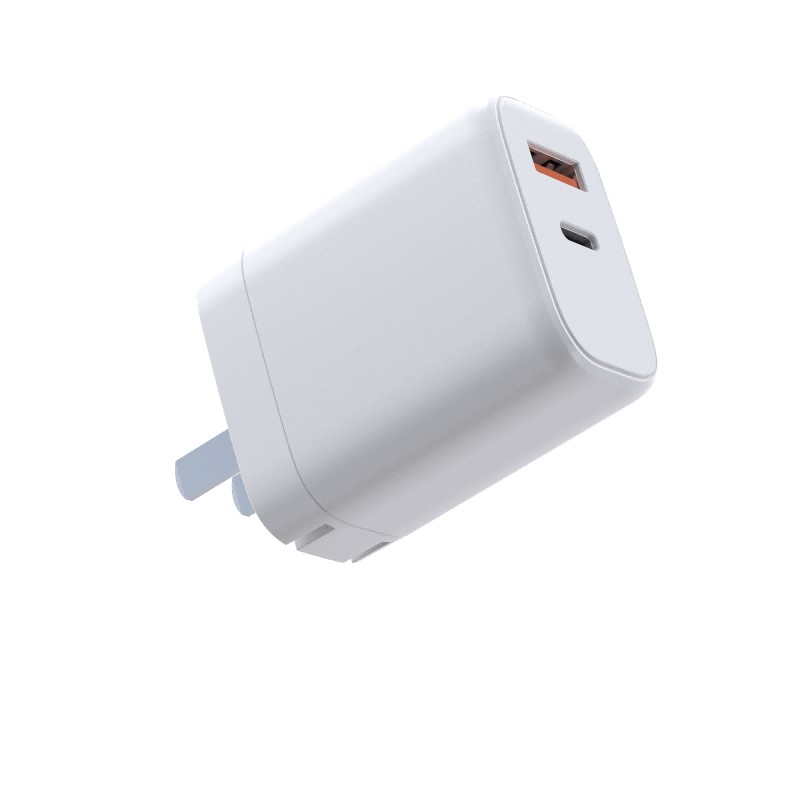
The plug strategy is the single decision that most affects the SKU count. Four fixed-plug products are four finished goods with four labels, four cartons and four minimum order quantities; one body with a plug kit is one finished good and a set of accessories.
The choice also moves the certification work. A fixed plug is part of the construction and follows it into each market’s file, while a kit is a separate item with its own approval and its own labelling, which concentrates the work rather than multiplying it.
Where a channel genuinely requires a fixed plug, the range is usually narrowed to the markets that carry the volume and the remainder are served from the kit.
FAQ
How many SKUs should a first wall charger range have?
One or two tiers and one plug strategy, with a packaging template that can accept market variants. Add tiers later from the same platform. Start from the markets rather than the tiers: a range that must cover three plug types and two outputs is six specifications before any packaging is considered, and a first order rarely needs all six. and check the tariff structure the range is sold into, because that is usually what sets the tier count.
Is a plug kit cheaper than four fixed-plug products?
The unit price may be similar; the inventory cost is much lower, because you hold one body instead of four finished products. The kit also shortens the response to a market whose requirement changes, because a new plug head is a smaller project than a new finished product with its own label and carton. The kit also reduces the number of finished goods held in each market’s warehouse.
Do more ports mean more SKUs?
They mean more configurations, which is a different problem. Each port layout is a separate specification and often a separate thermal characterisation. They also mean more test configurations, because the sharing behaviour and the thermal result change with the layout. That is the cost behind the extra specifications, and it does not appear in a unit price comparison. and the extra layouts change the certification scope per model.
Can packaging be added later?
Yes, but the print plates, the language versions and the insert are new tooling. Planning them against the full market list at the start costs less than adding them per market afterwards. Plan the template against the full market list, so that the language and the plug variant become zones on one artwork rather than separate print runs per market.
What shortens the launch most?
A platform with existing certification, one plug strategy and one packaging template. That removes the tooling loops and the certification discovery from the critical path. It also removes the certification discovery, because a platform with an existing file and a kit with its own approval can be quoted with the market access already established. and it shortens the quotation cycle, because the market access does not have to be established again.
Next step
Send the market list, the wattage tiers and the packaging requirements to Wecent Group through the contact page. The reply states the platform options, the plug strategy, the MOQ and the sample timing, so the SKU decision can be made against the real commercial terms. Related reading: wholesale chargers, OEM/ODM manufacturing and quality control. External references: USB-IF documentation, IEC standards, EU CE marking, FCC equipment authorisation, ICC Incoterms and ISO 9001.