
Talk · Selection · Travel plugs, form factor & materials
What size and weight targets are realistic for a 65W GaN charger with a folding plug?
Do not guess a target.
 Wecent Editorial Team
Updated
2 min read
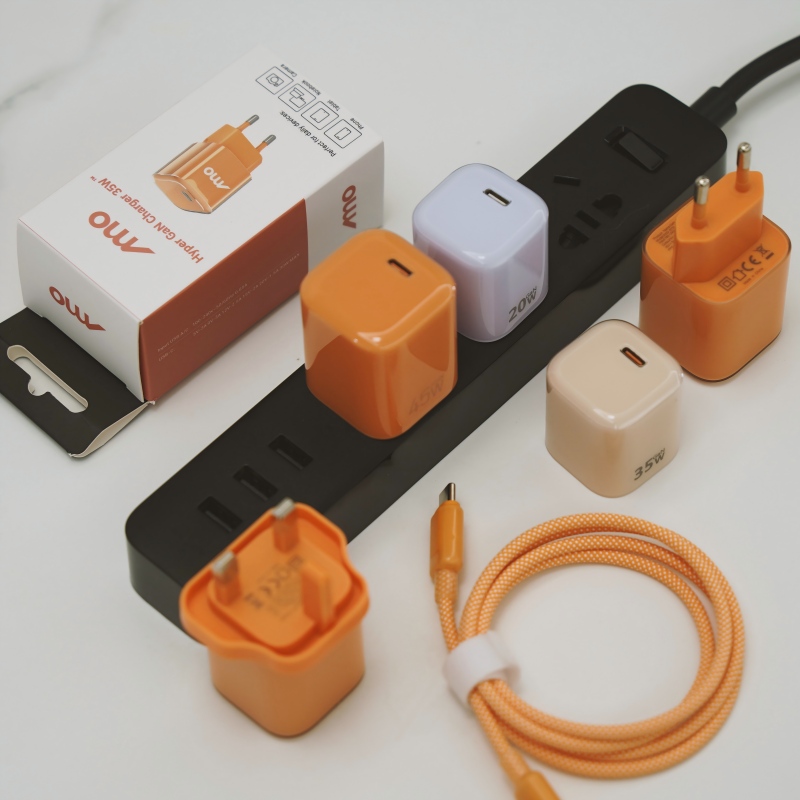
We want a 65W GaN charger with a folding plug that is as small as our competitors’ models. What size and weight should we put in the specification?
Short answer: Do not guess a target. Benchmark three or four comparable chargers by measuring their size, weight and surface temperature at full load, then set a target slightly better than the middle of the group. A smaller or lighter charger usually costs more and runs hotter, so the target must balance size, heat, cost and approval risk.
Why a number from a catalogue is not enough
Catalogue sizes may be rounded, may measure the body without the plug or may refer to a different version. A fair comparison needs measurements on units you can hold, using the same method for each.
Benchmark properly
- Buy three or four chargers of the same wattage with a folding plug.
- Measure length, width and thickness, with the plug folded.
- Weigh each one without a cable.
- Run each at full load for a set time and record case temperature and any output reduction.
- Note the port layout, the plug mechanism and the casing material.
What limits size
- Heat. Smaller bodies shed less heat, so they run hotter or reduce output sooner.
- Components. Capacitors, transformers and connectors have minimum sizes.
- Safety distances. The spacing between mains and output parts is set by the safety standard.
- Plug mechanism. A folding mechanism takes space and adds a few grams.
- Cost. Smaller designs often need more expensive parts and tighter manufacturing.
What limits weight
Metal parts help heat flow but add weight. Plastic is lighter but needs a good thermal design. Ask the factory how the housing and any heat-spreading parts affect mass.
Writing the specification
Use ranges, not a single number, for example a maximum length, width, thickness and weight, measured as you measured the benchmark. Add a surface temperature limit at full load, with ambient temperature stated, and a test method for both.
Be realistic about trade-offs
If the target is smaller than every benchmark, ask what the factory will change to reach it, and what it costs. A very small charger that runs too hot may get poor reviews and returns.
Check production units
Measure size and weight on production units as well as the engineering sample, and record the results.
Where this answer says to confirm with Wecent, the detail is not published on the product page and has to come from the datasheet or the factory. General facts come from the regulators, standards bodies or device makers named in the text.
Three more perspectives
Products discussed in this thread
Related articles & topics
Have a sourcing question about your own programme?
Ask our team More Travel plugs, form factor & materials questions