
Brands and distributors buy the same charger from several factories and receive quotations that look similar. The differences that matter appear later: whether the specification holds on the second order, whether the documentation survives a customs check, and whether a defect claim is answered with records or with assurances. This is what to verify before the first purchase order.
This guide is part of our Charger Factory & Production. Read the full topic guide for the decisions that come before and after this step.
Charger Manufacturer: the four things to verify first
Verify that the products are manufactured on site, that the safety-critical design is controlled, that inspection is performed at defined gates with records, and that a branded version can be produced without restarting the certification cycle. Each of those can be checked in a single visit: walk the line, ask for a batch record, watch the electrical test, and ask which platform the quoted product is built on.
Platform strategy and why it lowers your risk
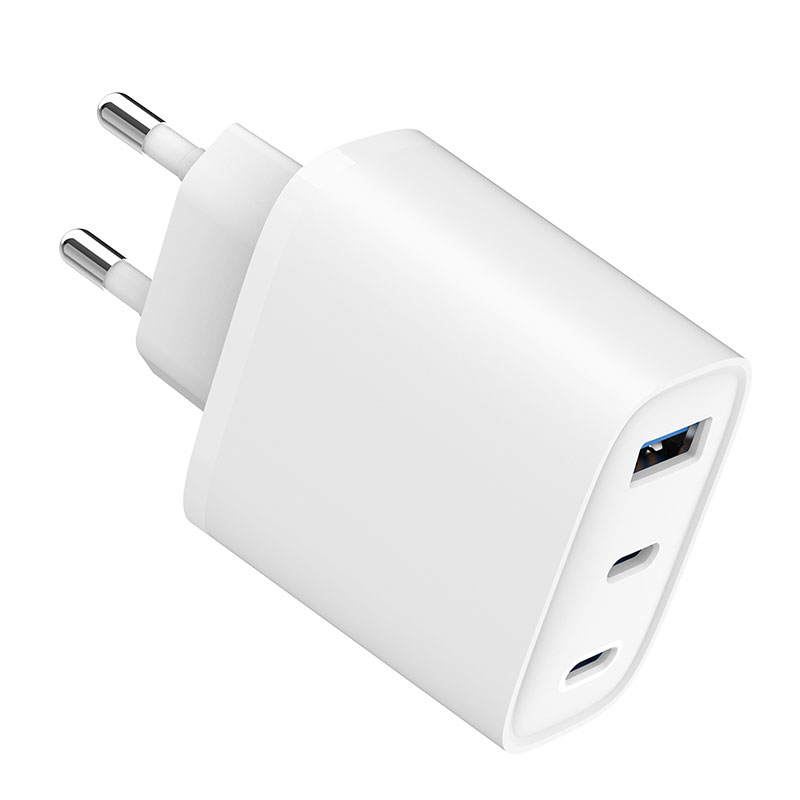
A platform is a certified electrical and mechanical design offered in several configurations: wattage tier, port mix, plug kit, enclosure finish and branding. The commercial effect is that a brand can open with a low quantity because the tooling and the safety-critical design already exist. The technical effect is that certification is not restarted for every variant. For a distributor building a multi-market assortment, this is the difference between a catalogue and a series of projects.
Quality gates: what should exist at each stage
A charger programme needs five gates: incoming inspection against the approved BOM, in-process inspection of soldering and assembly, 100% functional test, aging under load, and outgoing inspection with sampling. The gates matter because each one catches a different failure close to its cause. A factory that relies on a final check alone will discover a wrong component after the whole batch is built.
| Gate | What it catches | Record |
|---|---|---|
| IQC | Wrong or substituted components | Incoming inspection report |
| IPQC | Soldering, ESD and assembly defects | Process records |
| Functional test | Output and protection failures | Test results |
| Aging | Thermal and intermittent faults | Aging log |
| OQC | Appearance, labelling, accessories | Outgoing report |
Certification transfer when your brand is applied
Applying your brand changes the manufacturer identification, the model designation and the label, and it may change the importer details required in some markets. It does not change the electrical design. On a platform with existing reports, that work is documentation and marking rather than new testing. Ask which reports exist, which markets they cover, and what the factory needs from you: artwork, model names, importer address and language requirements.
MOQ, tooling and the economics of a first order
Tooling is the main driver of minimum order quantity. A platform-based charger can open at 200 pieces per model because the mould and the certified design already exist; a new enclosure carries tooling, sample loops and its own test work, which raises the economic minimum. If a supplier quotes a very low MOQ on a new form, ask where the tooling cost is being recovered, because the answer usually explains the unit price.
Lead time, samples and production slots
Lead time depends on the platform, the tooling position and the point in the factory calendar. Samples with logo and finish are typically prepared in two to three days where the platform allows, and quotations are returned within 24 hours on business days. Production is planned in slots, so a confirmed order holds capacity while an enquiry does not. Plan the launch date backwards from the required shipment date and confirm the milestone that starts the clock.
Warranty, spares and after-sales terms
Agree the warranty terms in the purchase order rather than assuming them: who handles the end customer, what evidence a claim needs, whether replacement or credit is issued, how many spare units ship with the first order, and which defects are excluded. A factory that links every claim to a batch and date code can diagnose a failure; one that cannot will negotiate it.
Documents to request before ordering
- Factory licence and address verification
- Quality certificate with its scope
- Test reports applicable to the platform
- RoHS and REACH declarations for the parts supplied
- Sample inspection report and batch record format
- Warranty and spares terms
Common mistakes buyers make
The most common mistake is comparing quotations that are not comparable: different platforms, different port layouts, different packaging and different certification scope. The second is approving artwork before the compliance text is frozen, which leads to a label reprint. The third is choosing a supplier on unit price alone and discovering at the pilot run that the process cannot hold the specification. All three are avoided by stating the specification completely and insisting that the quotation restates it.
What a first order should include
A first order should be built to give the brand everything it needs to sell and to reorder: the agreed specification, the approved golden sample, the packaging proof, the certification documents that name the model, and the batch record from the production run. The purchase order should reference the platform, the approved sample revision and the repeat-order terms. Where a supplier cannot state which revision will be produced, the second order is a new negotiation rather than a repeat.
FAQ
What should be verified before the first order?
The platform the product will be built on, the quality gates that exist in production, whether the certification status covers the brand’s markets, and who owns the tooling. Each answer changes the cost or the schedule rather than the appearance of the unit. Ask about the platform, the quality gates, the certification status for your markets and the ownership of the tooling, because each answer changes the cost or the schedule.
Does certification transfer when our brand is applied?
It transfers where the product configuration and the responsible party arrangement are unchanged. Where the brand becomes the party placing the product on the market, the declaration and the label change with it. Certification transfers where the product configuration and the responsible party arrangement are unchanged, and where the brand becomes that party the declaration and the label change with it.
What MOQ should a first order expect?
It follows the platform rather than the brand. A platform already in production carries a low minimum because the tooling exists; a new enclosure or a custom colour adds a tooling and a print minimum on top of it. It follows the platform rather than the brand, because a platform already in production carries a low minimum while a new enclosure adds a tooling minimum.
Which documents should be requested before ordering?
The quotation with its cost breakdown, the tooling quotation, the quality gate description, the certification status per market and the batch record sample. Those five allow a first order to be planned rather than estimated. Ask for the quotation with its cost breakdown, the tooling quotation, the quality gate description, the certification status per market and a batch record sample.
Next step
Wecent Group supplies brands and distributors from certified platforms with minimum quantities from 200 pieces per model, samples in two to three days where the platform allows, and a quotation within 24 hours on business days. Send your specification and target markets through the contact page. Related reading: OEM/ODM charger manufacturing, wholesale chargers and quality control. External references: USB-IF documentation, IEC standards, FCC equipment authorisation, EU CE marking, ECHA REACH and ISO 9001.