
Talk · Selection · Travel plugs, form factor & materials
How thin can a wall charger be before it feels flimsy in the socket?
There is no single thickness.
 Wecent Editorial Team
Updated
3 min read
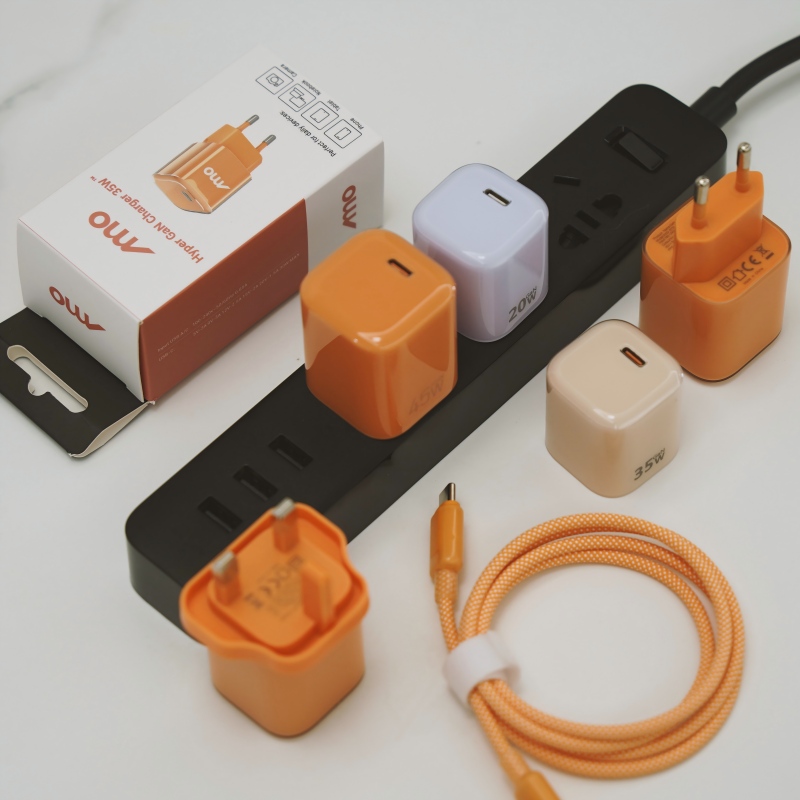
We want a very slim wall charger. How thin can it be before it feels flimsy in the socket?
Short answer: There is no single thickness. What matters is how well the plug blades are held, how much the charger weighs and how far it sticks out, because weight and distance create leverage on the socket. A slim charger can feel solid with a stiff shell, firm blades and a good fit, but a thin, light one in a loose socket will tilt or fall out.
The physics
When a charger hangs from the socket, its weight acts through the distance it sticks out from the wall. The longer or heavier it is, the greater the force on the blades and the socket. A thin charger can be light, but if it is wide or long, or if the shell flexes, it can still feel poor.
What makes a charger feel flimsy
- Flexing shell. The two halves bend when pressed.
- Loose blades. The prongs wiggle in the case.
- Poor fit. The blades are slightly the wrong size or spacing.
- Rattling. Loose internal parts.
- Unbalanced weight. The mass is far from the wall.
- Worn sockets. Even a good charger will lean in a loose outlet.
- Cheap materials. Thin plastic with poor ribs.
What to check on samples
- Press and twist the shell, and check how much it flexes.
- Wiggle the blades and check for movement.
- Plug it into several sockets, new and used, in horizontal and vertical positions.
- Hang a cable from it and see whether it tips or falls out.
- Check the insertion and removal force. It should be firm, not too tight or too loose.
- Drop test from a realistic height.
- Heat check. Thinner cases may be hotter, so test temperature under load.
Design factors
- Use ribs and good material in the shell.
- Reduce the distance from the wall to the centre of mass.
- Consider a folding plug, or a plug that is positioned to suit common sockets.
- Make sure the blades are properly anchored.
Standards
Plug and socket dimensions and strength requirements apply. The product must meet the applicable safety standard and the plug dimensions standard for the market.
Balance
A thinner design looks good, but a customer will judge it by how it feels in the socket and how well it stays there. Test with real sockets.
Quick summary
Judge by blade fit, shell stiffness and leverage, not by thickness alone. Test in several sockets.
Where this answer says to confirm with Wecent, the detail is not published on the product page and has to come from the datasheet or the factory. General facts come from the regulators, standards bodies or device makers named in the text.
Three more perspectives
Products discussed in this thread
Related articles & topics
Have a sourcing question about your own programme?
Ask our team More Travel plugs, form factor & materials questions