
Talk · Purchasing · Samples, tooling & launch
How many cavities should a charger shell mould have for a 10,000-piece first run?
For a 10,000-piece run, a single-cavity mould is often enough, because the moulding time is small compared with assembly and testing.
 Wecent Editorial Team
Updated
3 min read
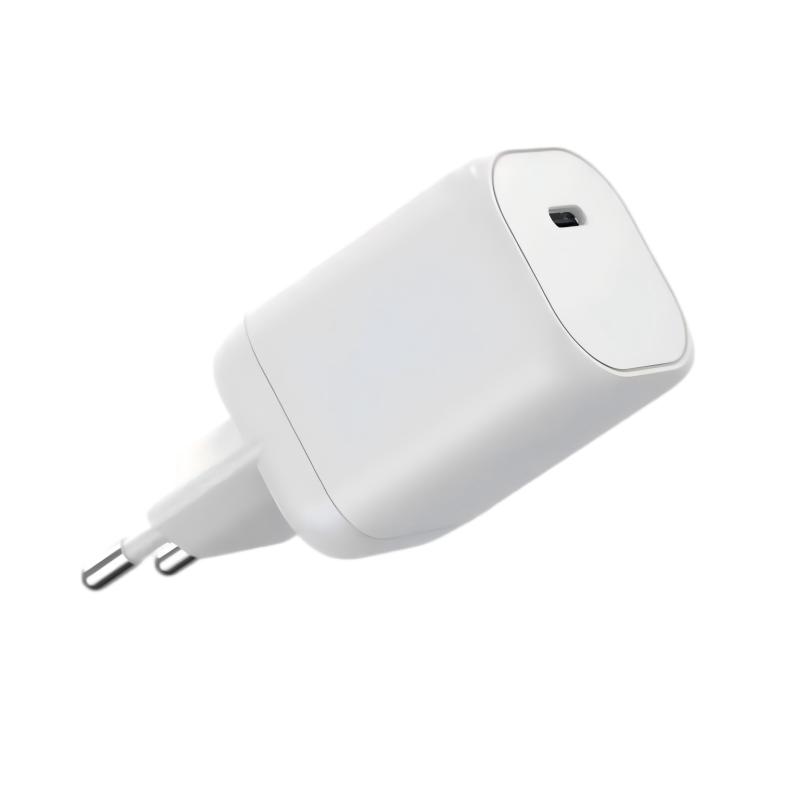
Our first run is 10,000 chargers with a possible reorder. The factory offers a one-cavity or a two-cavity mould. How should we decide?
Short answer: For a 10,000-piece run, a single-cavity mould is often enough, because the moulding time is small compared with assembly and testing. More cavities cost more to build and only pay off when annual volume is high enough to save more in cycle time than the extra tooling costs. Ask the factory to show the calculation for your volume.
What a cavity is
A mould can form one shell per cycle, or two, four or more at once. More cavities make more parts per cycle, but the mould is larger, costlier and harder to adjust.
A simple way to compare
- Estimate how many parts you need per day or per week at peak.
- Ask for the cycle time per shot for your shell, including cooling.
- Compute the parts per hour for each option. Parts per hour equals cavities times shots per hour.
- Compare the extra tooling cost with the saving in machine time over the life of the product.
An illustrative example
Suppose a shell takes about 30 seconds per shot. That is 120 shots an hour, so a single cavity gives roughly 120 shells an hour, or about 960 in an eight-hour shift. A 10,000-piece run needs about eleven shifts of moulding. That is a modest time even on a single cavity. This is only an illustration. Use your factory’s real cycle time and the number of parts in each product.
Reasons to choose more cavities
- High annual volumes, where machine time dominates.
- Short delivery times, where there is no room for extra shifts.
- Several variants of a shell that can share a mould or be run together.
Reasons to stay with fewer cavities
- Lower tooling cost and faster tooling lead time.
- Easier adjustment if the design changes after the first trial.
- Simpler quality control, since each cavity may differ slightly.
- The risk that a forecast is not met, leaving an expensive mould idle.
Cavity-to-cavity differences
With several cavities, parts from each may differ a little in size or colour. Ask the factory to label cavities and check each in the first trial.
Think about the second mould
A successful product often needs more volume later. Some brands start with one cavity and build a second mould when sales justify it, which also provides a backup if the first fails.
Ask for numbers
Request a table with tooling cost, cycle time, parts per hour and lead time for each option, so you decide on facts.
Where this answer says to confirm with Wecent, the detail is not published on the product page and has to come from the datasheet or the factory. General facts come from the regulators, standards bodies or device makers named in the text.
Three more perspectives
Products discussed in this thread

Related articles & topics
Have a sourcing question about your own programme?
Ask our team More Samples, tooling & launch questions