
Talk · Selection · Travel plugs, form factor & materials
What makes a wall charger tip out of a loose or worn socket, and how can the design reduce it?
A charger falls out when its weight and centre of gravity pull harder than the socket grips.
 Wecent Editorial Team
Updated
3 min read
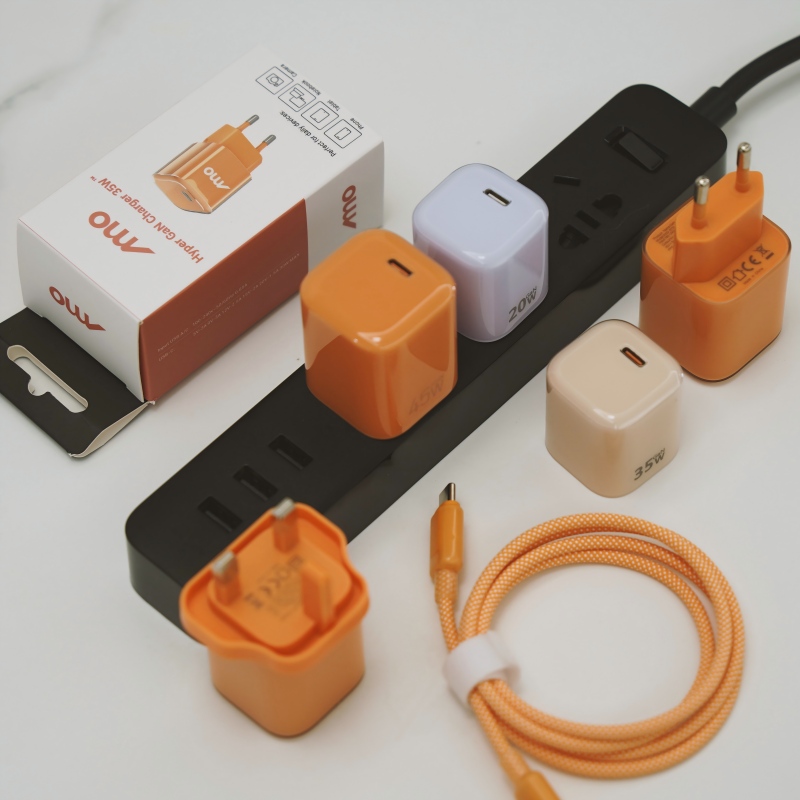
Reviewers complain that our 65W wall charger ‘falls out of the socket’ in older wall outlets. Is it a weight problem, and what in the design can we change?
Short answer: A charger falls out when its weight and centre of gravity pull harder than the socket grips. Heavy bodies, a long distance between the wall and the centre of mass, short blades and worn socket contacts all add to the load. Design choices such as a lower, slimmer body and good blade retention help, but they cannot fix a very worn outlet.
What pulls a charger out
Gravity acts at the charger’s centre of mass. The further that centre is from the wall, the larger the turning force on the plug blades. The socket’s contacts have to resist that turning force. In an old or worn outlet the contacts are loose, so even a modest charger can droop or slip out.
Design factors that matter
- Body thickness. A thicker body puts the weight further from the wall.
- Total weight. Metal parts, large capacitors and heat sinks add mass.
- Plug blade length and shape. Longer blades give more leverage against the turning force, as long as they fit the standard.
- Blade grip. Blade material, springiness and finish affect how firmly the socket contacts hold.
- Cable weight. A heavy cable hanging from the ports can pull the charger over.
- Orientation. A charger plugged into a lower outlet carries a different load from one at a higher outlet.
What the design can do
- Keep the body as thin as the heat design allows.
- Move the heaviest components close to the wall side of the housing.
- Use a plug blade design that the socket grips well, within the standard.
- Offer a version with ports on the side or bottom if the cable load is a problem.
How to test it
Build a simple fixture with a range of sockets: new, used and a known loose one. Mount the charger and apply a cable load typical of use. Record whether the unit stays put, droops or falls out. Use the results as a pass criterion for the specification.
Be honest in the listing
A charger cannot suit every worn socket. Say so in the product guidance and suggest a power strip or an extension where the wall socket is loose.
Collect the evidence
Reviewers’ comments are useful. Note the socket type, the wattage and the cable used, and compare against your fixture results.
Where this answer says to confirm with Wecent, the detail is not published on the product page and has to come from the datasheet or the factory. General facts come from the regulators, standards bodies or device makers named in the text.
Three more perspectives
Products discussed in this thread
Related articles & topics
Have a sourcing question about your own programme?
Ask our team More Travel plugs, form factor & materials questions