
Talk · Selection · Wireless, magnetic & multi-device
Which wireless charger design works best on a bedside table?
A stable stand or pad with dimmable or no lights, quiet operation, a compact footprint and good alignment works best. Clock or multi-device stands add convenience; bright lights and fans are common complaints.
 Wecent Editorial Team
Updated
2 min read
We want a bedside-focused wireless charger in our range. Should it be a pad, a stand, a 3-in-1 or a clock model?
Short answer: Choose by user needs. A stand lets users see notifications and use face unlock; a pad is simple and compact; a 3-in-1 suits users with a watch and earbuds; a clock model replaces a bedside alarm clock. Whatever the type, prioritise dimmable or no lights, silent operation, stability, a compact footprint and good alignment (magnetic where possible).
Light
Bright indicator lights and displays are the most common bedside complaint. Look for dimming, automatic night mode or lights that turn off after charging starts.
Noise
Bedrooms are quiet. Fans or audible coil noise are noticeable at night. Listen to samples in a quiet room.
Stability and footprint
- A heavy base or anti-slip feet.
- A footprint that fits small bedside tables.
- Cable exit at the back.
Alignment
Magnetic chargers keep phones aligned when picked up and replaced in the dark. Stands with ledges help too. Pads require more care to centre the phone.
Design options
- Pad: simple, low profile, cheaper.
- Stand: notifications visible, face unlock, alarm display.
- 3-in-1: phone, watch, earbuds in one place; needs more power and space.
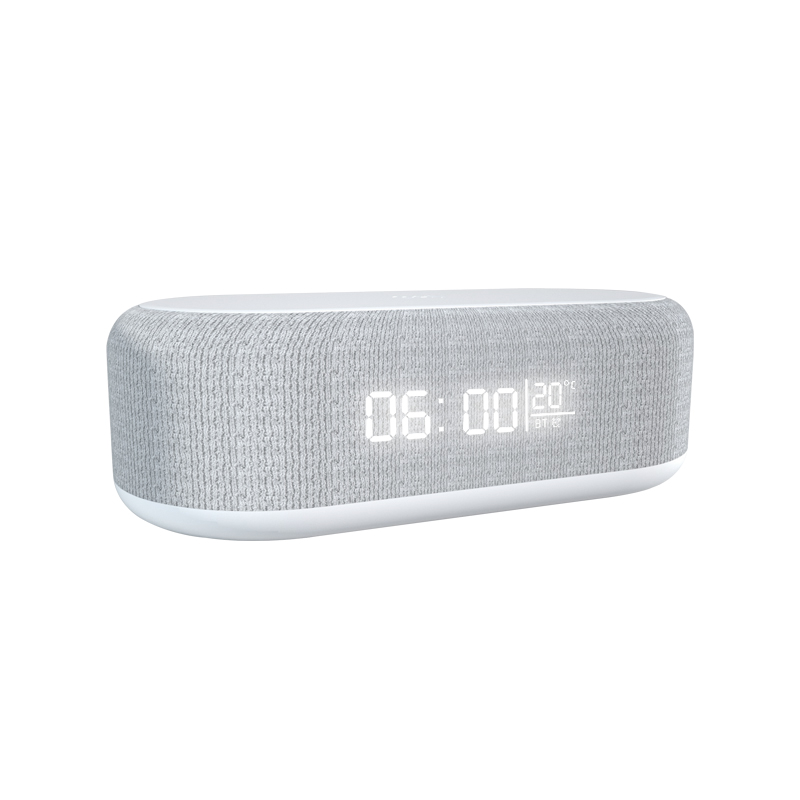
- Clock model: replaces an alarm clock; check display brightness and timekeeping after power cuts.
Heat
Wireless charging produces heat. Designs with good thermal paths and temperature protection keep phones cooler overnight. Ask about temperature management on samples.
Power adapter
Include or specify a suitable USB-C adapter. Bedside products are often used with old adapters, which leads to slow charging complaints.
Cable and socket placement
Bedside sockets are often behind the bed or low on the wall. A cable of 1.5 m or more and a slim adapter help. A cable that is too short pulls the charger to the edge of the table, where it’s easily knocked off in the dark.
Who buys bedside chargers
Gift buyers, hotels and couples sharing a bedside often want two-device or 3-in-1 designs. Single users often prefer a simple stand. Knowing your buyer helps pick the right hero model.
Our options
Wecent’s range includes clock wireless chargers and 3-in-1 stands. Confirm with Wecent the light controls, magnet support and input requirements for each model.
Test like a user
Put samples on a bedside in a dark room for a week. You’ll quickly see which lights, sounds and alignment issues matter.
Where this answer says confirm with Wecent, the detail is not published on the product page and has to come from the datasheet or the factory. General facts come from the standards bodies, regulators or device makers named in the text.
Three more perspectives
Products discussed in this thread
Related articles & topics
Have a sourcing question about your own programme?
Ask our team More Wireless, magnetic & multi-device questions