
Talk · Selection · Travel plugs, form factor & materials
Which charger shapes (cube, slim, folding) pack best into retail cartons?
A flat, slim charger usually gives the smallest retail box and the most efficient shipping, a cube is compact in two directions but deeper on a shelf, and a folding design packs flat but adds a hinge.
 Wecent Editorial Team
Updated
3 min read
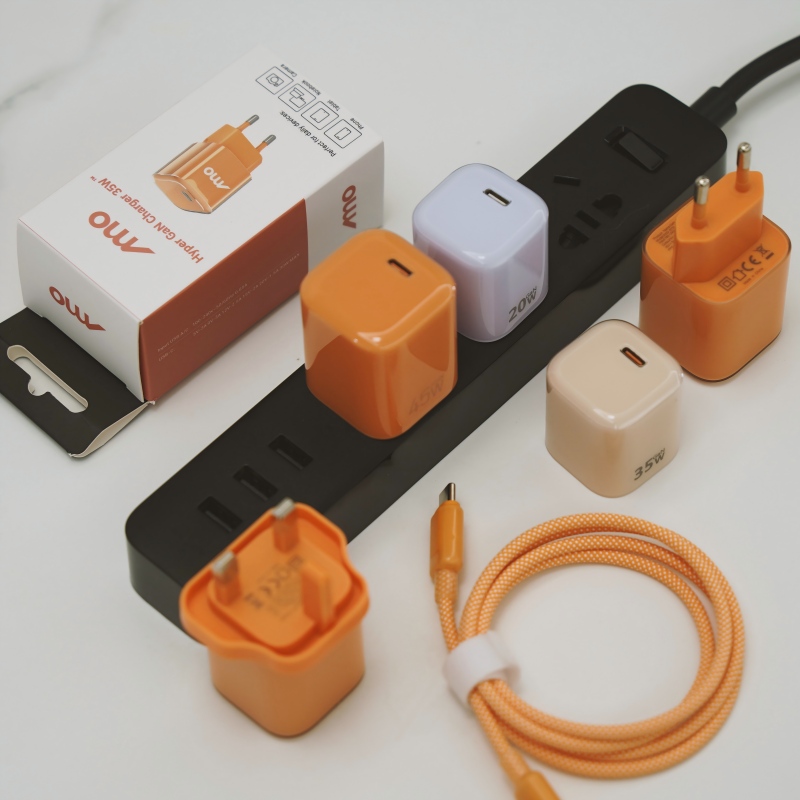
We are designing retail packaging for a 65W charger. Should we choose a cube, a slim flat body or a folding design to get the smallest, cheapest carton?
Short answer: A flat, slim charger usually gives the smallest retail box and the most efficient shipping, a cube is compact in two directions but deeper on a shelf, and a folding design packs flat but adds a hinge. The best choice depends on the retail display, freight cost and the product’s use. Compare box sizes and carton counts, not just charger volume.
What drives the carton
Retail cartons are sized by the largest dimension of the contents plus space for the cable, manual and protection. The volume of the charger matters less than its smallest enclosing box.
Cube-style bodies
A cube is compact, and good for single-port, low-power models. A box for a cube is often deeper than wide, which may not suit peg hooks or shelves with limited depth. A cube also tends to stand on its own, which looks good in display packaging.
Slim, flat bodies
A slim body has a small thickness and can lie flat. The retail box is thin and wide, which fits shelves, peg hooks and mailer boxes well. It suits notebook chargers and multi-port models, and ships efficiently because cartons stack closely.
Folding designs
Folding plug blades let the charger lie flatter. The retail box can be smaller, but check that the blade hinge and any locking parts fit into the pack without being pressed. Folding designs often add cost and a part that can fail.
What else sits in the box
- The cable and its coil size.
- A quick-start guide or card.
- Any plug adapters or a pouch.
- Protective inserts that stop the charger rattling.
How to compare
- Make 3D drawings or dummy boxes for each option with all contents.
- Measure the retail box and the master carton, and compute units per carton and per pallet.
- Compare freight cost per unit using your forwarder’s rates.
- Check display options: peg hook, shelf, counter or e-commerce mailer.
- Run a transport test on a sample.
Consider e-commerce
For online sales, the mailer size matters as much as the shelf box. A flat pack that fits a standard mailer can reduce shipping charges and cut damage.
Decide with data
Pick the shape that gives the lowest total cost across product, packaging and freight, then confirm with a drop and compression test.
Where this answer says to confirm with Wecent, the detail is not published on the product page and has to come from the datasheet or the factory. General facts come from the regulators, standards bodies or device makers named in the text.
Three more perspectives
Products discussed in this thread

Related articles & topics
Have a sourcing question about your own programme?
Ask our team More Travel plugs, form factor & materials questions