
Wireless Charging Phones: What Actually Limits the Rate
Almost every current flagship phone charges wirelessly, and almost none of them charge at the number printed on the pad. Here is what decides the real rate — and what to check before you specify a wireless charger for a fleet of phones.
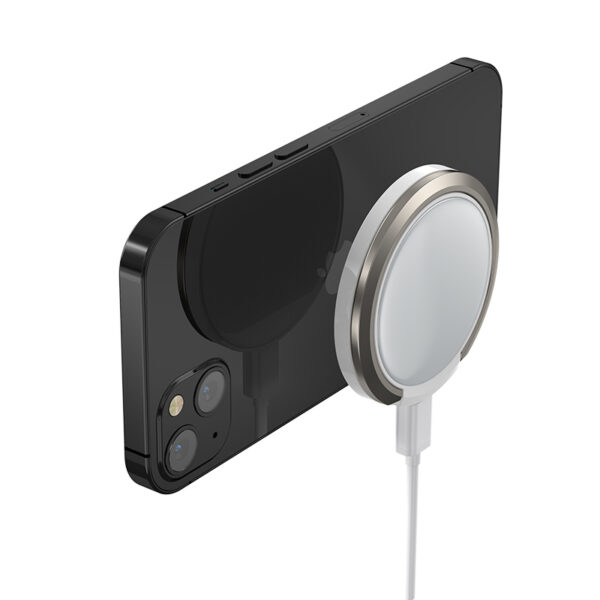
Wireless charging needs two things to work: a phone with a receiver coil and a pad that matches its profile. The rate the customer sees is decided by alignment, case thickness and heat, not by the pad’s label — which is why a magnetic Qi2 pad holds its rate while a free-position pad often looks slow.
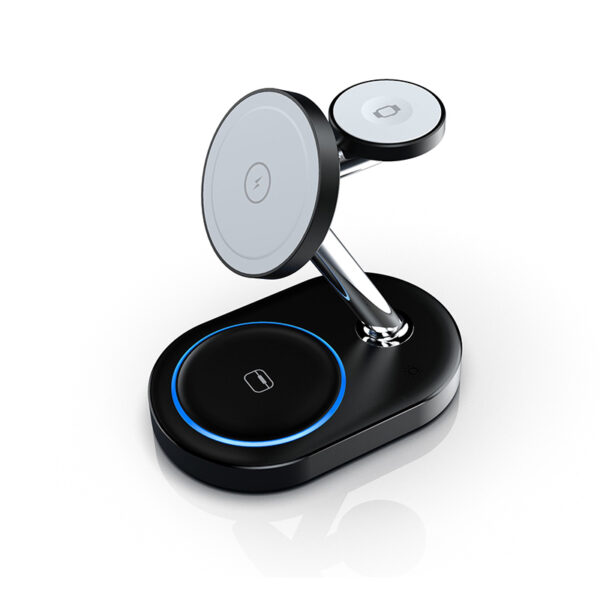
Four things decide the rate a phone actually gets
The first is the profile. A phone negotiates a rate with the pad, and the pad has to support it: a phone that implements Qi2 will take the higher band, one that only implements the older Qi profiles will not, whatever the pad is capable of. That negotiation is why two phones on the same pad can show different numbers.
The second and third are alignment and case thickness. A coil that is a few millimetres off centre couples less efficiently, and the lost energy becomes heat in the pad and in the phone. A thick or metal-backed case does the same thing. The fourth is heat itself: the phone throttles its own charging as it warms, so a session that starts at the rated rate and settles lower is behaving correctly, not failing.
- The profile. Qi2 and MagSafe-compatible platforms negotiate the higher band; older Qi-only phones stop at the legacy rate.
- Alignment. A magnet array holds the coil in the sweet spot; free-position pads leave it to the user.
- Case thickness. MagSafe-compatible cases pass the field; thick or metal-backed cases reduce it.
- Heat. The phone throttles as it warms, so the average rate over a session is the honest metric.
Qi, Qi2 and MagSafe — what each one buys
The three names get used interchangeably in listings and they are not the same thing. Qi is the baseline: any compatible phone charges, at the legacy rates. Qi2 adds a magnetic alignment reference to the standard, which is why Qi2 units behave consistently across brands. MagSafe is a phone-maker’s implementation of magnetic alignment, and MagSafe-compatible accessories work with phones that carry a magnet ring. For a branded product sold to a mixed customer base, the practical question is whether the target phones have a magnet ring.
| What you are choosing | Free-position Qi pad | Magnetic Qi2 / MagSafe-compatible |
|---|---|---|
| Phone coverage | Any Qi-compatible phone | Phones with a magnet ring or a compatible case |
| Rate consistency | Depends on how the user places the phone | Repeatable — the phone snaps to the coil centre |
| Use while charging | Phone must lie flat | Phone can be tilted, lifted or held |
| Best for | Mixed fleets and older devices | Current flagships and accessory ranges |
How this plays out in a product range is covered on the magnetic charger page.
Specifying a wireless charger for a fleet of phones
When the charger has to serve a mix of devices — a corporate rollout, a hotel, an office — the specification starts from the phone list, not from the pad. Send it and we will confirm what each device negotiates and where the common band sits.
- Send the phone list. Model names are enough to confirm which profile each one negotiates.
- Decide magnetic or free-position. If most devices carry a magnet ring, magnetic alignment removes the support calls.
- Check the case policy. If users keep thick cases on, the rate drops regardless of the pad.
- Specify the adapter with the pad. The input rating sets the ceiling for every coil on the unit.
Wireless charging for phones — what is specified
| Device requirement | A phone with a wireless charging receiver coil; the profile it negotiates is confirmed from the model list |
|---|---|
| Standardised bands | Qi2 and MagSafe-compatible 15W on our platforms; legacy Qi rates on older devices |
| Alignment | Magnet array on magnetic models; free-position on non-magnetic pads |
| Case compatibility | MagSafe-compatible cases pass the field; thick or metal-backed cases reduce the rate |
| Thermal behaviour | Phones throttle as they warm; the sustained rate is stated on the model datasheet rather than the peak |
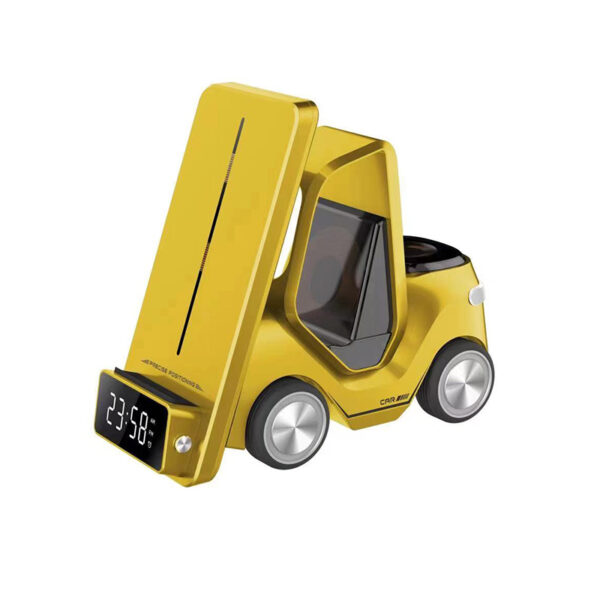
| Formats | Pad, magnetic pad, stand, 3-in-1 to 5-in-1 station |
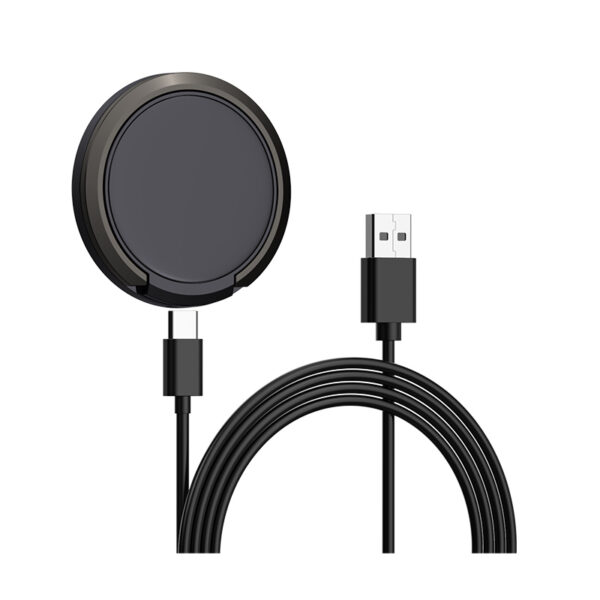
| Input | USB-C; the adapter rating is specified with the unit and quoted as a bundle where needed |
| Certifications | CE, RoHS, FCC, UKCA, PSE, KC, SAA and CB reports for a wireless charging programme, depending on the target market |
| MOQ | 200 pcs per model for a branded wireless charging programme; a trial quantity can be split across a few SKUs |
| Samples | 2–3 days with your logo and finish applied to the wireless charging programme |
| Mass production | 7–15 days after sample and artwork approval for the wireless charging programme |
| Carton | 50 pcs per carton as standard for the wireless charging programme, or customised to your requirement |
The rows above describe a standard wireless charging programme. Custom power stages, coil layouts, plugs and packaging are quoted per project, and every figure is confirmed on the datasheet before a sample is built.
Platforms for phone-first programmes
How a wireless charging programme is built and checked
For a programme that has to serve several phone models, the last gate is run with the target devices rather than with a reference load — a profile that negotiates on paper does not always negotiate on a phone in a case.
Material preparation and checking
Components are checked against the approved bill of materials before a board enters the line: coil, shielding, controller and cable, matched to the phone families the unit has to serve.
First-piece quality confirmation
The first unit of a run is bench-tested with the target phones rather than a reference load, because a charging profile that negotiates on paper does not always negotiate on a phone in a case.
Assembly on static-protected lines
Boards are assembled on static-protected lines to a written operation sheet, with coil seating verified before the housing is closed.
Visual inspection rounds
Repeat inspections cover coil centre, contact surface finish and the cosmetic condition of the housing, the parts a customer judges on arrival.
Aging under load and electrical testing
Every unit runs an aging cycle under load and is re-measured afterwards, which is where a pad that only holds its band while cool is caught.
Charging and protocol verification
Output voltage and current are measured across the coil, and the negotiated profile is recorded per phone family so the specification reflects the devices in the fleet rather than the label.
QA sampling, packing and shipment inspection
Sampling runs before packing, the box and cable are checked against the approved artwork, and the batch report keeps the shipment traceable for a rollout that has to be repeatable.
The bench test at the end of the line is run with the target phones rather than with a reference load, because a profile that negotiates on paper does not always negotiate on a phone in a case.
Where phone compatibility decides the specification
Corporate rollouts
A mixed fleet of phones on one charger — the phone list sets the format.
Hospitality
Guests arrive with different phones, so alignment matters more than peak rate.
Retail accessory ranges
A magnetic flagship SKU plus a cheaper free-position one for older devices.
In-box accessory
Chosen around the phone shipped in the box, which fixes the profile.
Certifications and what comes with the shipment
The file for a wireless charging programme is assembled from the first sample rather than hunted down before dispatch, so the paperwork matches the market the container is going to.
CE / UKCA
European Union and United Kingdom market access for the finished unit and its power supply.
FCC
United States electromagnetic compliance for the finished unit.
RoHS / REACH
Restricted-substance documentation for the European market.
PSE / KC
Japan and Korea market documentation, quoted with the plug kit.
CB / SAA / GS / ETL
Additional reports quoted where the channel or retailer requires them.
ErP efficiency
Efficiency documentation for the EU external power supply regulation.
Reference standards behind this page: Wireless Power Consortium (Qi / Qi2), EU external power supply regulation (ErP), EU CE marking and the USB Implementers Forum for USB-C and Power Delivery specifications.
Related guides and platforms
Magnetic wireless chargers
Why alignment decides the real charging rate.
20W wireless charger explained
What the number means and which profile delivers it.
Wireless charging pads
The format that suits mixed device fleets.
Wireless charging stations
Phone, watch and earbuds from one base.
All wireless chargers
The current wireless range with wattage for each model.
Wireless charger manufacturing
What to check before choosing a factory.
Wireless charging phones — FAQs
Which phones charge wirelessly?
Current flagship and most mid-range phones include a wireless charging receiver. The reliable way to confirm is the manufacturer’s specification sheet. If you send us the model list for a rollout, we will confirm the band each device negotiates.
Why does my phone show a lower rate than the pad’s rating?
Because the phone negotiates the rate and then manages it. Alignment, case thickness and heat all pull it down, and the phone throttles deliberately as the battery warms. A magnetic pad holds the higher rate for longer by removing the alignment variable.
Does a thick case stop wireless charging?
It does not usually stop it, but it reduces the coupling and therefore the rate. MagSafe-compatible cases are designed to pass the field; metal-backed cases are the worst case, because the metal shields the coil.
Do Android phones work on a MagSafe-compatible pad?
They can charge, but without a magnet ring they will not snap into alignment. Some Android phones have a magnet ring built in, and rings are also available as stick-on accessories. For a mixed fleet, a free-position pad is often the safer SKU.
Is wireless charging bad for the battery?
Wireless charging generates more heat than wired for the same delivered energy, and heat is what ages a battery. That is why alignment and thermal design matter — a well-designed magnetic pad keeps the losses, and therefore the heat, lower than a badly aligned free-position one.
Can a phone charge through the case and a card holder?
Cards and metal plates in a case interfere with both the field and the magnet array. A magnetic wallet that sits behind the phone will usually prevent wireless charging altogether.
What is the minimum order if we want a branded pad?
200 pcs per model. On a fleet programme the trial quantity is usually split across a magnetic and a free-position variant, so the first order measures how the mix of phones in the building behaves on each before the rollout quantity is committed.
Which certifications apply?
CE, RoHS, FCC, UKCA, PSE, KC, SAA and CB reports depending on the target market, assembled from the first sample rather than before dispatch.
Can you test our actual phones?
Yes. Bring the devices to a factory visit or send the model list, and the platforms are tested against them on the bench rather than on the marketing claim.
What is the warranty?
Two years on the platform, with the adapter included where it ships as a set. Complaints about slow charging are diagnosed against the shipped configuration — adapter rating, coil layout and the phone that was tested — rather than against a generic claim on the box.
Which phones have wireless charging?
Current flagship and most mid-range phones include a wireless charging receiver, and it is listed on the manufacturer’s specification sheet. The reliable way to settle it for a rollout is to send us the model list: we confirm the band each device negotiates instead of relying on the marketing name.
Can all cell phones do wireless charging?
No. A phone needs a receiver coil, and older or budget models often do not have one. Phones without a coil can be adapted with a receiver sleeve or a plug-in receiver, but the result is usually thicker and slower than a native implementation — worth knowing before specifying a fleet.
What is the cheapest cell phone with wireless charging?
Price moves quickly and varies by market, so the useful answer is what to look for rather than a model: a specification sheet that lists wireless charging, and ideally a magnet ring, which is what makes the difference between placement by hand and automatic alignment on a Qi2 or MagSafe-compatible pad.
Wireless charging on phones in more detail — compatibility, profiles and switching it on Know more Know less
Which phone models have wireless charging
Wireless charging needs a receiver coil inside the phone, and it is listed on the manufacturer’s specification sheet rather than implied by the model name. Current flagship and most mid-range phones include one; older and budget models often do not.
For a rollout, send the model list and we confirm the band each device negotiates. That is faster and more reliable than working from a marketing name, because two phones in the same family can differ in this one respect.
iPhone and Android wireless charging
The iPhone 12 generation onwards carries a magnet ring, which is what makes magnetic alignment work. Android models that support Qi2 use the same magnetic reference; the rest charge on the coil but have to be placed by hand unless a ring or a compatible case is added.
That distinction is the one worth settling before choosing a product, because it decides whether a magnetic stand or a free-position pad is the right SKU for the devices in the building.
How to turn on wireless charging
There is usually nothing to enable. A phone with a receiver charges when it is placed on a pad that supports its profile; the settings that exist mostly cover battery health limits, optimisation or slow-charging notifications.
If a phone does not charge, the cause is almost always mechanical or electrical rather than a setting: a case that is too thick, a card or metal plate behind the phone, a pad with no power, or an adapter that cannot supply the pad’s input requirement.
Fast wireless charging and what limits it
Fast wireless charging is a negotiation. The phone asks for a band, the pad has to support it, and then the phone manages the rate down as the battery warms or approaches full. The average over a session is the honest measure, not the first minute.
Alignment and case thickness are what pull the average down in practice, which is why a magnetic platform often reads as faster even when both products carry the same rating.
Send your spec, get a costed quotation
Send the phone list and the markets. You get the band each device actually negotiates, the format that suits the mix, and pricing — plus a plain answer where a magnetic product is the wrong choice for that fleet.
- MOQ from 200 pcs per model, splittable across a few SKUs
- Samples in 2–3 days with your logo and finish applied
- Reply within 24 hours on business days