
Wireless Charging Pad
The charging pad is the simplest wireless format: one coil, one cable, no moving parts and the largest flat surface for your branding. WECENT builds magnetic and free-position pads from 200 pcs per model, samples in 2–3 days.
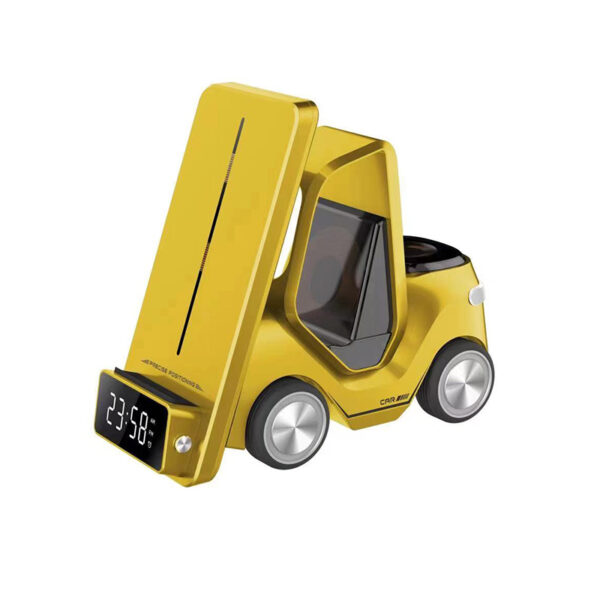
Two decisions settle a pad: whether it carries a magnet array, which holds the phone in the coil centre so the rated rate is repeatable, and whether the phone has to stay usable while it charges. If it does, the flat format is the wrong product and a stand suits the desk better.
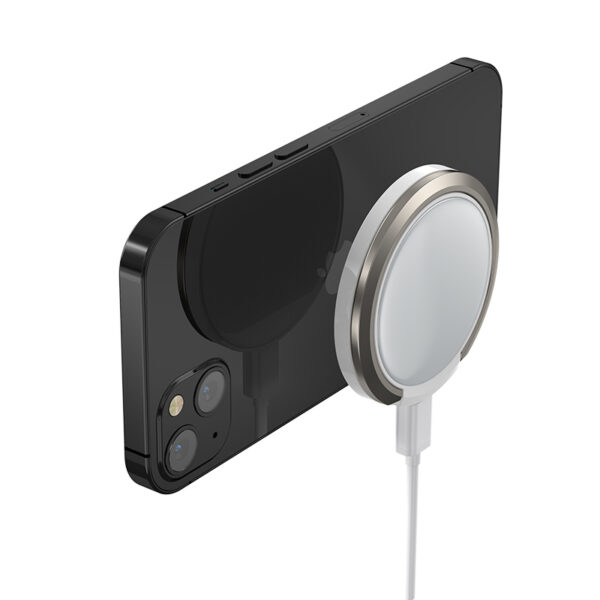
Where the simple format still wins
A pad has fewer parts than any other wireless product: one coil, a small board, a shell and a cable. That is why it is the cheapest wireless format to build and the easiest to brand — the whole top surface is available for printing, etching or a material face, and the unit packs almost flat, which keeps carton and freight cost down.
The trade-off is that the phone lies flat and stops being usable, and the customer has to find the coil centre by hand unless the pad is magnetic. For a gift, a counter-top or an in-box accessory, that is an acceptable trade. For a bedside table where the phone doubles as a clock, it is the wrong format — which is a use-case decision, not a quality one.
- Cost and freight. Fewest parts and the smallest packed volume of any wireless format.
- Branding surface. The entire top face is available, which suits large logos and material finishes.
- Alignment. A magnetic pad fixes the customer’s placement problem; a free-position pad needs a steady hand.
Pad, stand or station?
The three formats can share the same coil and the same power stage, so the choice is about how the product is used rather than how it is built. A pad puts the phone down and out of the way. A stand keeps it readable. A station charges several devices at once. Picking the wrong one is the most common reason a wireless SKU underperforms on the shelf.
| What you are choosing | Pad | Stand or station |
|---|---|---|
| Phone usable while charging | No — lies flat | Yes on a stand; several devices on a station |
| Unit cost | Lowest | Higher — hinge, base mass, extra coils |
| Packed volume | Smallest, packs almost flat | Largest, the base sets the carton |
| Typical channel | Gifting, in-box accessory, counter-top | Retail own-brand, office, hospitality |
If the phone needs to stay readable, the stand format is the right starting point; for several devices at once, see the station page.
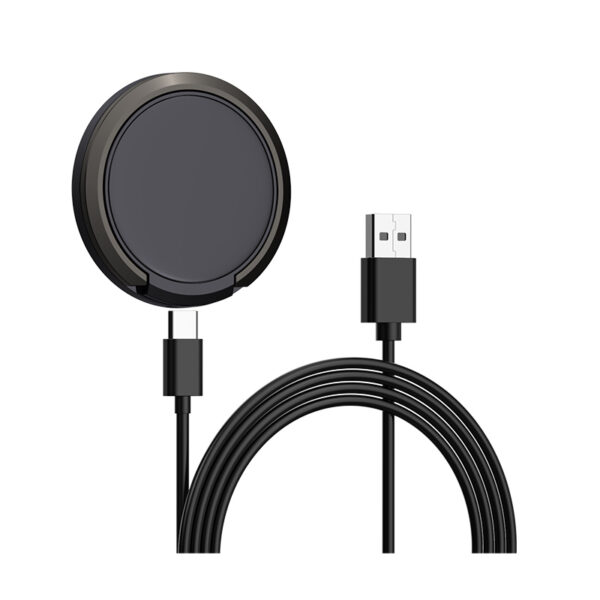
What you can change on a pad
Everything below sits on top of a platform that is already tested, which keeps the sample at 2–3 days and the MOQ at 200 pcs per model.
- Top face — ABS or PC with your colour and texture, or bamboo, wood, PU leather and silicone finishes.
- Magnet or free-position — a magnet array for alignment, or a plain coil for any Qi device.
- Size and shape — round or rectangular, sized to the phone and to the print area you need.
- Logo and packaging — silk-screen, laser or UV printing, plus a colour box and insert drawn to your artwork.
Wireless charging pad — specifications
| Charging standard | Qi2 and MagSafe-compatible 15W platforms; exact profile confirmed per model on the datasheet |
|---|---|
| Coil | Single coil; magnetic or free-position depending on the model |
| Shape | Round or rectangular; size set by the phone and the required print area |
| Top face | ABS, PC, bamboo or wood, PU leather, silicone; black and white as standard plus custom colour |
| Input | USB-C; cable and adapter quoted as a bundle where the channel needs one |
| Indicator | Charge indicator light; behaviour confirmed per model |
| Certifications | CE, RoHS, FCC, UKCA, PSE, KC, SAA and CB reports for a wireless charging pad, depending on the target market |
| MOQ | 200 pcs per model for a branded wireless charging pad; a trial quantity can be split across a few SKUs |
| Samples | 2–3 days with your logo and finish applied to the wireless charging pad |
| Mass production | 7–15 days after sample and artwork approval for the wireless charging pad |
| Carton | 50 pcs per carton as standard for the wireless charging pad, or customised to your requirement |
| Warranty | 2 years on the wireless charging pad, with a 24-hour complaint response and batch traceability |
The rows above describe a standard wireless charging pad. Custom power stages, coil layouts, plugs and packaging are quoted per project, and every figure is confirmed on the datasheet before a sample is built.
Pad platforms in production
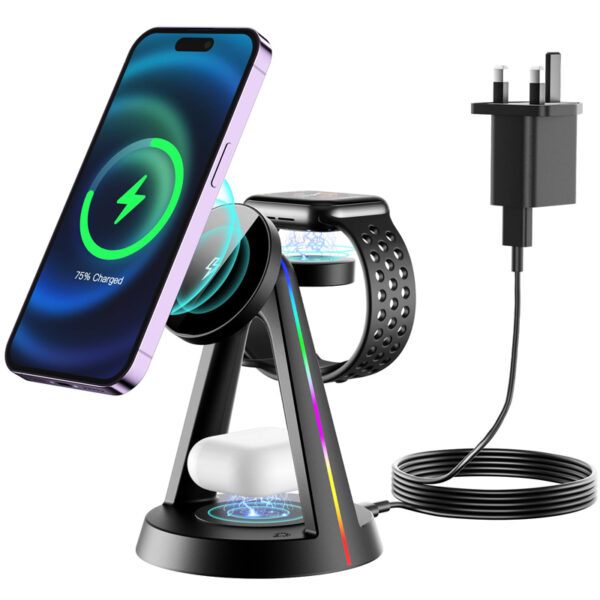
How a wireless charging pad is built and checked
A pad has the fewest parts in the range, so the route is short but unforgiving: the coil position and the top surface are checked on every unit, because a flat product has nowhere to hide an alignment error.
Material preparation and checking
The coil, shielding, controller, cable and the top surface a customer will see are checked against the approved bill of materials before a pad enters the line.
First-piece quality confirmation
The first pad of a run is built and charged against the approved sample before the line continues — on a flat product there is nowhere for a coil-position error to hide.
Assembly on static-protected lines
Boards are assembled on static-protected lines to a written operation sheet, with coil seating checked at the station rather than inspected after the housing is closed.
Visual inspection rounds
Repeat inspections cover coil centre, the contact surface, the finish of the top face and the cosmetic condition of the housing edges.
Aging under load and electrical testing
Every unit runs an aging cycle under load and is re-measured afterwards, so a pad that holds its rate only while cool is caught before it is packed.
Charging and protocol verification
Output voltage and current are measured on the coil, and the handshake is verified per phone family rather than generalised across the range.
QA sampling, packing and shipment inspection
Sampling runs before packing, cable, box and insert are checked against the approved artwork, and the batch record ties a surface or rate complaint to its production run.
A pad has the fewest parts in the range, so the coil position and the top surface are checked on every unit — on a flat product there is nowhere for a small alignment error to hide.
Where a charging pad gets specified
Corporate gifting
A large print area, a low unit cost at 200–500 pcs and packaging that ships flat.
In-box accessory
Supplied with a device or accessory, sized to the product it accompanies.
Counter and reception
A branded pad on a counter or reception desk, where the phone belongs out of the way.
Hospitality
Bedside pads in rooms where the guest brings their own cable.
Certifications and what comes with the shipment
The file for a wireless charging pad is assembled from the first sample rather than hunted down before dispatch, so the paperwork matches the market the container is going to.
CE / UKCA
European Union and United Kingdom market access for the finished unit and its power supply.
FCC
United States electromagnetic compliance for the finished unit.
RoHS / REACH
Restricted-substance documentation for the European market.
PSE / KC
Japan and Korea market documentation, quoted with the plug kit.
CB / SAA / GS / ETL
Additional reports quoted where the channel or retailer requires them.
ErP efficiency
Efficiency documentation for the EU external power supply regulation.
Reference standards behind this page: Wireless Power Consortium (Qi / Qi2), EU external power supply regulation (ErP), EU CE marking and the USB Implementers Forum for USB-C and Power Delivery specifications.
Related guides and platforms
Magnetic wireless chargers
Why alignment decides the real charging rate.
Wireless charging stands
When the phone needs to stay readable while it charges.
Wireless charging stations
Several devices on one base.
All wireless chargers
The current wireless range with wattage for each model.
Custom wireless chargers
What can be changed on a tested platform.
Wireless charger manufacturing
What to check before choosing a factory.
Wireless charging pad — FAQs
What is the difference between a pad and a stand?
The electronics can be identical. A pad charges the phone lying flat, so the screen is not usable while it charges. A stand holds it upright and keeps the screen readable. A pad is cheaper and packs smaller; a stand is the better product where the phone keeps working.
Should I choose a magnetic pad?
If the target phones have a magnet ring or a MagSafe-compatible case, yes — it removes the placement problem and holds the higher rate. For a mixed fleet with older devices, a free-position pad covers more phones.
Will a phone in a case charge?
Magnetic pads align through MagSafe-compatible cases; thicker or metal-backed cases reduce the coupling. Free-position pads depend more on placement than on the case. Tell us the target devices and cases and we will confirm on a bench test.
What is the minimum order?
200 pcs per model. On a pad the branding is the whole product, so the trial quantity is often split across two print treatments or two face materials rather than two electronic configurations.
How fast are samples?
2–3 days with your logo and finish applied, and mass production 7–15 days after sample and artwork approval.
Can the pad carry a large logo?
That is the format’s main advantage — the whole top face is available for printing, laser etching or UV printing, on ABS, PC, wood or PU leather.
Does the pad come with a cable?
It can ship with a cable, with a cable and adapter, or unit-only. Bundling changes the carton configuration, so it is quoted with the packaging.
Which certifications apply?
CE, RoHS, FCC, UKCA, PSE, KC, SAA and CB reports depending on the target market, assembled from the first sample rather than before dispatch.
Is a pad fast enough?
The pad carries the same 15W Qi2 or MagSafe-compatible platform as the other formats, so the rate depends on the phone and the alignment rather than on the shape of the product.
What is the warranty?
Two years, and the most common claim on a pad is not electrical — it is the top surface marking or lifting after months of use. That is why the face material and the printing method are agreed on the sample, and why the batch record ties a surface complaint back to a production run.
Is a wireless charging pad worth it?
It is the cheapest way to remove one cable and the easiest wireless product to brand, which is why it dominates gifting and in-box accessory programmes. What you give up is the screen: the phone lies flat and stops being usable, so a pad suits a counter or a drawer, not a bedside clock.
Do wireless charging pads work with any phone?
Any phone with a wireless receiver charges on a pad at the rate it negotiates. Magnetic pads align automatically for phones with a magnet ring; free-position pads need the phone placed by hand, and a thick case reduces the coupling either way.
How do I connect my wireless charging pad?
The pad needs its own power supply, not a desk USB port. Connect the supplied cable to an adapter that can deliver the pad’s input requirement and supports USB-C Power Delivery — an underrated adapter is the most common reason a pad appears to charge slowly.
Wireless charging pads in more detail — materials, alignment and branding Know more Know less
Wireless charging pad vs magnetic pad
A pad and a magnetic pad can carry the same coil and the same 15W platform. The magnet array is the only difference in use: it holds the phone in the coil centre so the rate is repeatable, while a plain pad leaves placement to the user.
For a mixed fleet with older phones, the free-position pad covers more devices. For a range aimed at current flagship phones, the magnetic version removes the most common complaint.
Wireless phone charger pads and fast charging
The rate a phone receives depends on the profile it negotiates and on how well it is aligned, not on the size of the pad. A pad carrying a Qi2 or MagSafe-compatible platform will hold the higher band; an older Qi-only phone will charge at its own legacy rate on the same pad.
Heat is the other variable: the phone throttles as it warms, so a pad that keeps the phone aligned and ventilated holds its rate longer than one that traps it against a surface.
Materials: plastic, wood, bamboo and leather
ABS and PC take printing and etching well and keep the unit cost down. Bamboo and wood faces give the product a different weight and finish and suit gift programmes. PU leather and silicone are usually applied as the contact surface rather than the whole shell.
The material is a unit-cost and lead-time decision as much as a design one, because some faces have to be sourced to order and that affects the date rather than the price alone.
Wholesale, private-label and corporate gift pads
A pad is the cheapest way to put a brand on a wireless charger and the format with the largest flat surface to print on, which is why it dominates gift and in-box accessory programmes. Orders start at 200 pcs per model and are often split across two print treatments rather than two electronic configurations.
For a device launch, the pad is usually specified with the packaging rather than after it, so the insert and the box are drawn around the same artwork.
Send your spec, get a costed quotation
Tell us the phones it has to charge and the print area your logo needs. You get the pad size, a sample with your artwork in 2–3 days, and unit pricing at your quantity.
- MOQ from 200 pcs per model, splittable across a few SKUs
- Samples in 2–3 days with your logo and finish applied
- Reply within 24 hours on business days