
Talk · Troubleshooting · Factory & QC failure analysis
A customer says their GaN charger buzzes or gets hot. Is that a defect, and what evidence do we need for an RMA?
Faint coil noise and a warm case under load are normal for switching chargers. Loud noise, a burning smell, discoloration or a case too hot to hold are not. Capture the conditions before you ship the unit back.
 Wecent Editorial Team
Updated
3 min read
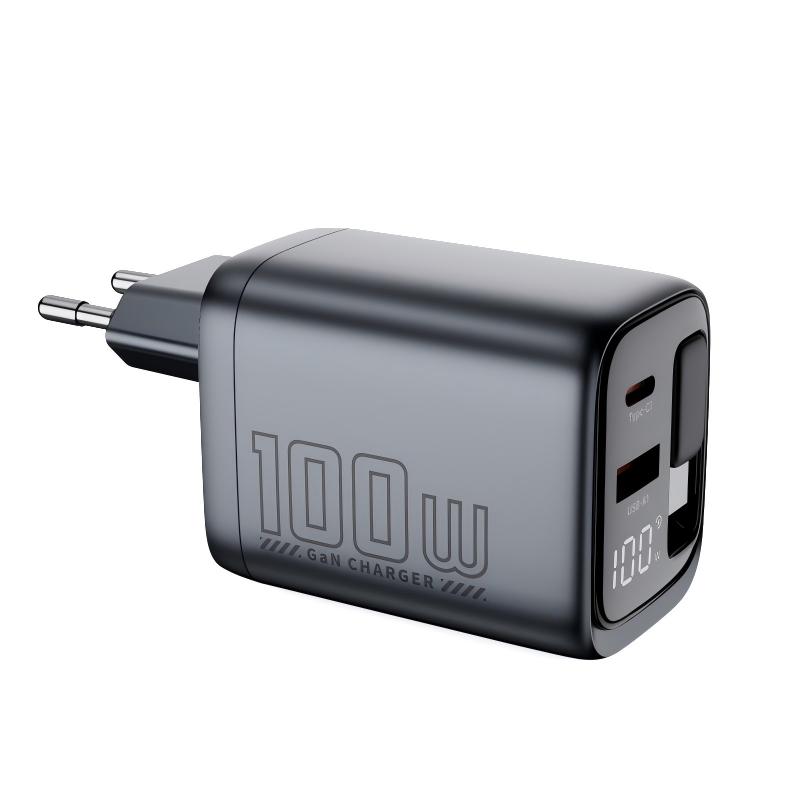
A retailer passed on a complaint: a 100W charger (WEX100S) buzzes quietly while charging a laptop and feels hot. The customer wants a replacement. How do we judge it, and what should we collect before claiming warranty from the factory?
Short answer: A quiet high-pitched noise that changes with load, and a case that is warm or hot to the touch while delivering high power, are both common in compact switching chargers. They aren’t defects by themselves. Stop use and treat it as a fault if there is a loud or crackling noise, a burning smell, discoloration, deformation, or the charger cuts out repeatedly.
Why chargers make noise and heat
A GaN charger is a switching power supply. Components such as transformers and capacitors can vibrate slightly when the load changes, which some people hear as a faint whine. The sound often changes when a device starts or stops drawing power. Conversion is efficient but never lossless, so a compact 100W unit delivering high power will get warm. That is the reason safety standards such as IEC 62368-1 set limits for accessible surface temperatures, and why compliant designs are tested against them.
When to treat it as a fault
- A loud, crackling or popping noise, or one that is present even with nothing connected.
- A burning or hot-plastic smell.
- Discoloured, bubbled or deformed housing or pins.
- Repeated shut-downs at loads the charger is rated for.
- A case too hot to hold comfortably, in normal room conditions and with free airflow.
Any of these: unplug the unit, stop using it, and replace it.
Evidence for the RMA
- The label photo with model, rating and batch/date code.
- Photos of any damage, and a short video with sound if it is noisy.
- The device being charged, the cable used, which port, and any other connected devices.
- Where it was used: plug location, covered or open, approximate room temperature.
- Purchase date and channel.
- The unit itself, if the factory asks for it for analysis.
How the claim is assessed
Wecent’s product pages state a 2-year warranty. The detailed terms (what’s covered, who pays shipping, replacement vs credit) are set out in your agreement. Units with physical damage or used outside the rated conditions are usually handled differently from manufacturing defects. Good evidence lets the factory reproduce the issue and tell a unit fault from a batch issue, which matters most if several reports share a date code.
Facts cited here come from the named standards bodies, regulators, Apple support documentation and Wecent product pages. Points marked “ask”, “confirm” or “check” are recommendations or open questions to settle with your supplier, not verified specifications.
Three more perspectives
Products discussed in this thread


Related articles & topics
Have a sourcing question about your own programme?
Ask our team More Factory & QC failure analysis questions