
Talk · Use · Business & shared deployment
How should a conference organiser set up phone charging for 500 attendees?
Plan for a share of attendees charging at once, not everyone. Spread many fast ports across the venue, check the circuit capacity and put charging where people already wait.
 Wecent Editorial Team
Updated
3 min read
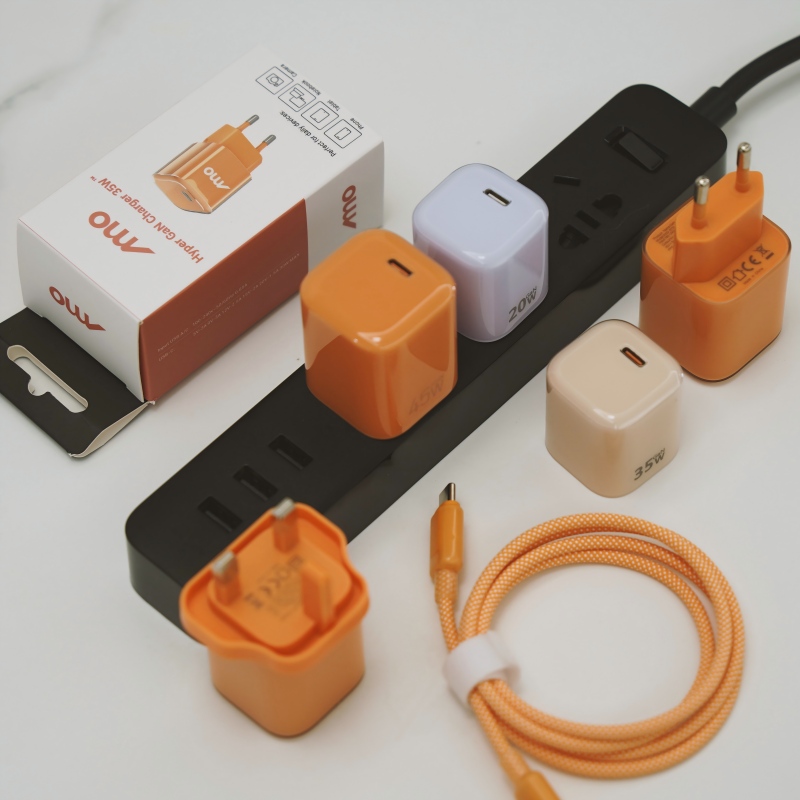
We run a two-day conference for about 500 people. Attendees keep asking where they can charge. How many charging points do we need, where should they go, and what do we need to check with the venue?
Short answer: Plan for a share of attendees, not all 500, charging at any moment, and give them quick top-ups. A common starting point is one charging port for every five to ten attendees, spread across lobbies, breakout rooms and cafe areas, with a mix of USB-C and wireless. Check the electrical capacity with the venue first.
How many ports
Not everyone needs a charge at the same time. Many attendees arrive with a charged phone and want a top-up during a break. Planning for roughly one port per five to ten attendees gives 50 to 100 ports for 500 people. Raise that for all-day events and for audiences who rely heavily on phones, and lower it if the venue has other charging points. This is a planning estimate, not a measured rule, so review it after the first day.
Where to put them
- Where people already wait: registration, lunch areas and lobbies.
- Near seating in the main room, if the venue allows cables.
- At the back and sides of session rooms so charging does not block aisles.
- Near help desks, where staff can see them.
Port types
Most attendees now carry USB-C phones or have an adapter, and a few still use older connectors. Offer USB-C as the main option and a small number of other cable types or adapters at staffed points. Wireless pads suit short top-ups at tables but charge more slowly than cables.
Electrical capacity
Check the venue’s circuits before you order equipment. On a typical US 120V, 15-amp circuit, the nominal capacity is about 1,800W, and electricians usually plan continuous loads to about 80 percent of that. If you plan 100 ports at 20W each, that is 2,000W at full use, which needs more than one circuit. Ask the venue’s electrician to confirm circuits and any restrictions on extension leads.
Security, tidiness and loss
- Use charging stations where cables are fixed or attendees bring their own, to avoid cable theft.
- Route cables so they are not a trip hazard, and use cable covers where needed.
- Tell attendees not to leave phones unattended, or provide a staffed, ticketed locker.
Staffing and signs
Put clear signs at each point showing the port types and the maximum time per use. A volunteer checking stations at each break helps catch damaged cables.
Review after day one
Note which stations were busy and which were idle, and move equipment overnight. The data is better than any estimate.
Where this answer says to confirm with Wecent, the detail is not published on the product page and has to come from the datasheet or the factory. General facts come from the regulators, standards bodies or device makers named in the text.
Three more perspectives
Products discussed in this thread

Related articles & topics
Have a sourcing question about your own programme?
Ask our team More Business & shared deployment questions