
Talk · Troubleshooting · Factory & QC failure analysis
Why does a charger miss its efficiency target at 10 percent load?
At light load the useful output is small, so fixed losses weigh more.
 Wecent Editorial Team
Updated
3 min read
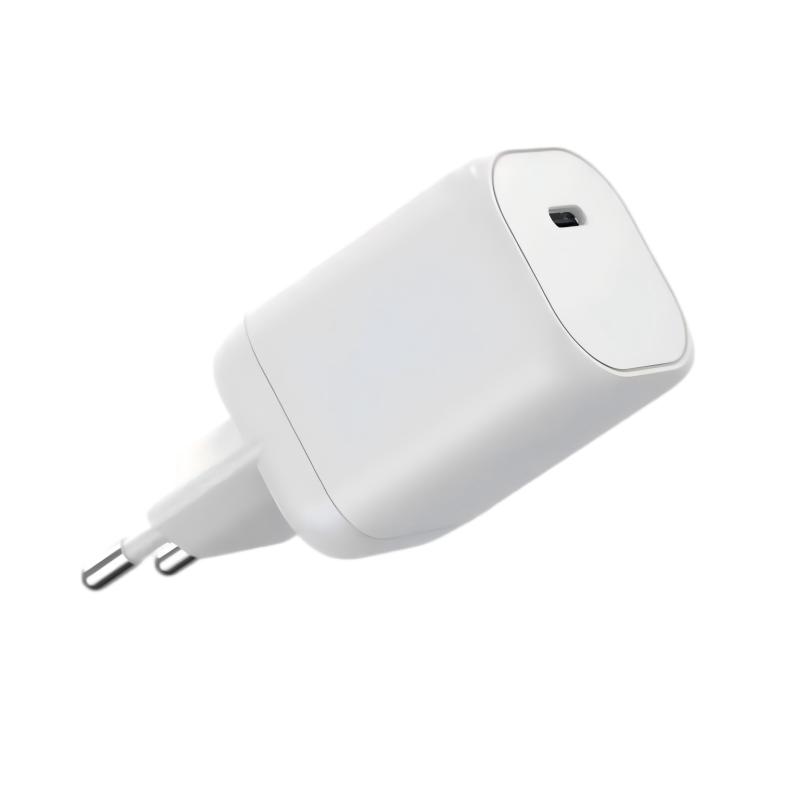
Our charger passes at full load but misses the efficiency target at 10 percent load. Why?
Short answer: At light load the useful output is small, so fixed losses weigh more. Controller power, switching losses, gate drive, bias supply, snubbers and the transformer core all use roughly the same power regardless of load. The design may be tuned for full load, and a poor burst or standby mode makes it worse. Check the spec, the test method and the design at light load.
Why light load is hard
Efficiency is output power divided by input power. At full load, the output is large and the fixed losses are a small fraction. At 10 percent load the output is small, but many losses remain, so the percentage drops.
Typical sources of loss at light load
- Controller and bias power. The control chip and its supply run all the time.
- Switching losses. Each switching cycle loses energy, in the transistors, snubber and transformer.
- Gate drive. Driving the switches costs energy even with little output.
- Magnetising losses. The transformer core loses energy at each cycle.
- Feedback circuit. The optocoupler and reference draw current.
- Output stage. Synchronous rectifier control and diode losses.
- Cable and protection circuits. Small but constant draws.
- Fast-charge protocol chips. Always powered, to negotiate.
Design reasons
- The design was optimised for full-load efficiency.
- The controller does not enter a low-frequency burst mode at light load.
- Poor selection of components.
- High-power chargers with oversized parts have more fixed losses.
- The snubber is too lossy.
Check the requirement
First, confirm which loads the target applies to. US Department of Energy rules for external power supplies use average efficiency at several loading points plus a no-load limit, as set out in the test procedure, while a customer’s own specification or a voluntary programme may call out other load points, such as 10 percent. Make sure that you test according to the correct document.
What to do
- Review the test method: connection, cable, warm-up, and meter accuracy.
- Measure each loss with a bench test where possible.
- Ask the designer about burst mode and controller settings.
- Adjust the snubber, bias supply and feedback to reduce losses.
- Consider a controller with better light-load performance.
- Retest several units, since component tolerance matters.
Note on measurement
Meters used at light load must be accurate at low power. An inaccurate meter can give a false pass or fail.
Quick summary
Fixed losses dominate at light load. Check the target, the test method and the design’s light-load mode.
Sources checked on 24 Oct 2026: U.S. Department of Energy: External power supplies; Natural Resources Canada: External power supplies.
Where this answer says to confirm with Wecent, the detail is not published on the product page and has to come from the datasheet or the factory. General facts come from the regulators, standards bodies or device makers named in the text.
Three more perspectives
Products discussed in this thread

Related articles & topics
Have a sourcing question about your own programme?
Ask our team More Factory & QC failure analysis questions