
Talk · Selection · Wired GaN chargers: wattage, ports & protocols
What is a GaN charger, and is it different from a normal charger?
A GaN charger uses gallium nitride transistors instead of silicon. The result is usually a smaller, cooler charger at the same wattage, not a different kind of plug or port.
 Wecent Editorial Team
Updated
3 min read
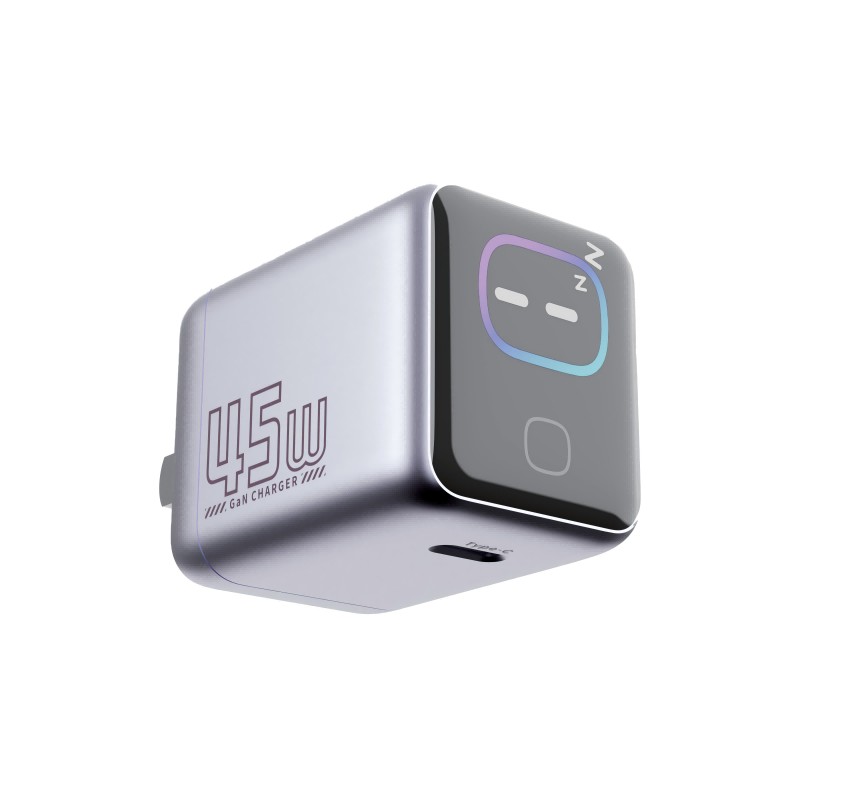
Customers see ‘GaN’ on a box and ask whether it is a new charging standard, whether it charges faster, and whether it is worth paying more for. Our sales team needs an accurate one-paragraph answer and a longer one for the product guide.
Short answer: GaN stands for gallium nitride, a semiconductor material used in the power switches inside a charger. It lets designers build the same wattage in a smaller body with less wasted heat. GaN does not change the connector, the protocol or the speed your phone accepts, so a GaN charger charges a phone at the same rate as any charger with the same output.
What changes inside the charger
Every wall charger converts mains power to a lower voltage using electronic switches that turn on and off very quickly. Traditionally those switches are made of silicon. GaN is a different semiconductor with properties that suit fast switching and low losses. In practice, designers can switch faster and lose less energy as heat, which allows smaller transformers and capacitors. That is why GaN chargers are often much more compact at 65W or 100W than older designs.
What does not change
- Charging speed. Your phone or laptop still negotiates its own power level. A 65W GaN charger and a 65W silicon charger give a 20W phone the same 20W.
- The connector and protocol. GaN says nothing about USB-C or USB Power Delivery. Those need to be checked separately.
- Safety approvals. A GaN charger still needs the same safety and radio-interference approvals as any other mains charger. The material alone does not make a charger safe.
Where GaN helps most
GaN matters most at higher wattages, where heat and size are real constraints: laptop chargers, multi-port desktop chargers and travel adapters. At 20W for a phone, the size gap between GaN and a well-designed silicon charger is smaller, which is why some buyers do not see value there. Our post on whether GaN matters for a 20W charger goes into this.
What to check on a GaN charger
- The rated output per port and when two ports are used together.
- Whether it supports USB Power Delivery for the devices you plan to charge.
- Safety markings and the documents the supplier can show.
- Build quality: a good plug fit, no rattle, no sharp edges and a clear rating label.
Is it worth paying more?
For a laptop or travel kit, usually yes, because smaller size and lower heat are useful. For a basic phone charger, the choice depends on price and how much the size matters to your customers.
Where this answer says to confirm with Wecent, the detail is not published on the product page and has to come from the datasheet or the factory. General facts come from the regulators, standards bodies or device makers named in the text.
Three more perspectives
Products discussed in this thread
Related articles & topics
Have a sourcing question about your own programme?
Ask our team More Wired GaN chargers: wattage, ports & protocols questions