
Talk · Use · Travel & flying
Can you take a power bank on a plane in the US and Canada?
Yes, in carry-on only. Power banks up to 100 Wh are generally allowed, 101–160 Wh needs airline approval, and your airline may set stricter limits than the regulator.
 Wecent Editorial Team
Updated
3 min read
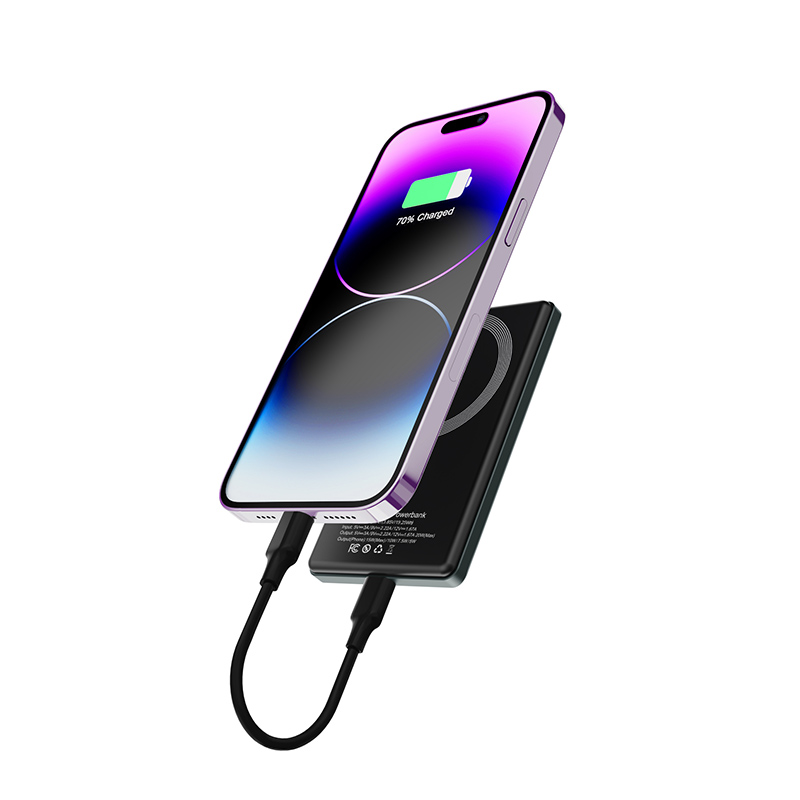
Customers who buy a power bank from a charger brand ask the same question before every trip: can I take it on the plane, and is there a size limit? Our product pages and travel kits need an accurate answer for both US and Canadian flights.
Short answer: Yes, but only in your carry-on, never in checked baggage. In the US, the FAA allows spare lithium-ion batteries up to 100 Wh per battery, and up to two larger ones of 101–160 Wh with airline approval. Canada’s guidance is the same for carry-on. Many airlines add their own stricter rules, so check yours before you fly.
Carry-on only
The FAA states that spare lithium-ion batteries, including power banks and battery charging cases, must be carried in carry-on baggage only. If a carry-on bag is checked at the gate, the power bank must be taken out and kept with you in the cabin. Transport Canada gives the same instruction in its safety alert, and CATSA’s guidance tells travellers to keep batteries in carry-on baggage.
The 100 Wh and 160 Wh limits
- Up to 100 Wh per battery: allowed in carry-on, with no set quantity limit from the FAA for most batteries, though they must be for the passenger’s own use.
- 101 to 160 Wh: allowed with airline approval, with a maximum of two spares per person according to both the FAA and CATSA.
- Above 160 Wh: not allowed in carry-on according to CATSA’s table.
Converting mAh to Wh
Many power banks show only mAh. Both the FAA and CATSA give the formula: watt-hours equal volts multiplied by amp-hours. A typical lithium-ion cell is rated about 3.7V, so a 10,000 mAh power bank is roughly 37 Wh, well under the limit. Check the label for a printed Wh value, which is the safest figure to rely on.
Protect the terminals
The FAA says battery terminals must be protected from short circuit. For a power bank with a USB port, keeping it in its original packaging, in a pouch or in a case achieves this. Do not carry it loose with keys or coins.
Damaged or recalled power banks
The FAA says damaged or recalled batteries must not be carried aboard unless made safe. Transport Canada issued a safety alert in 2025 about recalled power banks and recommends that crew tell any passenger with such a device to switch it off, not use or charge it and keep it on their person.
Airline rules can be stricter
The FAA explicitly says that many airlines set stricter limits, including how many power banks each passenger may carry and, in some cases, a ban on using them in flight. CATSA also advises checking airline policies and notes that many airlines prohibit charging devices onboard. Check your airline’s page before you travel.
Spares for sale
The FAA says batteries carried for further sale or distribution, such as vendor samples, are prohibited in passenger baggage. Samples should travel as properly declared cargo.
Sources checked on 24 Oct 2026: FAA PackSafe: Lithium batteries; CATSA: Guidelines for batteries; Transport Canada: Civil Aviation Safety Alert 2025-10.
Where this answer says to confirm with Wecent, the detail is not published on the product page and has to come from the datasheet or the factory. General facts come from the regulators, standards bodies or device makers named in the text.
Three more perspectives
Products discussed in this thread

Related articles & topics
Have a sourcing question about your own programme?
Ask our team More Travel & flying questions