
Talk · Maintenance · Care, cleaning & lifecycle
How should a magnetic power bank be stored when unused?
Store it partly charged, in a cool dry place, away from metal objects and heat, and top it up every few months. Check for swelling or damage before using it again.
 Wecent Editorial Team
Updated
3 min read
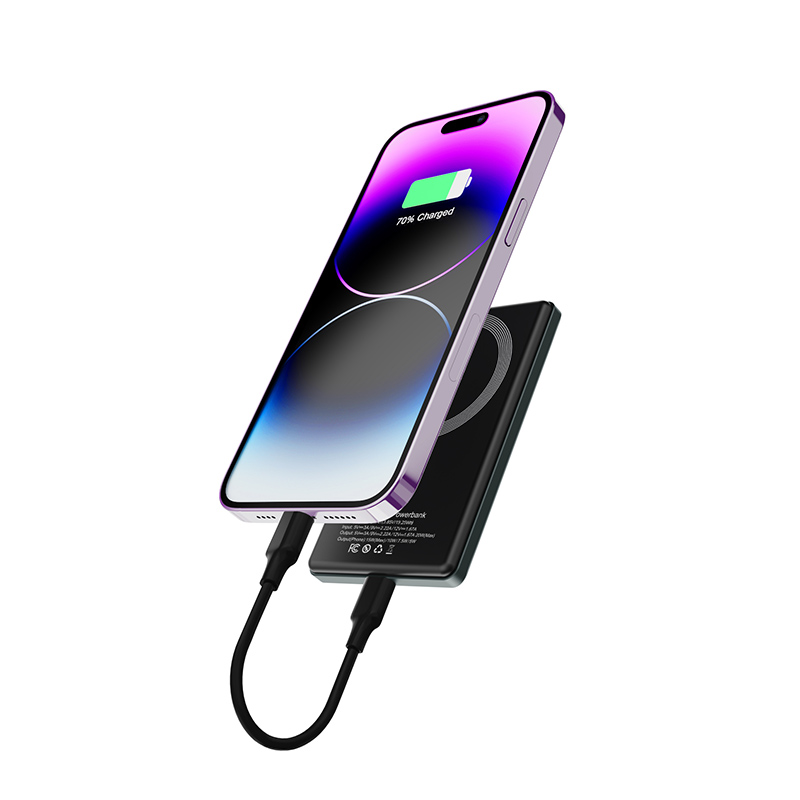
Customers often buy our magnetic power bank for travel and leave it in a drawer for months between trips. How should they store it so it lasts and stays safe?
Short answer: Store it at a medium charge rather than full or empty, in a cool, dry place out of direct sun, away from coins, keys and other metal objects. Top it up every few months so it doesn’t drain completely. Before using it again, check for swelling, cracks, heat or smell; if any appear, stop using it and dispose of it as battery waste.
Charge level
Lithium batteries age faster when kept full for long periods, and a battery left completely empty for a long time can drop too low to recover. A medium charge is a sensible storage level for most lithium battery products. Check the manual for any model-specific advice.
Temperature and place
- Cool and dry, ideally room temperature.
- Not in a car, on a windowsill or near heaters.
- Not in a bathroom or damp cellar.
- Away from flammable materials.
Keep metal away
The magnetic surface attracts metal debris, and coins or keys near ports can be a risk. Store it in its pouch or box, separate from loose metal items.
Periodic top-up
Lithium batteries slowly self-discharge. Set a reminder to check the level every few months and top up if it’s low. That avoids a deeply discharged battery when you next need it.
Check before use
- Swelling, bulging or a case that doesn’t sit flat.
- Cracks or damage to the housing.
- Heat while idle, or an unusual smell.
- Very fast drain after a full charge.
If any of these appear, stop using it and don’t charge it. Keep it away from flammable materials and take it to battery recycling.
Coming back from storage
After long storage, charge it with the recommended cable and adapter on a hard, non-flammable surface while you are nearby. If it doesn’t take a charge, gets hot or shows any of the warning signs above, stop and dispose of it properly instead of trying again repeatedly.
Travel
Airlines generally require power banks in cabin baggage, not checked bags, with limits based on watt-hours. Check the airline’s rules and the watt-hour rating on the label before travelling.
What we don’t know
Wecent’s product page for the magnetic power bank doesn’t publish cycle life or a specific storage charge level. Confirm with Wecent before quoting cycle life or storage times in your listing.
Where this answer says confirm with Wecent, the detail is not published on the product page and has to come from the datasheet or the factory. General facts come from the standards bodies, regulators or device makers named in the text.
Three more perspectives
Products discussed in this thread
Related articles & topics
Have a sourcing question about your own programme?
Ask our team More Care, cleaning & lifecycle questions